成都で外国人カメラマンのレンズが最も長くとどまるのは、パンダではなく、人が腰を下ろした後のあのゆるやかさだ
When foreign creators write about Chinese cities, they are often captured quickly by two categories of place: those driven by scale and those driven by visual wonder. Chengdu is different. Its true strength often does not come from overwhelming the viewer in the first second. It comes from helping the traveler realize very quickly that one does not have to remain in permanent attraction mode here. Teahouses, parks, street food, metro movement, and walking lines that still work after the pace has slowed down all combine into a city feeling that is rarely summarized aggressively yet is very easy to miss once one has left.
That is why many public creator pieces about Chengdu, even when they still mention giant pandas, hotpot, Kuanzhai Alley, or other familiar labels on the surface, leave a stronger memory through more everyday fragments: sitting down, waiting a little, taking a sip, walking through tree shade, and suddenly realizing on an ordinary street that the city is not forcing movement. For Travel Notes, this kind of material is especially suited to a reported format because it explains more clearly why Chengdu feels comfortable than simply listing what attractions Chengdu possesses.
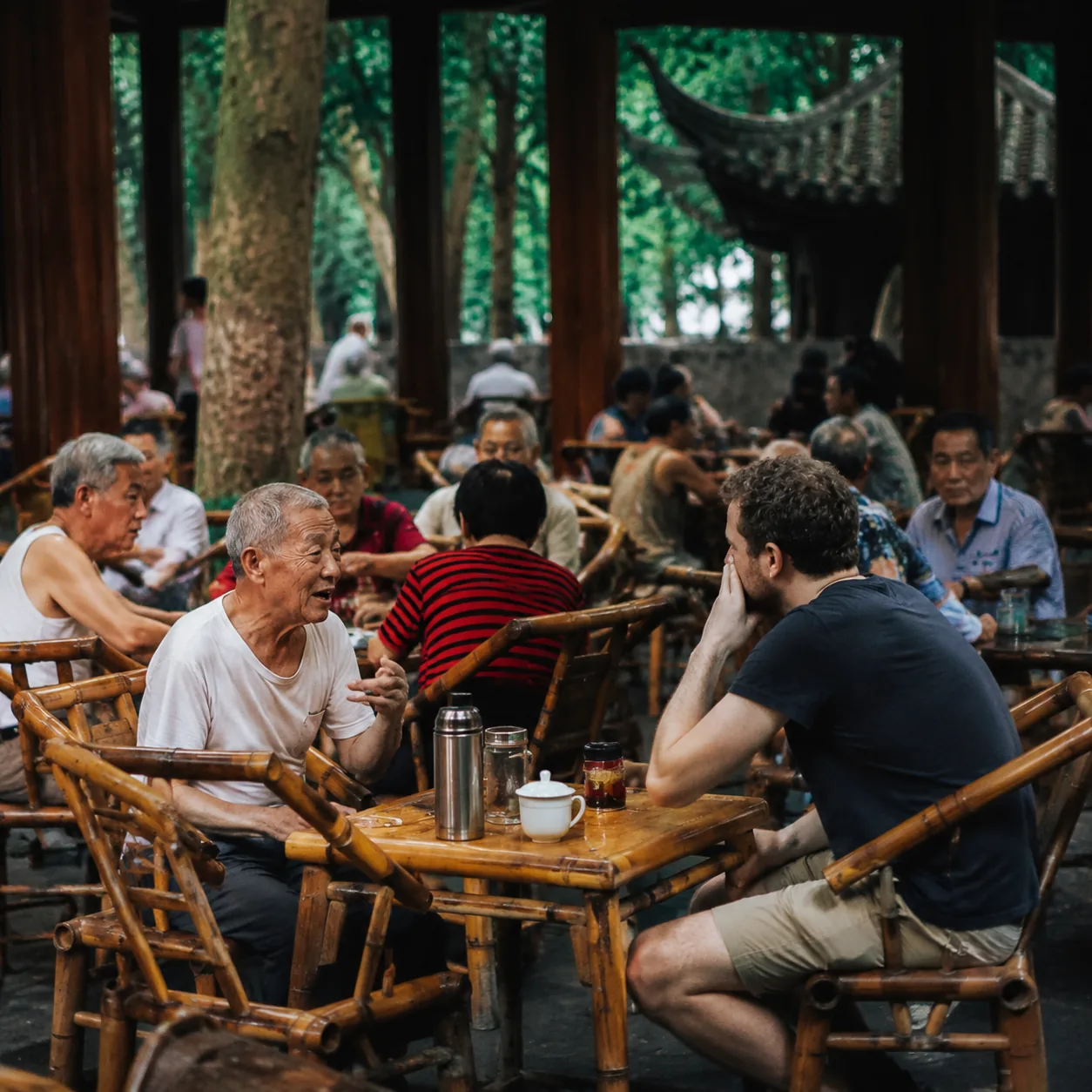
What Deserves Clarifying About Chengdu Is Not the Phrase “Slow Life,” but How That Slowness Actually Grows Inside the Route
Slow life has become one of the most overused phrases in writing about Chengdu. But once it is pasted on as a label, it explains almost nothing. The real question is not whether Chengdu is slow in the abstract, but how that slowness actually affects the traveler. It does not ask people to do nothing. It allows parts of a route that might normally require force to be completed in a looser way. One still eats, walks, looks, and transfers, but those actions stop carrying the sharp edge of constant urgency.
If foreign creators succeed in filming this layer, Travel Notes’s next step should not be to repeat that Chengdu feels relaxed. It should break that relaxation into specific experience. Which places function best as midday buffers? Which neighborhoods restore the legs? Which meal settings matter not merely because they are famous food moments, but because they reset the rhythm of the entire day? Only at that point does Chengdu move from abstract impression into executable route logic.
For a First-Time Visitor to China, Chengdu’s Greatest Value May Not Be Mandatory Check-In, but Recoverability
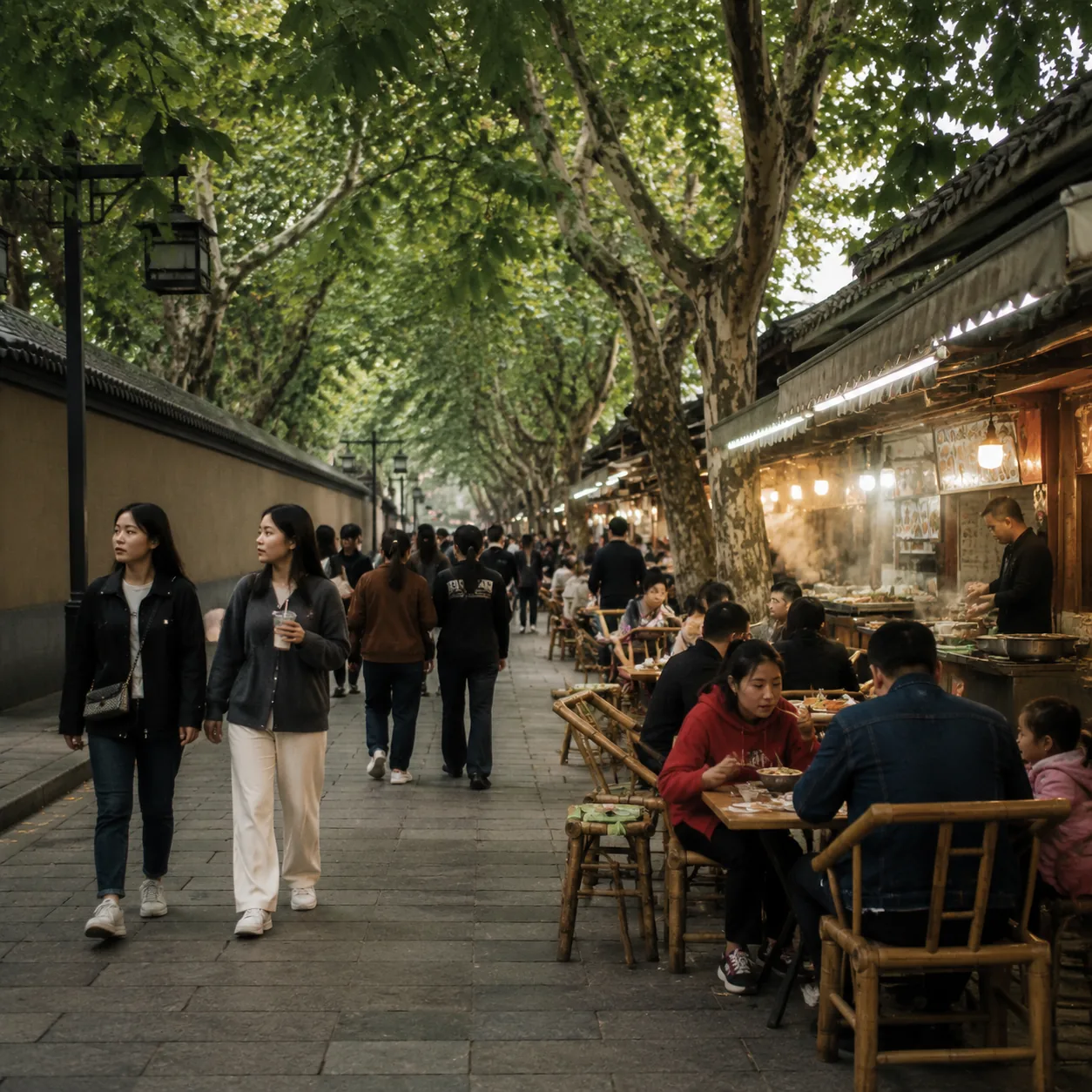
Once a China route becomes even slightly dense, many people begin to feel a subtle kind of fatigue around day three. They are not exhausted to the point of collapse, but their excitement for the next stop begins to dull. Chengdu is especially good at handling this state because many of its best qualities do not require the traveler to arrive with a highly charged emotional state. If one feels normal, the city works. If one feels tired, it still does not fall apart. For that reason, Chengdu often plays a highly important role inside a China route, even if that role is not named often enough: a recovery city.
This does not mean Chengdu is merely a rest stop. On the contrary, its value is very high. It simply does not always appear in the most dramatic form. Giant pandas, hotpot, teahouses, parks, lanes, and evening light do not combine to create one visual explosion. They combine to help the traveler feel that the light and heavy parts of a China route can be rebalanced. For foreign creators, that kind of city easily becomes a place that is less explosive but deeply livable, stayable, and calming. For Travel Notes, that is exactly the kind of city worth writing carefully through to the end.
A Good Article About Chengdu Should Ask Not Only Where to Go, but Also When to Stop
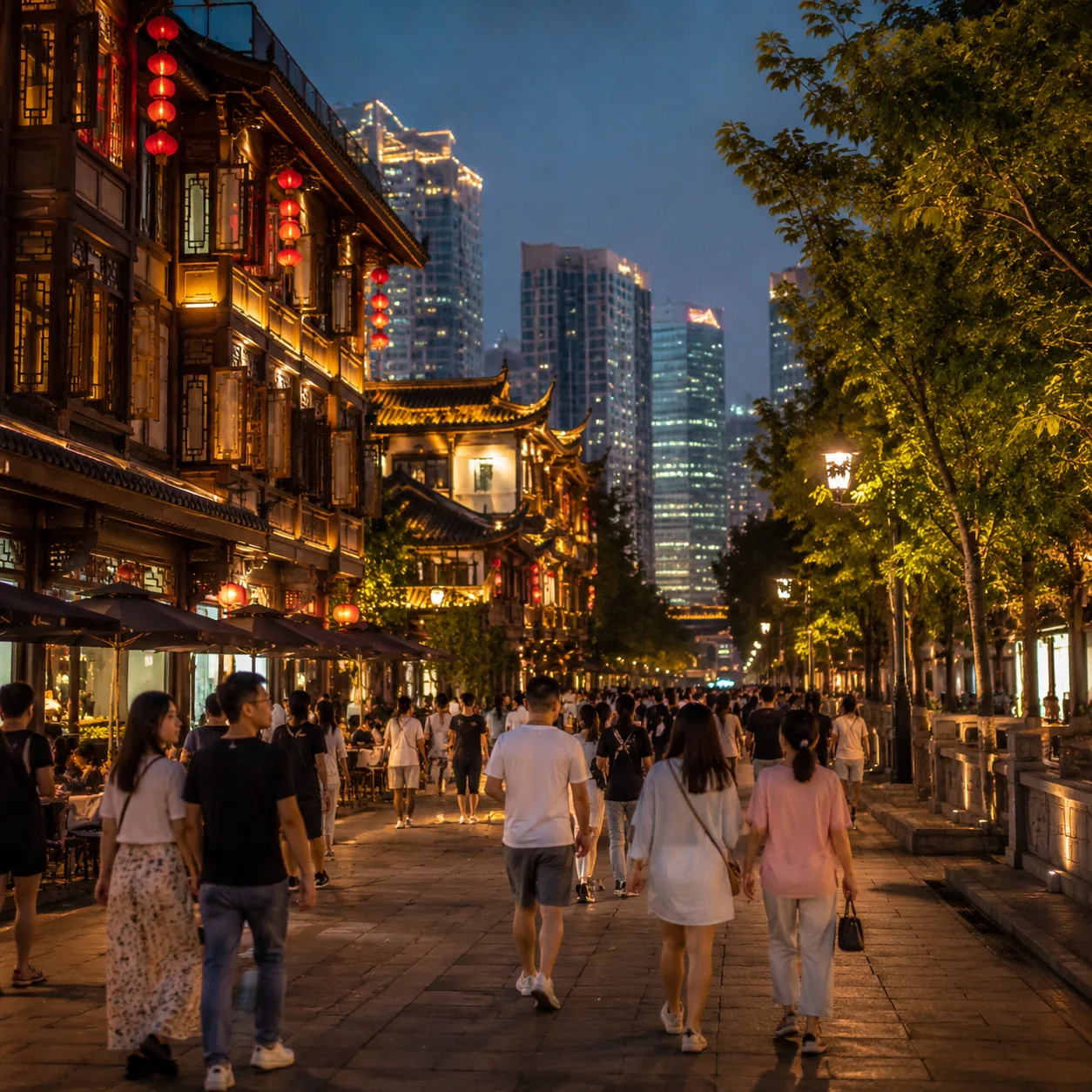
By the end of many city guides, the answer collapses into a list of places. If Chengdu is written only as a list, its most distinctive strength disappears. What matters is not merely where the parks, lanes, museums, panda base, and hotpot restaurants are located, but where blank space should be left between them. Should an afternoon belong to a teahouse or an alley? Should an evening go to hotpot or a riverside walk? Should the route keep pressing forward or pause under the trees for ten minutes? These seem like small questions, but they decide whether Chengdu will actually be walked as a comfortable city.
That is why foreign creator material about Chengdu is best transformed into lived-route reporting rather than pure attraction recommendation. What is precious in Chengdu is not usually the ability to stop a person cold, but the ability to make a person gradually not want to leave. A city like that deserves a more patient style of writing as well.
Public Source Notes
Public source note:
- Rewritten from publicly visible foreign-creator angles on Chengdu’s city life and slower route rhythm, focusing on how everyday atmosphere stabilizes a broader China trip.
- No wholesale reproduction is used; the emphasis is on route logic and recoverability.