銀川の朝の羊肉湯が、「淡さ」と「濃厚さ」への私の理解を変えた
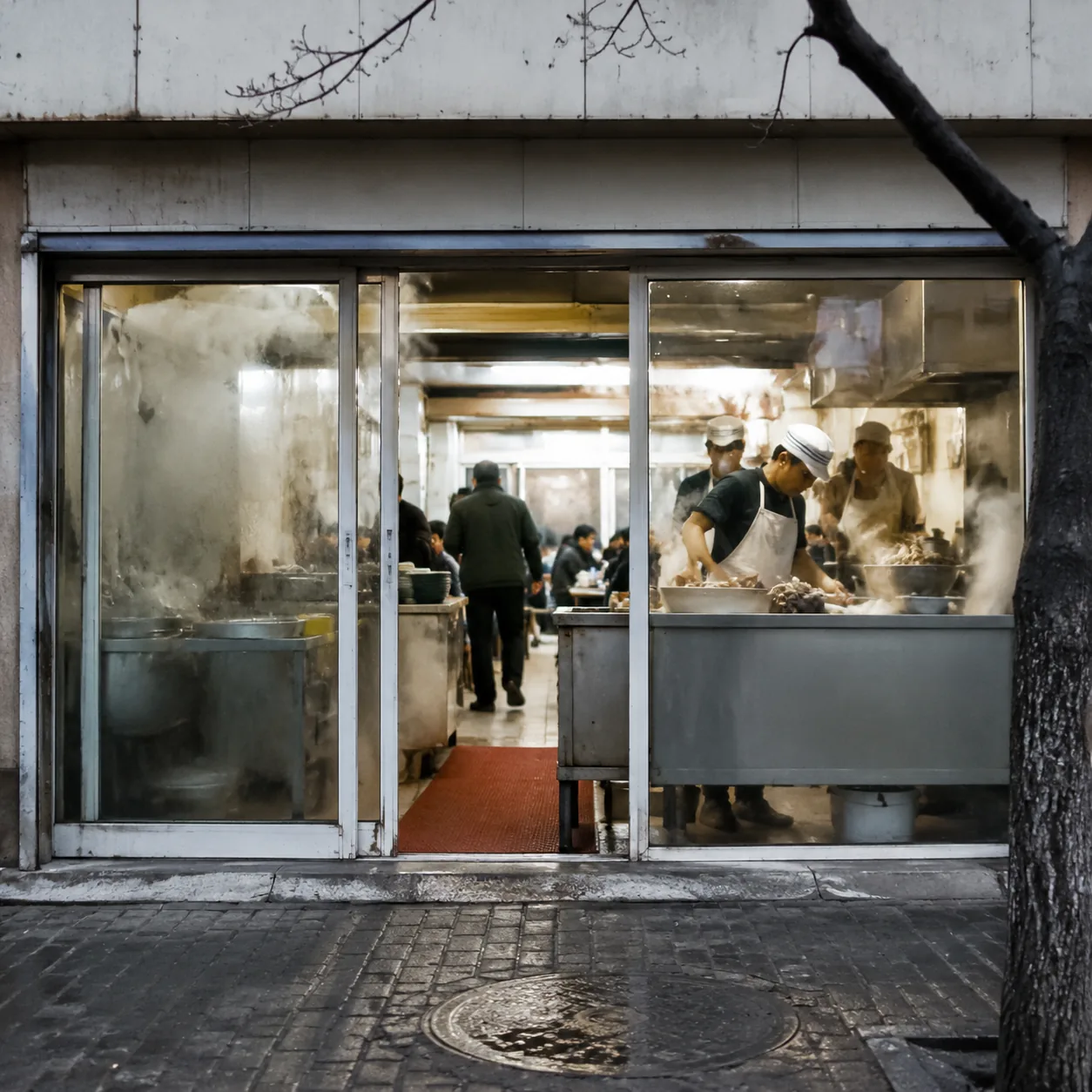
On my second morning in Yinchuan, I woke before the alarm. The sky outside looked rinsed with cold water, the trees along the street were thin and clear, and taxis slid through empty intersections with short lines of light behind them. I had only meant to find a hot breakfast, but the hotel receptionist’s suggestion, “go have a bowl of mutton soup,” led me into an alley that had not fully become busy. The storefront was small, the sign had faded, and steam had left watery marks on the glass. Yet as soon as I pushed the door open, the smell of the soup opened the morning. It was not an aggressive gaminess, nor a fragrance built from piles of seasoning, but a warmth spreading slowly through the air.
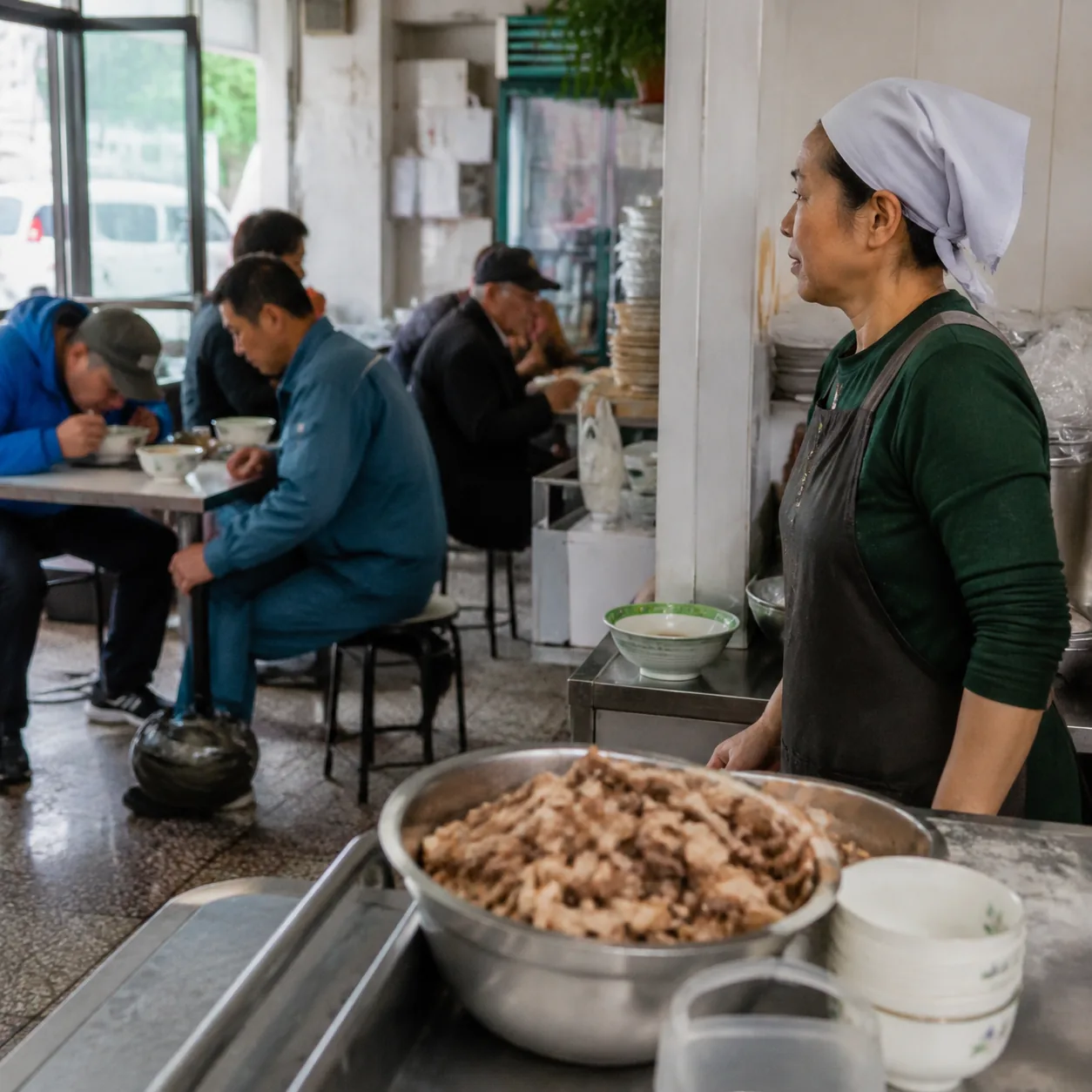
Most people in the shop seemed local. One man wore work clothes with dust from a night shift still on the brim of his cap. Another placed a bicycle helmet beside his feet and held a small handful of change. An elderly man sat alone in the corner, tearing flatbread into tiny pieces as if doing a patient piece of handwork. The woman behind the counter did not hand me a menu. She only asked whether I wanted a large or small bowl, extra meat or regular. I hesitated in front of the counter, and she glanced at my backpack before saying in an ordinary tone, “If it is your first bowl, get the regular. The soup is hot, drink slowly.” That sentence felt like a key, releasing me for a moment from the tourist habit of comparison and choice.
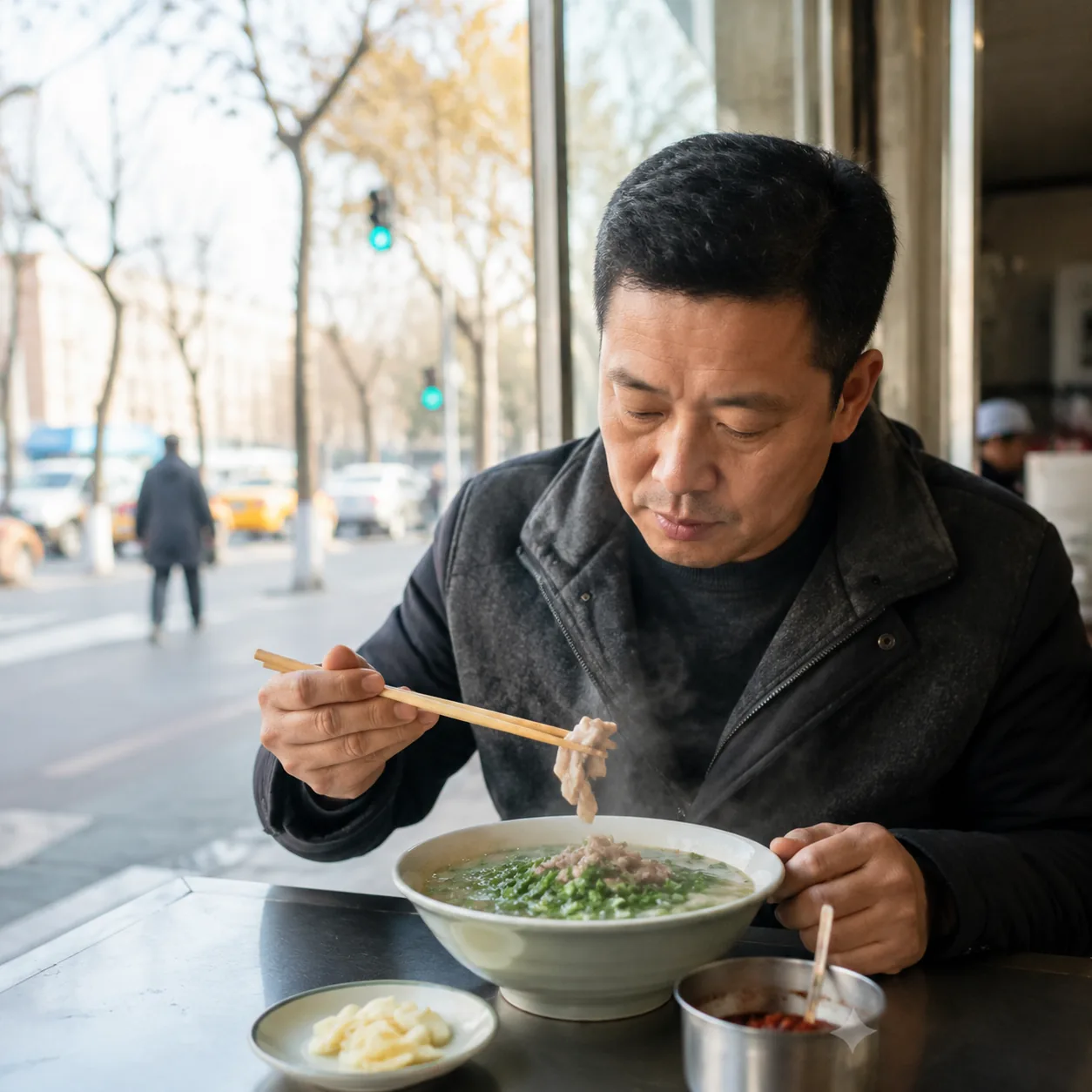
When the bowl arrived, the first thing I noticed was the color of the broth. It was not the thick white liquid I had imagined, but a clear soup with a faint milky sheen. A few bits of scallion and cilantro floated on the surface, while slices of mutton rested underneath, their edges softened by rising steam. Beside it were small dishes of salt and chili powder, along with pieces of flatbread. The arrangement surprised me because it did not seem eager to prove abundance; it even looked restrained. But when my spoon touched the surface, heat rose immediately, and the aromas of meat, bone, and a little pepper separated and gathered again, like a river that was quiet but deep.
I used to understand “light” as having little flavor and “rich” as having many seasonings. Before Yinchuan, I imagined a bowl of mutton soup as something fiery, rough, direct, full of grassland and stove heat. But with the first sip, I realized how specifically wrong I had been. The soup entered lightly, with almost no unnecessary greasiness. After I swallowed, warmth traveled from my throat into my stomach and spread slowly. Light did not mean empty, and rich did not mean heavy in the mouth. In this bowl they were not opposites, but two layers arriving in sequence: the first made me willing to come closer, and the second made the taste stay.
I tore the flatbread into the soup clumsily, making pieces of uneven sizes. The elderly man beside me glanced over, said nothing, and simply turned his own bowl slightly toward me so I could see that his pieces had already absorbed the broth, like small softened patches of moonlight. I followed him, tearing the larger pieces smaller and letting them sink for a while. After absorbing the soup, the bread changed completely: warm and tender outside, with a little wheat aroma and chew still in the center. The slices of mutton were not thick, but their fibers were clear. Only a little salt was needed to lift the meat’s sweetness. At that moment I understood that the bowl was not about stimulation. It was about placing each element where it could be noticed.
Yinchuan’s morning shared a temperament with the soup. The streets were broad, the wind at intersections carried a dry chill, the buildings were not crowded together, and people’s voices did not hurry. You might think the city was pale, so pale that a visitor had to search actively for points of brightness. But sitting in the mutton soup shop, watching the owner tend a pot from darkness into morning, watching regulars enter without many words and already know where to sit, whether to add chili, and how much bread to take, I found that its richness was hidden in repetition. Not every depth has to announce itself in strong color. Some depth is simmered out by time.
I noticed that no one in the shop turned eating into a performance. People lowered their heads to drink, occasionally looking up to mention the strong wind, a road under repair, or a child’s exam. The topics were like scallions on the surface of the soup, brief but enough to give breakfast a direction in daily life. A young man came in to buy takeout for coworkers, listing four different requests. The owner repeated only the essential parts and never stopped moving. Plastic bags were opened, paper bowls placed inside one by one, and the ladle struck the rim of the pot with a short, steady sound. That morning made me feel that local flavor does not live only on the tongue. It also lives in a repeatedly used understanding between people.
Many travel experiences encourage people to look for the “most authentic” place, but while drinking mutton soup in Yinchuan, I did not want to use that word too quickly. Authenticity can become a stamp that flattens complicated things once it is pressed down. The shop in front of me might not have been the most famous in the city and had no polished introduction, but it honestly handled morning hunger, cold air, and the needs of people heading out to make a living. The soup had to be hot, the meat clean, the bread suitable for soaking, the seats quick to turn over, and both regulars and strangers had to find their places within minutes. That precision convinced me more than the word authentic.
I added a little chili powder. The red fell into the broth but did not immediately change everything; it released a small heat only where the spoon had passed. That detail interested me. Chili was not the main character, yet it brightened the edges of the soup. Cilantro was not the main character, yet it lifted the aroma of the mutton. The bread was not the main character either, yet it turned the soup from something to sip into a meal. Food in Yinchuan seemed to work this way often, not through one dazzling element but through cooperation. It shifted my attention from whether a flavor was strong enough to how different flavors left room for one another.
Near the bottom of the bowl, the broth became a little cloudier, with bread crumbs and tiny pieces of meat resting there like a footnote left by the morning. I did not put down the spoon quickly. I finished the last few sips slowly. Once my body warmed, the wind outside no longer felt sharp. Shops along the street opened one after another, fresh meat was hung at stalls selling beef and mutton, people stood outside breakfast places eating from bowls, and the line at the bus stop grew longer. The city did not suddenly become dramatic, but its outline became clearer. It was as if I had seen Yinchuan’s base color through one bowl of soup: clean, restrained, able to endure long heat, and not thin at all.
Before leaving the shop, I carried my bowl to the return area. The owner looked up and asked, “Can you get used to it?” I said it was fresher than I had imagined and also stronger than I had expected. She smiled and said a good soup should not coat the mouth too much; if it coats too much, it becomes greasy. The judgment was simple, but I remembered it for a long time. Many places, when introducing themselves, seem afraid of not being rich enough, full enough, or forceful enough, so they keep adding flavor, story, and posture. But something truly worth drinking often knows where to stop. It does not surround you. It steadies you into the day.
After that day, I also ate hand-grabbed mutton, stewed snacks, cold noodles, and drank eight-treasure tea in Yinchuan. Each had its own personality: some plain, some sweet and smooth, some clearly shaped by Hui food traditions, and others carrying the mixed temperament of a northwestern city. Yet when I look back, the bowl that first changed my scale of taste was still that morning mutton soup. It taught me not to see lightness as retreat, and not to see richness as force. Lightness can be the ability to filter out noise. Richness can be an accumulation that does not rush to show itself. When the two meet, food becomes more than delicious; it gains character.
What stays with us most easily during travel is often not the largest meal, but a flavor that fits a particular moment exactly. The mutton soup of a Yinchuan morning fit because it did not try to speak for the entire city, yet it described one part of it accurately: the wind is cold, so the soup must be warm; the land is dry, so the flavor must be clean; life is not slow, so the bowl must arrive quickly; people are not restless, so the aftertaste must last. It sent me forward with a new way of distinguishing taste. When I meet another bowl of soup that seems light, I will wait before judging, and see whether its richness is hidden deeper down.