社区の修理屋の前で十分待って、私は中国人がなぜいつも「まず直せるか見てみよう」と言うのかやっと分かった
When something broke, my first instinct used to be simple: maybe it was time to replace it. That was especially true for the in-between kinds of things—small appliances, zippers, lamps, fans—items that seemed too troublesome to repair but too wasteful to throw away without hesitation. But after living in China for a while, I kept hearing one sentence: let’s first see whether it can be fixed. The first time I truly understood that phrase was not in a shopping mall or an official service center, but outside a tiny repair shop near a residential neighborhood. The sign was a little faded. The glass listed services like shoe repair, key cutting, zipper replacement, and small appliance repair. The light inside was not bright, and several old chairs waiting for attention stood outside the door. The place looked easy to overlook, yet it felt like a tiny station dedicated to extending the lives of the city’s scattered objects.
That day I brought a small desk lamp whose connection had gone loose. The bulb flickered on and off. I had already started browsing online for a replacement, but as I passed the shop I suddenly remembered a friend saying that places like this were worth asking first. Before I even spoke, several people were already ahead of me: an auntie getting a shoe sole reinforced, a middle-aged man carrying the lid of a rice cooker, a younger person handing over a backpack zipper that had jammed. What surprised me most was that nobody treated these items as beneath repair. Everyone spoke in a matter-of-fact tone, as if repair were simply a normal step in life. The repairman did not boast or overpromise either. He took each thing, turned it over, pressed here and there, tested it, and then said either it could be fixed, it would need a replacement part, or it would not be worth the cost. The rhythm was flat and practical, with no mystique and no hard selling.
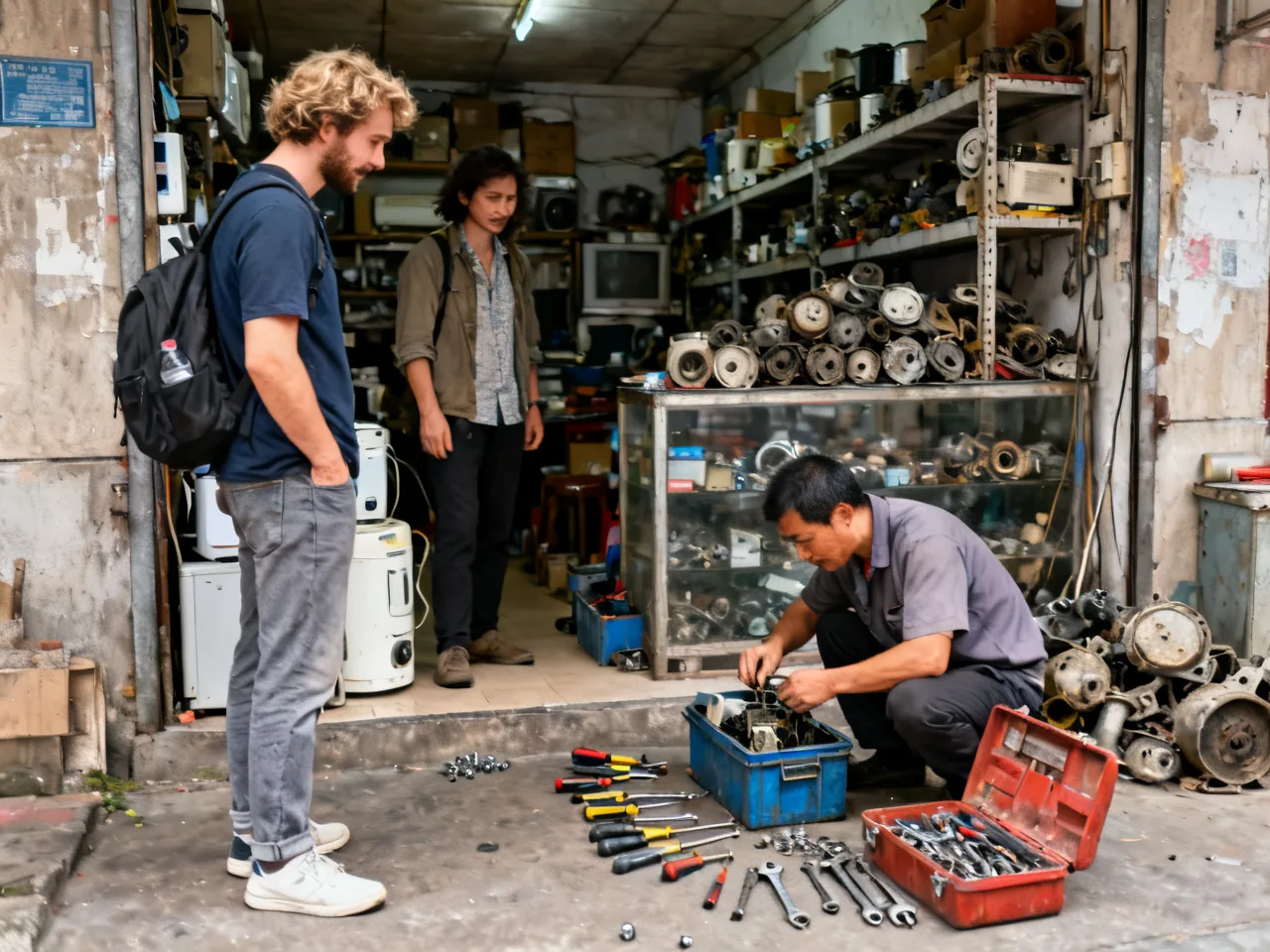
When my turn came, the repairman plugged in the lamp, twisted the connection lightly, opened the base with a small screwdriver, and in under two minutes said it was not the bulb at all. One wire inside had loosened. He said it as simply as if announcing a fact too ordinary to dramatize. I stood to the side waiting, listening as he casually told another customer which kinds of shoe heels wore out faster and which zipper heads broke most easily. Suddenly I had a strong feeling that this little shop was not just repairing isolated objects. It was maintaining an entire habit of judgment built around not throwing things away too soon. You brought something in not because it was expensive, but because it had not truly reached its end yet.
Later I increasingly felt that neighborhood repair shops are especially revealing for foreigners. They disrupt a very common assumption: modern urban life does not necessarily mean that everything must be consumed quickly and replaced quickly. In many Chinese neighborhoods, repair is still a living daily skill, and it usually is not dramatic. It simply stays there quietly on a side street. You see that people hold a practical patience toward objects. They first ask whether something can be patched, whether a part can be replaced, whether it can last a little longer, rather than immediately entering replacement mode. That is also why I came to believe even more strongly in entering everyday China through small recurring scenes, because places like repair shops often show the true texture of a city’s life better than anything grand.
A few minutes later, the repairman assembled the lamp again, plugged it in, and the light turned steady. When I asked the price, the amount was so low that I almost felt embarrassed; it was roughly the cost of a cup of coffee. The auntie beside me took back her repaired shoes and immediately stamped each foot twice outside the shop to test the feel. The younger customer with the backpack opened and closed the zipper several times before leaving, checking for smoothness. People kept arriving and leaving. No one treated the place as a special cultural experience. Yet the longer I watched, the more precious it felt. It suggested that everyday life does not have to move only by constant disposal. Sometimes, through a pair of hands and a little time, many things can be gently brought back.
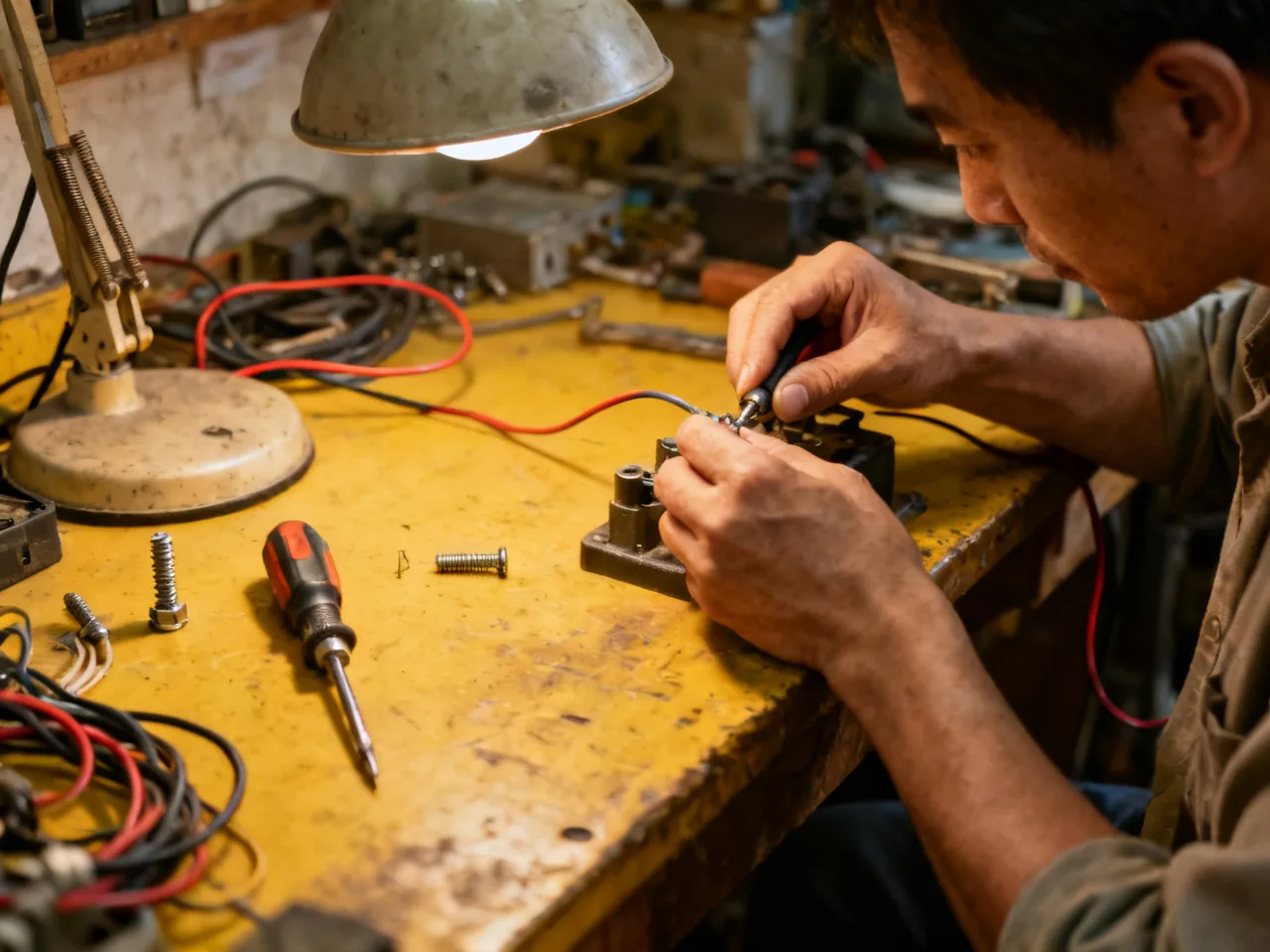
If someone asks me now where in China one can best observe a practical and low-waste attitude toward life, I think of the neighborhood repair shop. It has no polished display and no complicated story, only things that are a little broken, a little old, and not yet ready to be given up. For me, what makes such a place so appealing is not nostalgia. It is the fact that it still truly participates in how the city functions today. It reminds me that many tiny repairs, however insignificant they seem, are quietly helping people live more steadily and make things last a little longer.