中国の高鉄駅で、地元の人みたいに乗り換えられるようになった話
After living in China for a long time, I found that the place where I still looked least like a local was not a restaurant or a ride-hailing car, but a high-speed railway station transfer. In daily life I could scan codes, receive parcels, and nod to the guard at my compound gate with ease. Yet inside a large railway station, the overhead screens, split corridors, and constantly changing gates could take my confidence apart piece by piece. The first time I had to transfer alone, I stood before the arrival exit with my phone in my hand and one question in my mind: did I need to leave the station first and then enter all over again?
The itinerary was not complicated, at least not when I bought the tickets. I was traveling from a central Chinese city to the eastern coast, and the system offered a transfer plan with forty-two minutes between trains. A friend said it was enough, and I believed it. The real problem was that forty-two minutes looked like one solid block on the phone screen, but on the platform it broke into many pieces: getting off, following the crowd upstairs, finding transfer signs, confirming the next train number, passing a gate or not passing one, reaching the waiting area, and then finding the boarding gate. If any step slowed down, time began to leak.
My first mistake after getting off the train was understanding “follow the crowd” too simply. Most passengers did move in the same direction, but they were not going to the same place. Some were exiting, some were heading for the metro, some were going to ride-hailing pickup points, and some, like me, were transferring. At first I stared only at the suitcase in front of me and almost followed it to the exit. Then I saw a blue overhead sign marked “convenient transfer,” with English beside the Chinese, and I stopped, edging back from the stream into another corridor. At that moment I understood that locals did not look calm because they wandered casually; they started filtering information earlier.
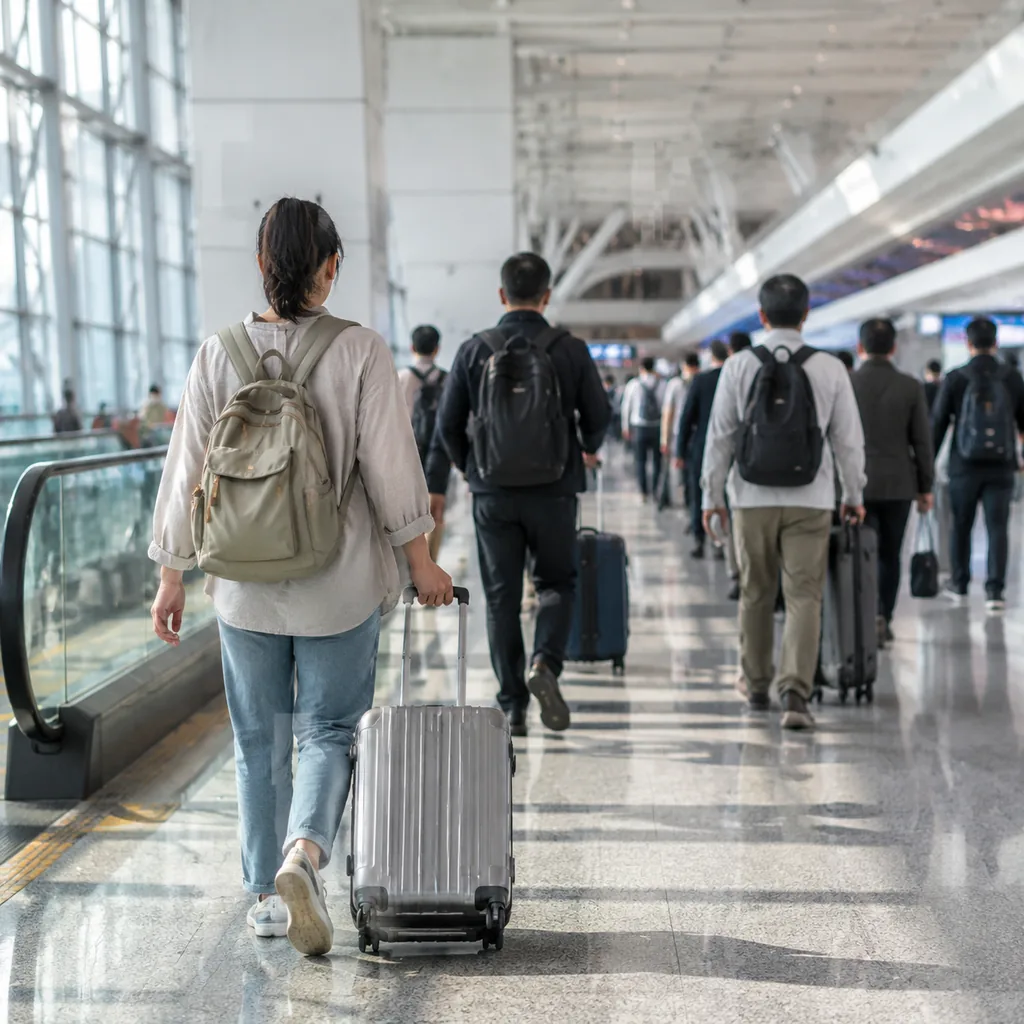
The second problem was the train number. I was used to looking at the destination city, but I did not check the specific service number immediately. On screens in Chinese high-speed railway stations, there may be many trains going in the same direction, and the same city name may appear again and again. My next train was not simply “the train to Hangzhou.” It was a specific G-number, a specific departure time, and a specific boarding gate. The method I later developed was to take a screenshot of the next leg before getting off and keep it at the front of my photo album. Train number, seat, and departure time were visible at once, so in the transfer corridor I did not have to reopen the order while the signal was weak or my hands were busy.
That day I followed the “convenient transfer” signs to a gate where more than a dozen people were waiting. Everyone had an ID card or document page ready, and the line moved quickly. I was using a passport, so I could not pass through the same way most people did with Chinese ID cards, and I felt tense again. A staff member saw my hesitation and pointed to the manual lane. I handed over my passport and phone order; she checked my next ticket and let me through in less than a minute. The problem did not vanish, but it changed from a vague worry into a manageable step: foreign passport holders use the manual lane, open the order in advance, and do not start searching at the window.
After the transfer gate, I reached the waiting level. The challenge there was different from an airport. Airport transfers often center on the gate, while railway stations require you to watch the waiting area, boarding gate, train status, and inspection time together. Each time the big screen refreshed, I felt nervous because there was too much information. Later I learned to lock onto three things first: whether my train number was displayed, whether the boarding gate had appeared, and whether the status said on time, waiting, or boarding. Once those three were clear, other information could wait. Transferring like a local did not mean understanding every screen; it meant knowing which words mattered right now.
I also learned a very practical detail: do not stop in the middle of a passage to study your phone. During my first transfer, I was nervous and paused at the top of an escalator to confirm my direction. I immediately realized I was blocking the people behind me. No one scolded me, but suitcase wheels and footsteps detoured around me, and I understood that I had chosen the wrong place to think. Now I first move beside a pillar, near a wall, or behind a row of seats before checking maps and tickets. That small adjustment changes a lot. Once you are not blocking the way, your mind steadies too. You stop being pushed by the flow and start observing how the flow works.
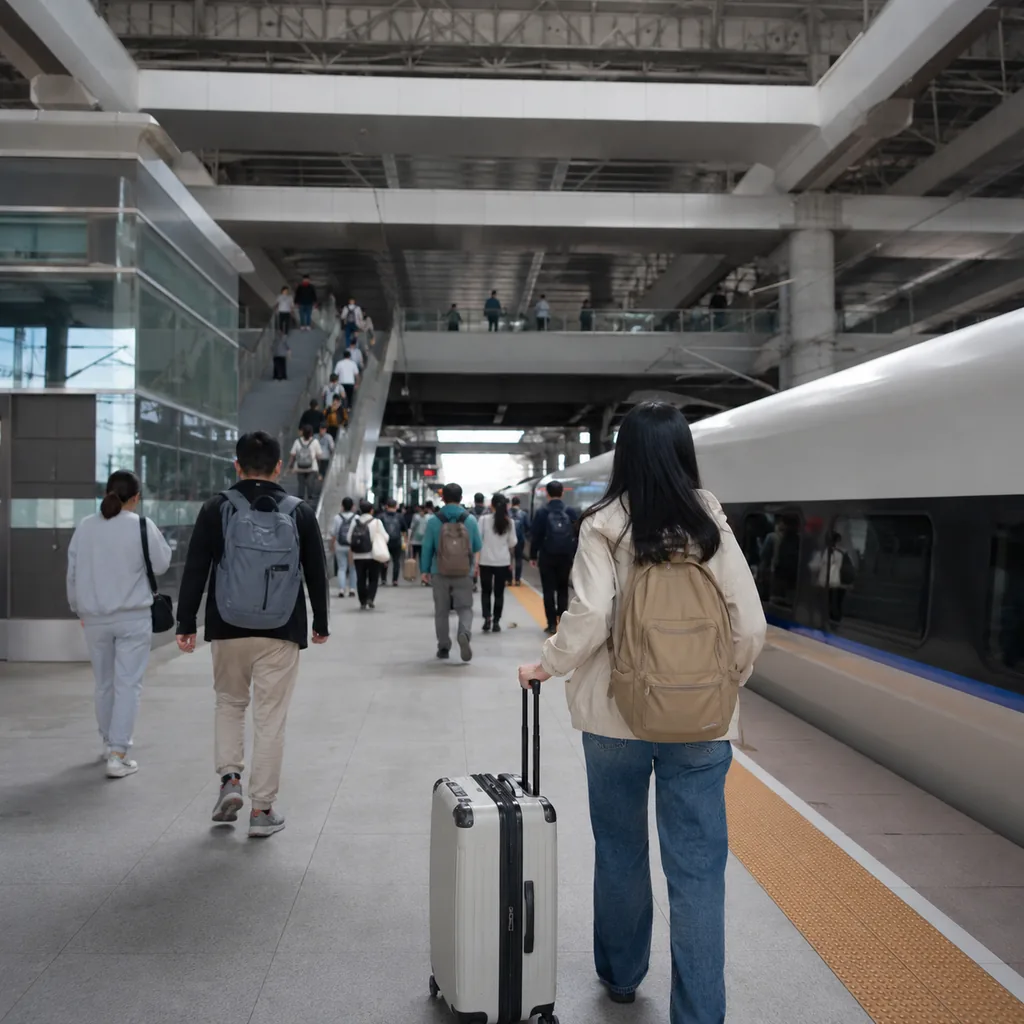
The most dangerous part of that transfer was not getting lost; it was almost spending time on the wrong comfort. There were coffee shops and convenience stores in the waiting hall. I saw local passengers buying water and wanted to do the same. But they might be close to their boarding gate, familiar with the station layout, or aware that their train had not started boarding. I was different. I needed to find the gate first and only then decide whether I had time to buy anything. Later my order became fixed: confirm the gate first, then deal with water, restroom, and charging. Once the order changed, half the anxiety disappeared.
When I found the boarding gate, the screen showed that inspection would begin in fifteen minutes. Only then did I truly breathe out. I sat on a nearby row of seats with my backpack on my knees and watched the people around me. Someone had slipped an ID card behind a phone case, someone hung a child’s water bottle on a suitcase handle, and someone checked ticket information with a calm face. I began copying these details: putting my passport where I could reach it fastest, turning up my phone brightness, facing my backpack zipper toward myself, and memorizing my next seat number. I did not feel embarrassed about imitation. In large transport spaces, imitation is often the quickest form of learning.
When boarding inspection began, the crowd quickly formed several lines. I used to think locals queued fast because they were in more of a hurry; later I realized that was not the whole story. They had simply prepared documents earlier, judged which gate they could use earlier, and knew earlier that they should not reorganize bags at the machine. I joined the manual inspection lane behind a mother with a child. She held documents in one hand and rested the other on the child’s shoulder. The child pulled a small suitcase; when its wheels caught in a gap, she did not panic, only lifted it gently over. The way she handled a small problem taught me more than any sign could.
The platform had another rhythm. In the waiting hall, people could spread out, but on the platform they automatically moved near their carriage numbers. The first time, I only noticed that the train was long and did not understand how much carriage position affected boarding speed. Later I checked the platform screen before going down to see whether Car 1 was to the left or right, then moved according to my own carriage number. Chinese high-speed trains usually do not stop for long. If you wait until you are on the platform to search slowly, you can make things difficult for yourself. Acting like a local means moving “I’ll figure it out after I board” earlier into “I should think before I go down.”
After boarding, I realized I had eight minutes left. That number stayed with me because it proved the transfer had succeeded, but not by such a wide margin that I could have been careless. I stored my suitcase, found my seat, and sat down with sweat still in my palms. After the train started, I messaged my friend that I had made the transfer. He replied with only two characters in Chinese: normal. I laughed. For him, of course it was normal. For me, it was a system I had just unpacked: signs, screens, documents, manual lanes, boarding gates, carriage direction. Each part had become a little more readable.
Since then, I have treated high-speed rail transfers as a process to design in advance, not an improvisation. When buying tickets, I no longer look only at total travel time. I check the size of the transfer station, the gap between the two trains, whether the transfer is within the same station, and whether the arrival time falls during a rush period. Fifteen minutes may look attractive, but for someone using a passport, carrying luggage, and unfamiliar with the station route, it can be risky. Thirty to fifty minutes is usually more comfortable. At a very large station or one I am visiting for the first time, I would rather leave more. Time is not wasted; it is a buffer for mistakes and hesitation.
I also made a simple checklist for myself. Before getting off: screenshot the next ticket, put away the water bottle and charging cable, and place the passport in an outer pocket. After getting off: look first for “transfer” or “convenient transfer,” not for the exit; if unsure, ask uniformed staff rather than passengers who are also rushing. After reaching the waiting level: find the train screen and boarding gate before thinking about the restroom or buying things. Before inspection: raise phone brightness, open the order page, and hold the passport. Before going to the platform: check carriage direction. The checklist is not brilliant, but it prevents me from repeating the same mistakes.
Long-term living taught me that feeling local is often less about perfect language and more about the right order of actions. You can ask directions with an accent and take a little longer at the manual lane, but if you know to stand aside before checking your phone, confirm the boarding gate before buying coffee, and trust the train number more than the city name, you look far less panicked. The railway station did not become simple because of me. I learned to break it into a chain of small problems. Each small problem had an answer, so the whole situation stopped looking like a wall.
Now, when I transfer at a high-speed railway station, I still arrive early, check the screens twice, and hold my passport carefully. I have not become someone who can cross the station with closed eyes. But I no longer interpret nervousness as failure. Nervousness reminds me to check, procedure helps me move, and observation lets me adjust. When I follow the “convenient transfer” signs up to the waiting level, find the boarding gate, and see my train number appear on time, I feel a quiet satisfaction: not that I have conquered the station, but that I have finally learned how to cooperate with it.