炉を囲んで座れば、この食事に終わりはない
There is a kind of meal that’s easy to start and hard to end.
In Chongqing, hot pot is called tang — a verb, not a noun. “Let’s go get scalded.” The word is brilliantly precise: food tumbles in boiling red broth, scalded to doneness, scalded through with flavor, and the people around it get scalded too — faces flushed, sweat running, loosened up. After a hot pot meal, people are relaxed, talkative, closer to each other than before.
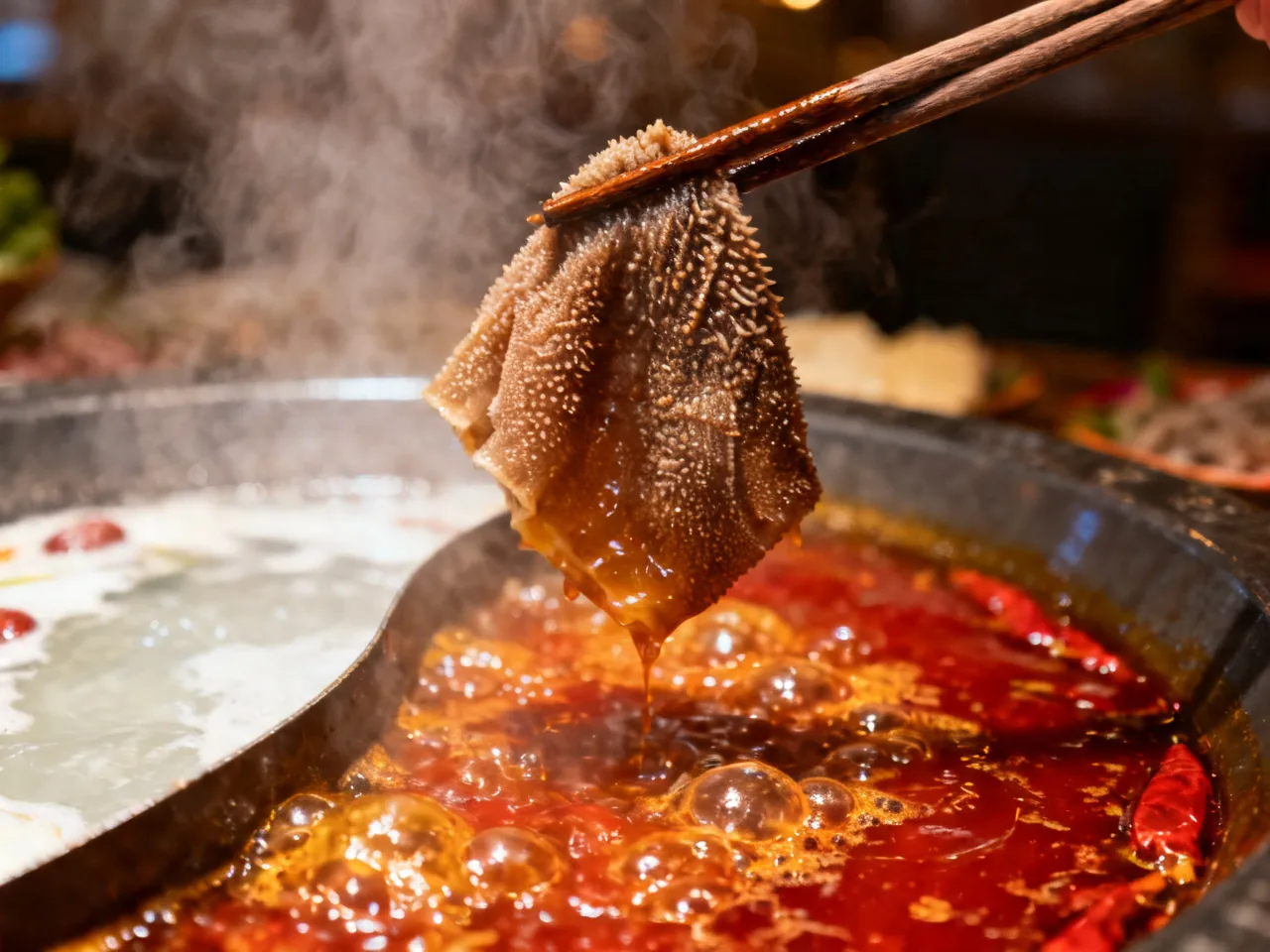
To read a hot pot table, start with the broth. Chongqing’s old-style hot pot uses a tallow base: deep red, with a thick layer of beef fat and chilies on the surface, Sichuan peppercorns half-hidden beneath. This broth isn’t mixed — it’s stir-fried. Beef tallow, doubanjiang, dried chilies, peppercorns, old ginger, garlic, all cooked in a large iron wok over high heat for forty minutes or more before the fragrance is right.
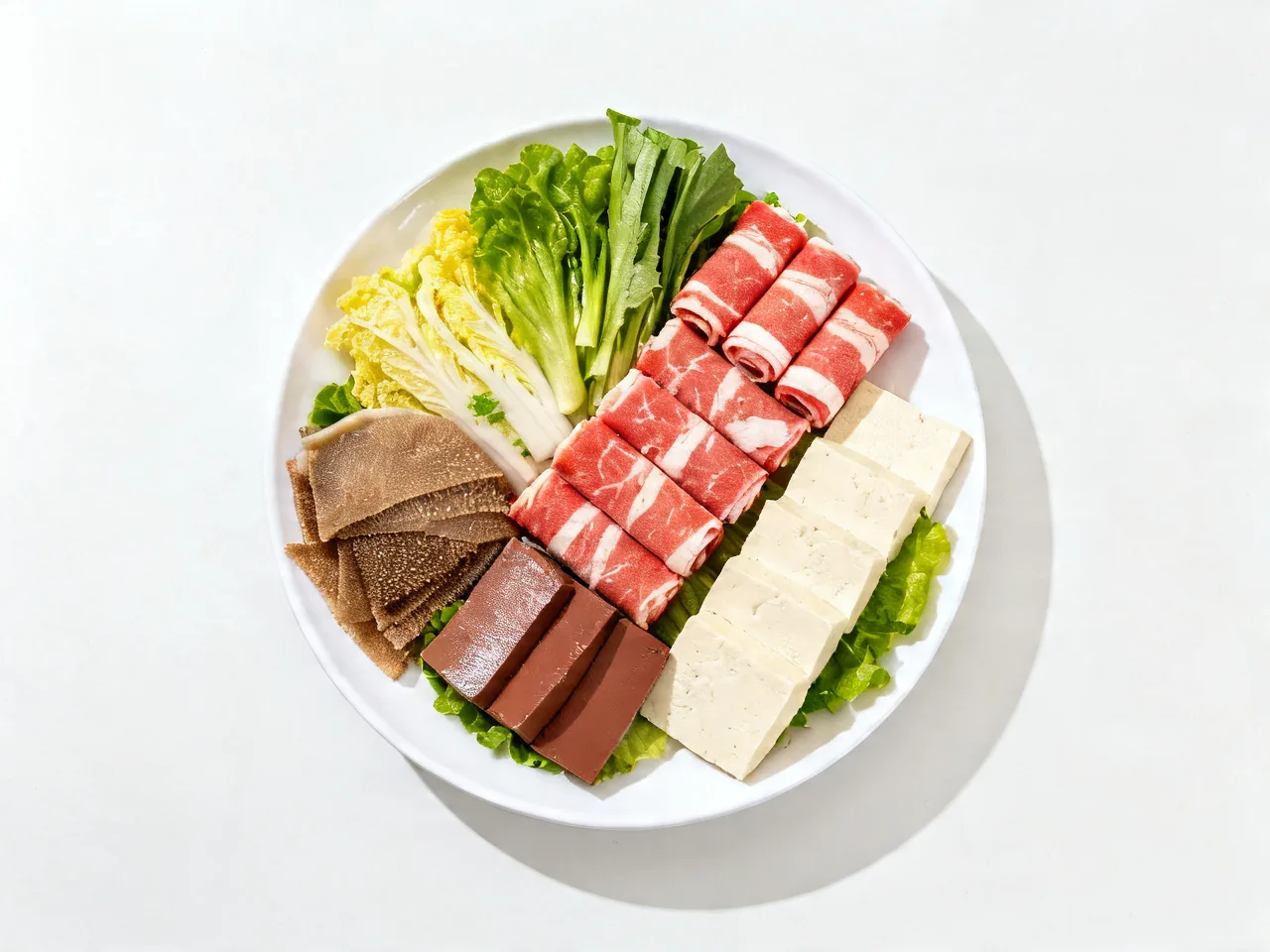
Northern-style lamb hot pot sits at the opposite extreme: clear broth, or just a few slices of ginger and scallion. The restraint in the base exists to let the lamb speak for itself. Lamb raised on Inner Mongolian grasslands is tender and mild, with none of the gaminess people fear. Ten seconds in clear broth, a dip in sesame paste — a satisfaction of an entirely different register.
Hot pot has a democracy that other cooking methods lack: all ingredients share the same pot, and none is nobler than another. Tripe and duck blood hold a status in Chongqing hot pot no lower than beef. Tripe requires the “seven up, eight down” technique — dipped in and out of the broth seven or eight times, two to three seconds each, until just cooked through, crisp but not tough. The motion demands focus; one moment of distraction and the tripe turns rubbery.
Friday night, nine o’clock, an old hot pot restaurant near Jiefangbei in Chongqing. Thirty-some tables fill the outdoor seating, each with a bubbling pot at its center. Servers weave between them carrying four or five plates at once. At the next table, a couple argues about whether to order duck intestines. At another, a middle-aged man has shed his jacket and sits in his undershirt, drinking broth straight from the ladle. The air is thick with chili and tallow, mixed with beer and sweat — noisy and completely real.
Chongqing and Chengdu people hold fundamentally different views on dipping sauce. Chongqing tradition favors the dry dish: ground chilies, ground Sichuan pepper, sesame — dry, for dipping food straight from the pot, a sizzle and a burst of fragrance. Chengdu people prefer the oil dish: sesame oil as a base, with minced garlic, scallion, cilantro, sometimes a raw egg cracked in to cool the food and temper the heat.
Visitors often don’t know how to compose their dipping sauce. There’s no standard answer. A hot pot restaurant owner who has seen thousands of customers put it simply: mix it until you like it, and don’t worry about what anyone else says. That advice applies to a lot of things beyond hot pot.
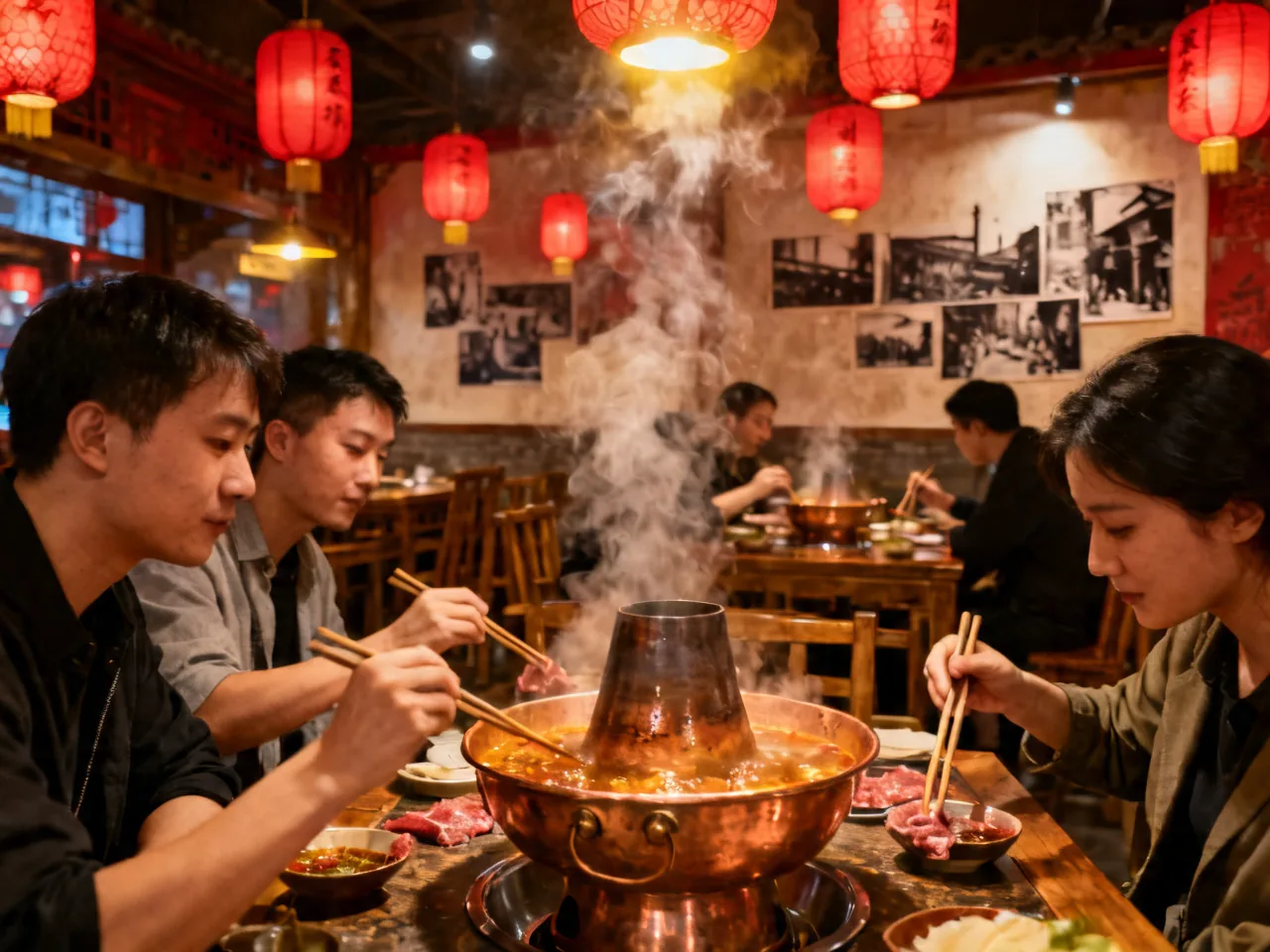
Hot pot is the most socially charged form of Chinese dining. It demands sharing, waiting, and face-to-face presence. Phones have a low survival rate at a hot pot table — things in the pot are always about to be done, always needing to be fished out, and attention must stay at the table. This may be part of why hot pot has grown more popular in the social media age, not less: it forces people back into the present moment, back toward each other.
You can eat hot pot alone. Chengdu has many single-diner hot pot restaurants — small pots, solo seats, partitioned booths that spare solo diners any awkwardness. But honestly, eating hot pot alone always feels like something is missing. That missing thing is probably hot pot’s actual soul.
Winter. Rain outside the window. A pot boiling hard inside. Across the table, someone you wanted to see. At moments like this, time is allowed to stop.
Related Reads
- The 8 Great Cuisines of China
- Spellbound at First Bite: A Stranger’s Descent into Chengdu’s Heat
- Street Steam: The Real Pulse of Chinese Cities
- The Peppercorn Dossier: Sichuan’s Flavor Map Through a Botanist’s Eyes
- 10-Day East China Five-City Loop