Chinese Cold Dishes: Every Great Meal Starts Here
In China, cold dishes are the overture to a meal.
The hot food hasn’t arrived yet, but the cold dishes are already on the table. A few small plates — smashed cucumber, wood ear mushroom salad, mouthwatering chicken, husband-and-wife beef slices — different colors, different emphases: sour, spicy, numbing, refreshing. You eat while drinking tea, and the wait for the main courses passes without noticing.
This habit exists across China, but the style of cold dishes varies enormously. Sichuan cold dishes are heavy on numbing spice; Northeast cold dishes lean sour-sweet; Cantonese versions are light; Yunnan’s are bold and raw. “Cold-dressed” means something completely different depending on where you are.
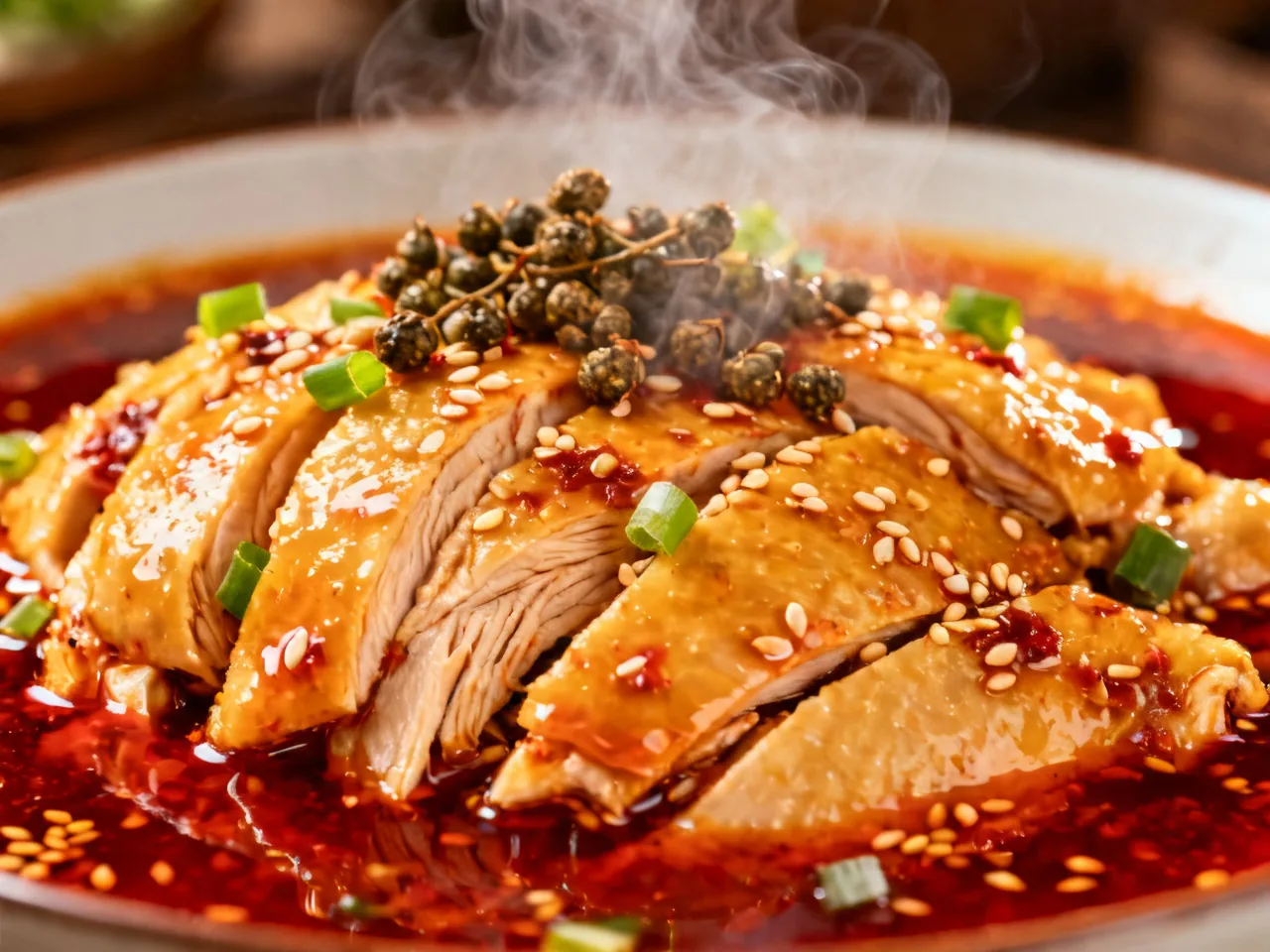
Sichuan cold dishes are built on two things: chili oil and Sichuan peppercorn.
Mouthwatering chicken (口水鸡) is the archetype. Poached chicken thigh, cooled and sliced, dressed with chili oil, Sichuan pepper oil, soy sauce, vinegar, garlic paste, ginger, sesame, finished with crushed peanuts and scallions. The name comes from a poem by Guo Moruo — it means “makes your mouth water.” Good mouthwatering chicken has silky meat, chili oil that’s fragrant without being harsh, and peppercorn that numbs without going numb.
Husband-and-wife beef slices (夫妻肺片) contains no lung. The dish uses beef head skin, heart, tongue, and tripe, thinly sliced and dressed with chili oil, Sichuan pepper, and celery. The name comes from a Chengdu couple who sold it from a street stall; “fèi piàn” became the dish’s proper name, no longer connected to lungs.
Bàng bàng jī is a Leshan specialty — the chicken is tenderized by beating with a stick, then dressed with sesame paste, chili oil, and Sichuan pepper. Similar to mouthwatering chicken but with a higher sesame paste ratio and a richer texture.
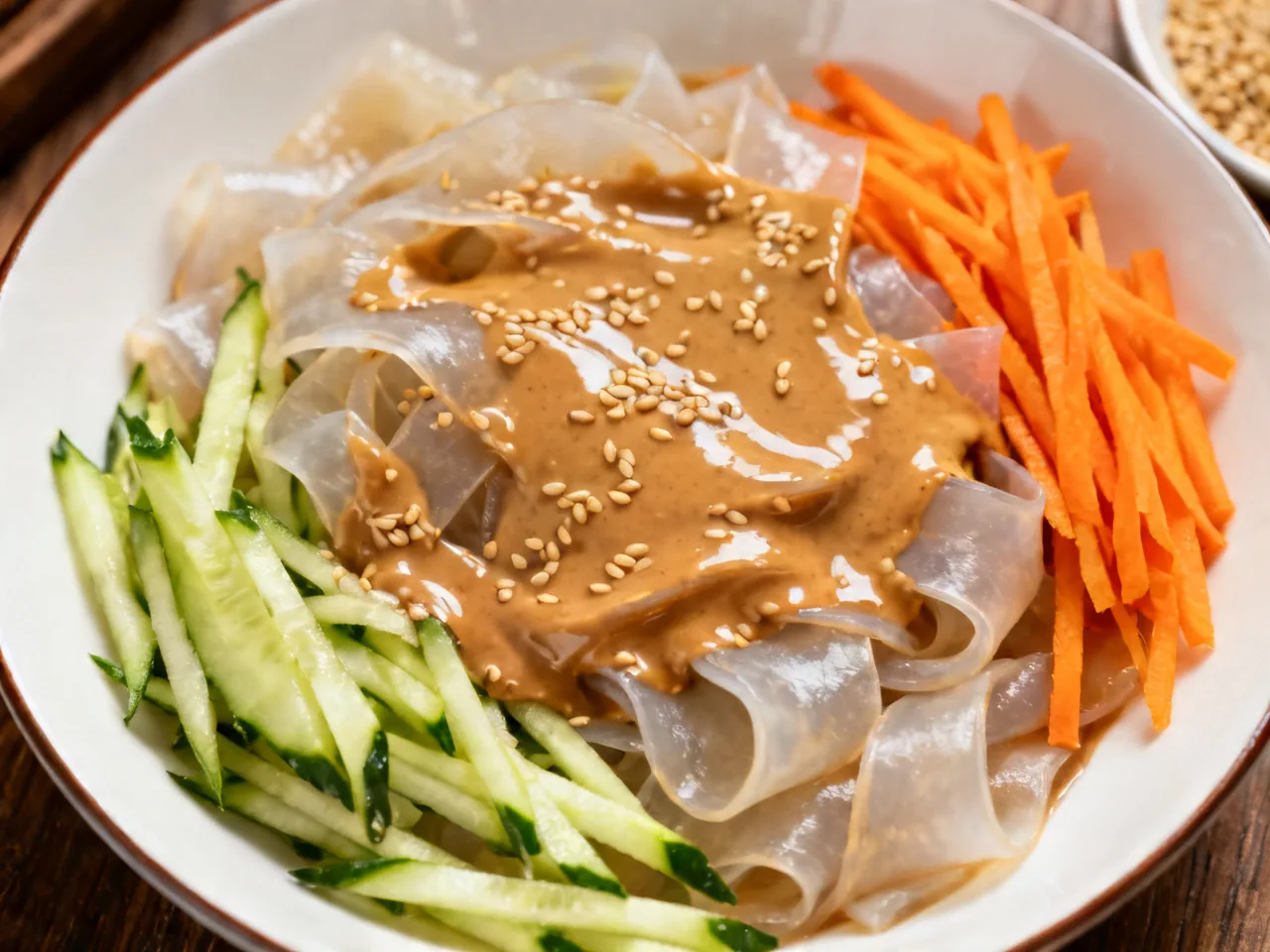
Northeast cold dishes are the opposite of Sichuan — the emphasis is sour, sweet, and refreshing.
Smashed cucumber (拍黄瓜) is the simplest cold dish and one of the hardest to get right. Cucumber smashed with the flat of a knife, dressed with garlic, salt, vinegar, sesame oil, and a little chili oil. The key is the smashing — cracked cucumber absorbs dressing better than sliced, but it can’t be pulverized. The Northeast version is heavy on garlic and vinegar, clean and palate-cleansing.
Northeast glass noodle salad (大拉皮) is a banquet staple. Wide mung bean noodles cooked and cooled, mixed with julienned cucumber, carrot, egg strips, and shredded pork, dressed with sesame paste, garlic juice, vinegar, and soy sauce. The noodles are chewy, the sauce is rich — it’s the Northeast cold dish with the most emotional weight.
The seasoning logic of Chinese cold dishes is essentially the combination and balance of a few base flavors.
Sour: rice vinegar, aged vinegar, lemon juice. Aged vinegar is dark and mellow, suited to bold dishes; rice vinegar is lighter, better for refreshing styles.
Spicy: fresh chili, dried chili, chili oil. Sichuan red oil is the highest form of chili oil — made by infusing multiple chili varieties and spices, with a complex fragrance.
Numbing: Sichuan pepper oil or powder. Numbing and spicy are two different sensations — numbing is the tingling of the tongue, spicy is heat. Good Sichuan cold dishes balance both.
Savory: soy sauce, oyster sauce, fish sauce. Light soy adds umami, dark soy adds color.
Aromatic: sesame paste, sesame oil, crushed peanuts, scallion, ginger, garlic. Sesame paste is the base note of many cold dishes — thin it with warm water for a smooth texture.
Practical Notes
- Sichuan cold dishes: restaurants around Jinli and Kuanzhai Alley in Chengdu, ¥50-100 per person
- Mouthwatering chicken and husband-and-wife beef slices available at most Sichuan restaurants, ¥15-45
- Northeast cold dishes: Harbin and Shenyang Northeast restaurants; glass noodle salad is essential, ¥20-35
- DIY: smashed cucumber is the easiest to replicate at home — simple ingredients, 10 minutes
- Summer recommendation: cold dishes are the stars of Chinese summer tables
Related Reads
- The 8 Great Cuisines of China
- Spellbound at First Bite: A Stranger’s Descent into Chengdu’s Heat
- Street Steam: The Real Pulse of Chinese Cities
- The Peppercorn Dossier: Sichuan’s Flavor Map Through a Botanist’s Eyes
- 10-Day East China Five-City Loop