After a Full Month in Chongqing, the Camera Finally Catches the Everyday Framework Beyond the Sights
Many foreign travel videos present Chinese cities as a brief shock: arrive, look, react, leave. But channels like Pasta and Panda, willing to stay longer in Chongqing, bring something quite different. The most important word in the public title is neither “skyline” nor “hotpot.” It is “one month.” That time span immediately pushes the content away from attraction montage and toward lived observation. It encourages viewers to believe that a city as visually complex as Chongqing is not merely something to pass through. It is something that can be inhabited and gradually unpacked.
That shift is exactly what Travel Notes should catch when working with this kind of source material. A short-stay tourist can tell readers what is most shocking. An outside creator who remains for a while can more easily show what is most easily misunderstood, what deserves a slower pace, and what may not seem loud on day one but becomes steadily more rewarding by day three, day five, or the end of a week.
Saying “One Month” Is Already a Content Statement
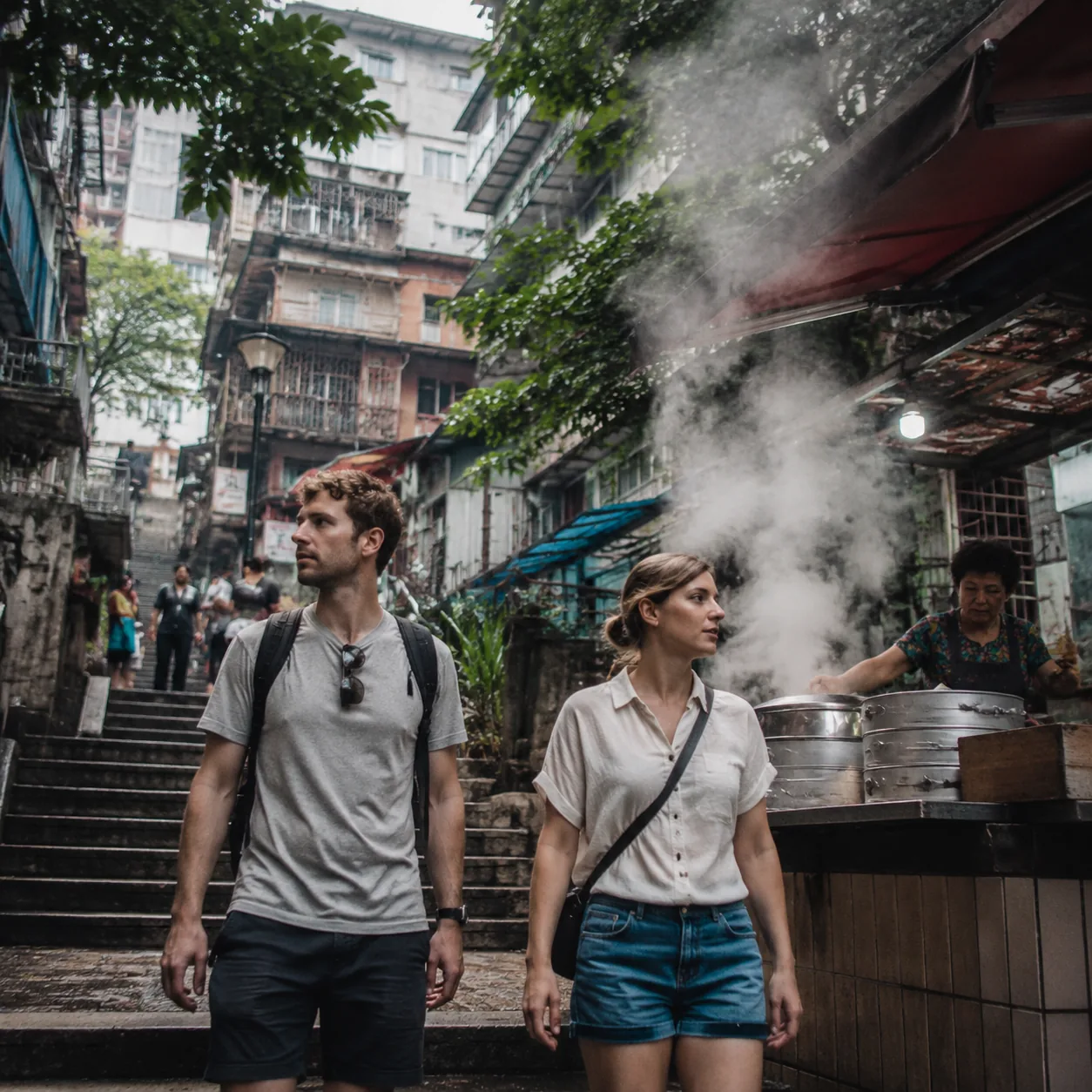
Within writing about Chinese cities, the phrase “I stayed for a while” naturally changes the narrative center. The moment the stay is no longer a two-day checklist, the route cannot continue rotating only around signature images. Finer layers must enter: whether transport remains interesting after repeated use, whether the hills are still meaningful on day five and not only on day one, whether street food is a one-time novelty or part of the city’s true rhythm, and which viewpoints belong to the first visit versus which should be saved for a quieter mood later.
That is why public material from creators like Pasta and Panda carries a distinctive form of persuasion for outside audiences. It is not saying merely, “come here and you will be stunned.” It is saying, “come here, and after the shock, there is still enough left to live inside.” For many people who have never visited China, that step is crucial. Surprise may win the click, but the possibility of inhabiting the place is what turns attention into genuine consideration.
What Matters Most Here Is Not the Attraction List, but What Still Holds After Repetition
Almost everyone seeing Chongqing for the first time is captured by its verticality. But someone staying there for a while often remembers something else in the end—not that it is high, but why height does not turn empty after the first impression fades. In other words, what truly deserves reporting is not the spectacle that works on first contact, but the living logic that still works after repetition. That includes how metro and walking alternate, how older streets and commercial districts switch roles, which kinds of food genuinely restore strength after repeated climbing, and which viewpoint lines belong to dusk rather than noon.
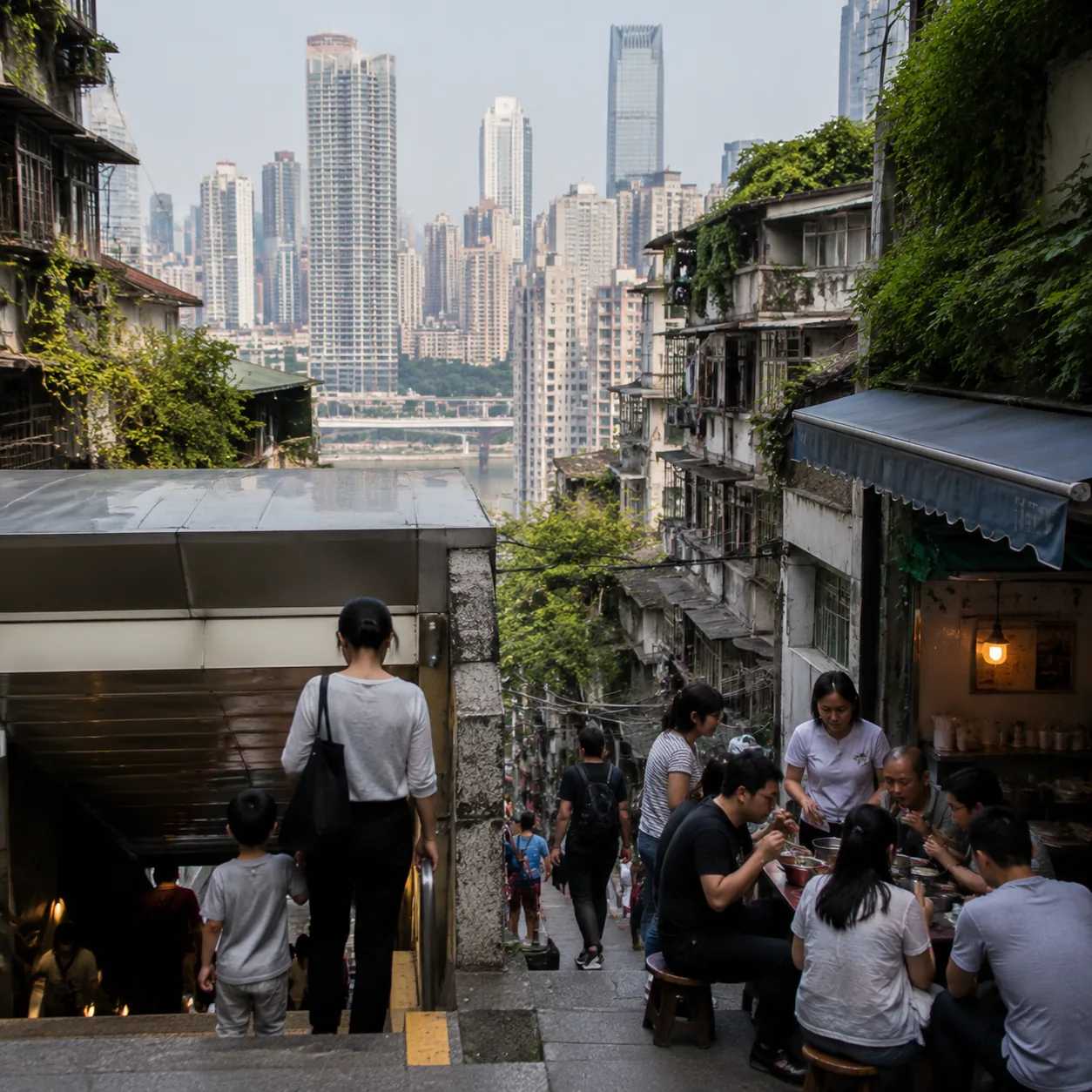
For Travel Notes, this category—things that still hold after repetition—is tremendously valuable. Ordinary travelers do not ultimately need the loudest recommendation. They need the most durable one. Once an outside creator stays long enough, they naturally filter out some places that work only for one photograph and leave behind elements closer to real travel intensity. A reported-format article should be reading that filtration back to the audience.
Chongqing’s Hardest Feature Is Not Complexity Itself, but How Easily That Complexity Gets Romanticized
Many public videos make Chongqing’s stacked structure look enchanting, and there is nothing wrong with that. The difficulty is that audiences then see only the romantic layer: bridges, slopes, towers, night, mist, hotpot, neon. Someone who has actually stayed longer has a better chance of showing the second layer as well: what those beautiful structures mean for bodily planning, which connected routes become exhausting, and which locations that appear visually close should not be forced into the same time block.
The writer believes this is the strongest reason longer-stay outside creators deserve to be translated into site articles. It is not that they praise more effectively than short-term visitors. It is that they are better positioned to translate beauty into movement. Once that translation happens, Chongqing stops being a spectacular city onto which outsiders project fantasy and becomes a concrete city that an ordinary traveler can enter step by step.
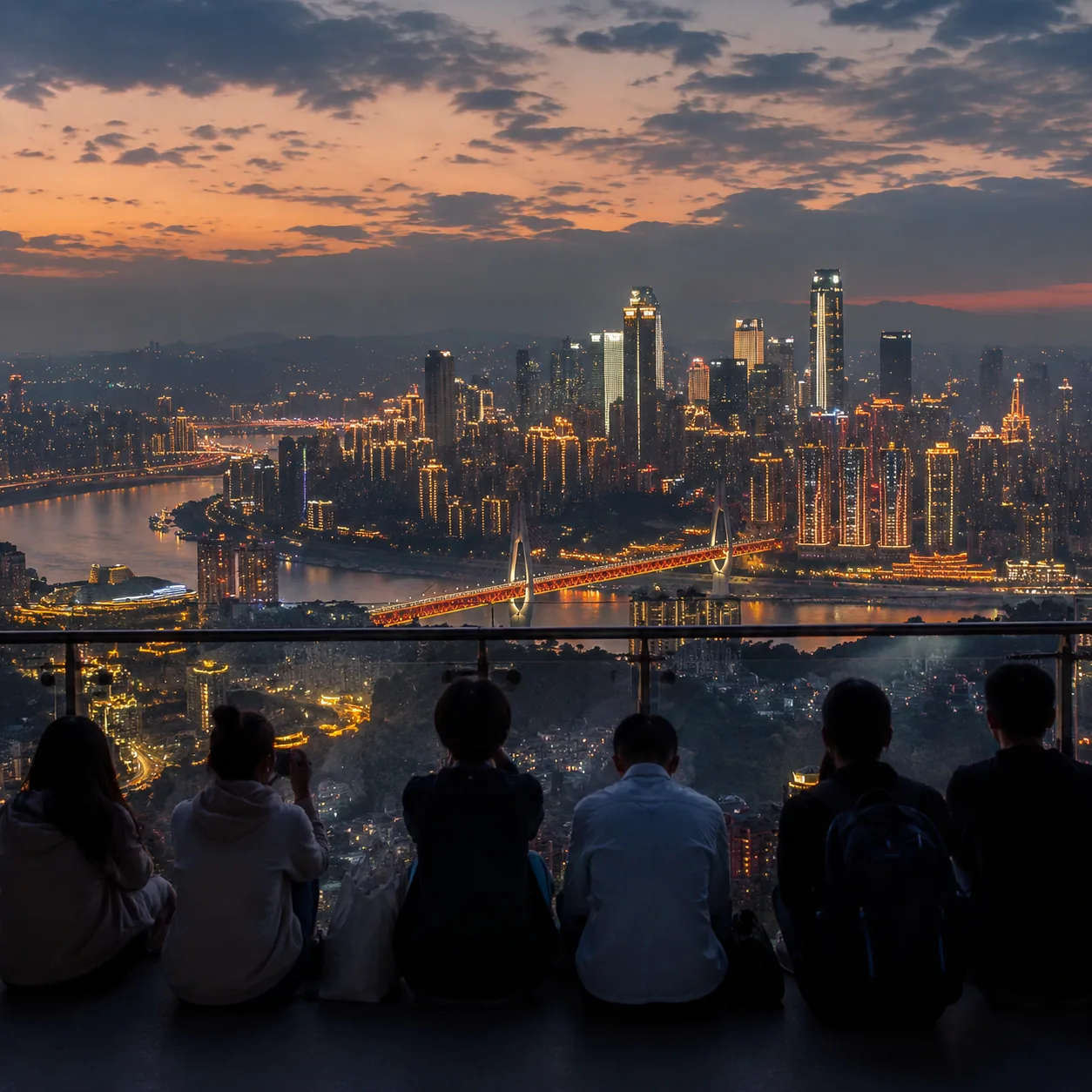
For Travel Notes, This Material Is Best Turned into a Slower Version of the Guide
If short-stay foreign creators are best used for writing first-impression routes, then longer-stay material is clearly better transformed into a slower version of the guide. It does not need to maximize attraction coverage. It is better suited to explaining which routes improve on a second walk, which districts deserve an afternoon stay, which night views should be kept for a moment when the body still has energy, and which older streets are best saved for when the mood has quieted. Written that way, the result is no longer a standard recommendation piece. It becomes something closer to a method article on how to live inside the city for a short while.
The next step of this material is easy to imagine. If outside creators become more willing to stay longer in Chinese cities, Travel Notes can continue the work by developing more articles on how to adapt during the first week, which districts are better for settling in first, and how a traveler route can slowly transition into a city route. For overseas readers, that would send a powerful new signal: China is not only worth seeing. It is worth inhabiting for a while.
Public Source Notes
- Pasta and Panda (Dav and J), “1 Month In Chongqing: China’s Real-Life Cyberpunk Megacity”
Public source used:
- Pasta and Panda (Dav and J), “1 Month In Chongqing: China’s Real-Life Cyberpunk Megacity”
- Only a very limited amount of public cover imagery is used for explanatory reporting, not for wholesale reproduction.