The Hardest Part of Writing Zhangjiajie Is Not How Cinematic the Peaks Look but How the Body Breathes Between Two Moments of Awe
Zhangjiajie enters foreign creator material with a built-in advantage. Towering stone pillars, mist, cable cars, glass bridges, and dramatic platforms are already strong enough to form instant memory one by one. For that very reason, public content about the area quickly slips into one familiar tone: it looks like special effects, a movie set, or a landscape that should not exist in the ordinary world. But if Travel Notes catches only that tone of amazement, the article soon begins spinning in place. What truly deserves to be broken down is how the transitions between these wonders should be arranged.
The real difficulty of Zhangjiajie has never been whether it is worth going. It is how not to turn oneself into a constant machine of high-intensity scenic reaction. For many first-time overseas readers, the issue is not a dislike of wonder, but a lack of awareness that when wonder density becomes too high, fatigue also arrives faster. The stronger the landscape, the more breathing space the route requires. That logic is exactly what a third-person reported format can explain well.
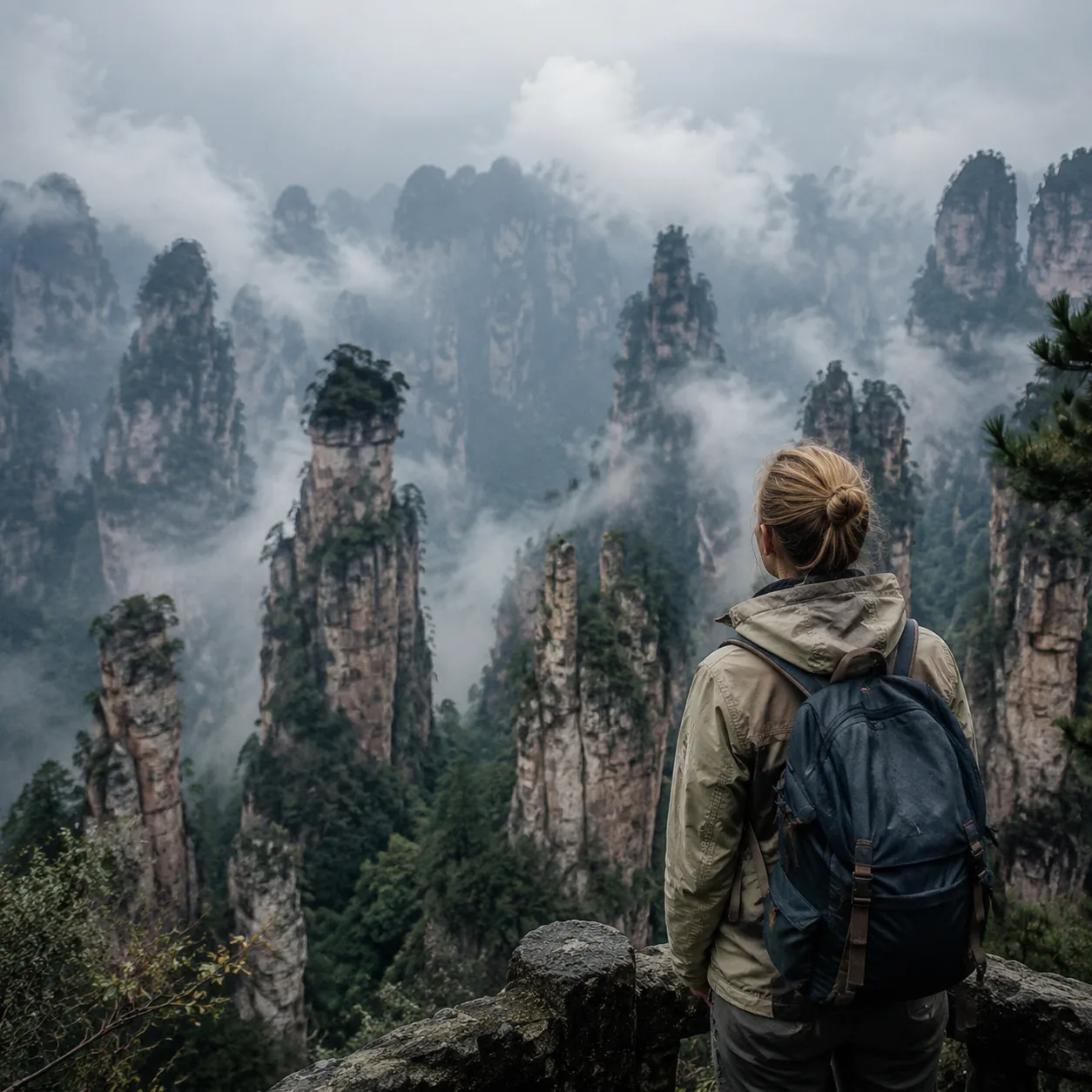
What Is Most Easily Missed in Foreign Creator Material Is That Wonders Do Not Connect Automatically
Many public videos cut Zhangjiajie into an almost frictionless sequence: one forest of peaks after another, one exclamation following the next, with barely any visible gaps. But from the standpoint of a real traveler, that smoothness is mostly narrative smoothness rather than bodily smoothness. Cable-car ascents and descents, the walking distance between platforms, waiting time, backtracking, and shifts between zones all shape whether a person remembers “I truly saw a lot” or “I spent the whole time rushing toward the next more dramatic point.”
In other words, a useful article should not stop at which viewpoint is the most spectacular. It should ask how spectacle connects to spectacle. When should the route push emotional intensity fully at the first major viewpoint, and when should part of the anticipation be intentionally saved for evening? When does a quieter walkway actually help the previous summit register more clearly? Those are the questions that make a wonder route durable rather than exhausting.
What Most Needs Clarifying in Zhangjiajie Is Not Whether It Looks Like Avatar, but How to Keep Every View from Demanding the Same Energy
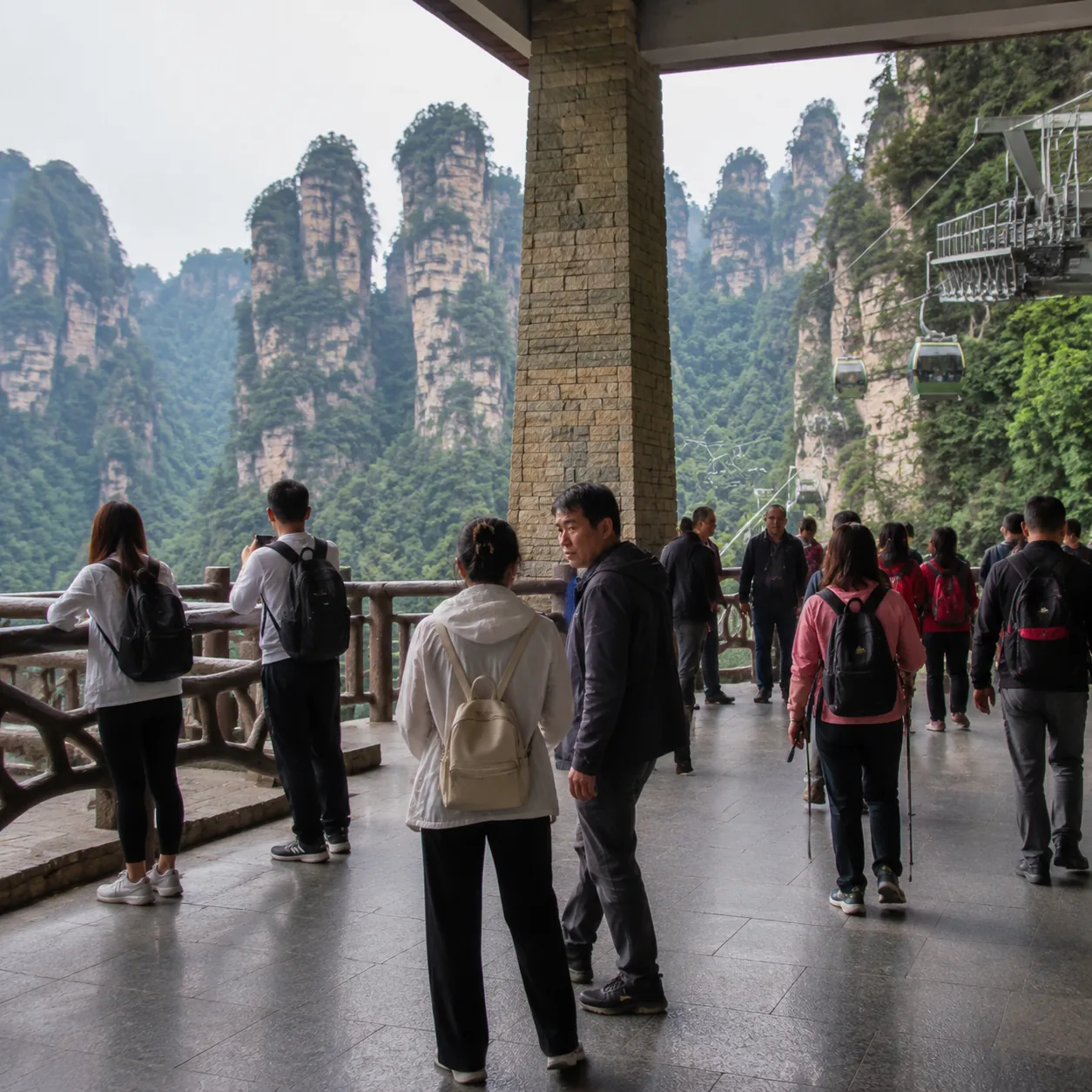
Foreign content often reaches for references like Avatar or CGI when describing Zhangjiajie, which is understandable because such comparisons trigger quick recognition in audiences. But for a reader who may actually come to China, that comparison needs to be made only once. What is needed afterward is another kind of explanation: when every peak feels like the kind of peak one ought to stop for, how should attention and physical energy be distributed? Which view deserves a longer stay, which should leave only one clean impression, and which path should never be forced under the harshest sun? Those choices determine the actual quality of the trip.
The writer believes this is exactly the layer Travel Notes should add when transforming foreign creator material about Zhangjiajie. The point is not to import their amazement and stop there, but to explain how that amazement should be sequenced so that it does not cancel itself out. A mature wonder route is not one in which every minute tries to become the climax. It is one that knows when to lift the traveler upward and when to let the traveler recover breath first.
For a First-Time Visitor to China, Zhangjiajie Need Not Be Delayed, but It Should Not Be Overpacked
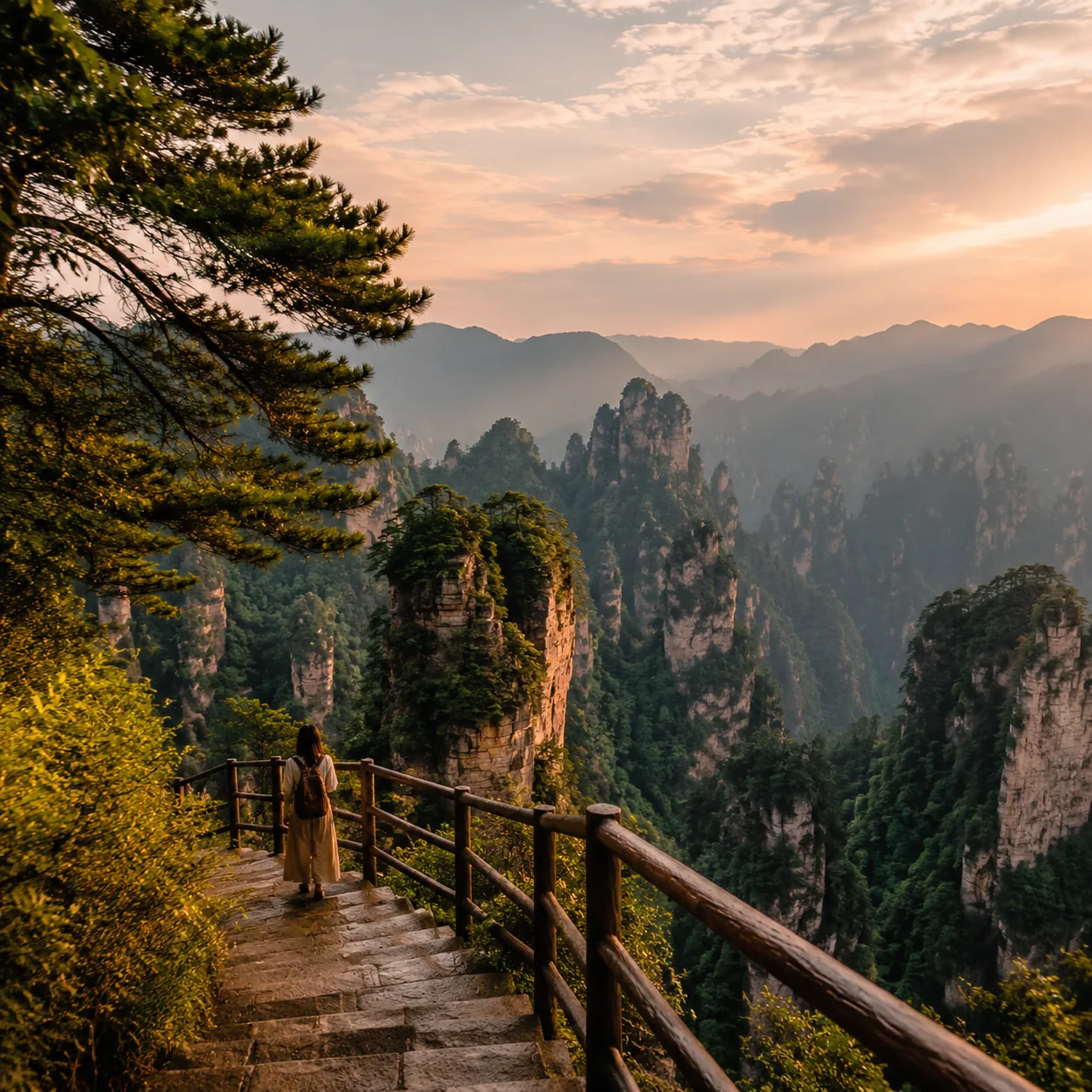
Many people assume a place like Zhangjiajie must either appear first—see the most intense thing immediately—or appear late, after a traveler has already adapted to China. The writer would argue that position is not the main problem. Density is. Zhangjiajie can absolutely appear early in a China itinerary, but only if no one tries to turn it into two consecutive days of relentless impact. With enough buffer, a slower evening segment, and a clear understanding of how cable-car movement and walking interact physically, it can become the very first place that sets a high standard for China’s natural landscapes.
The task of a reported-format article here is to explain two truths at once: that one can go early, but one should not overload the route. Once those two ideas are stated together, readers are less likely to misjudge the line because the video was too spectacular, and less likely to abandon the place because they fear they cannot handle it. A truly useful China landscape article should not only inspire desire. It should help readers avoid mistakes caused by desire that has not yet been organized.
Public Source Notes
Public source note:
- Rewritten from publicly visible foreign-creator angles on Zhangjiajie and China wonder routes, focusing on how spectacle is sequenced into a durable itinerary.
- No wholesale reproduction is used; the emphasis is on route rhythm and transition logic.