Spellbound at First Bite: A Stranger's Descent into Chengdu's Heat
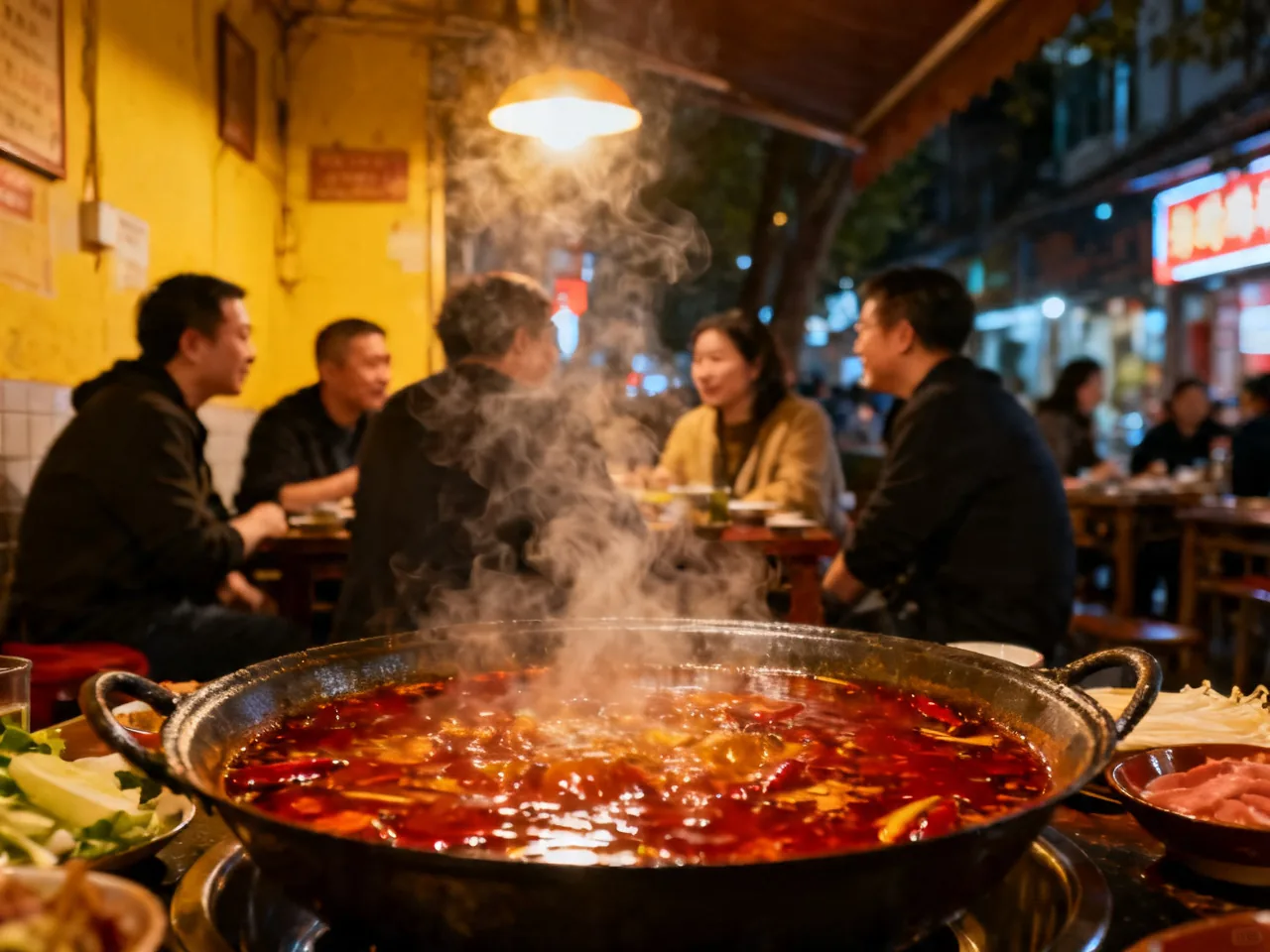
It was a rainy November evening in 2023 when I dragged my suitcase into an unmarked hole-in-the-wall near Yulin Road in Chengdu. The owner was stirring a wok of rolling red oil with a large iron ladle, the surface thick with dried chilies and Sichuan peppercorns, the aroma hitting me like a wall. I sat down at a greasy wooden table and ordered a plate of fuqi feipian — husband-and-wife beef offal — in my broken Mandarin. I had no idea that what I was about to experience would permanently rewire my understanding of what “delicious” means.
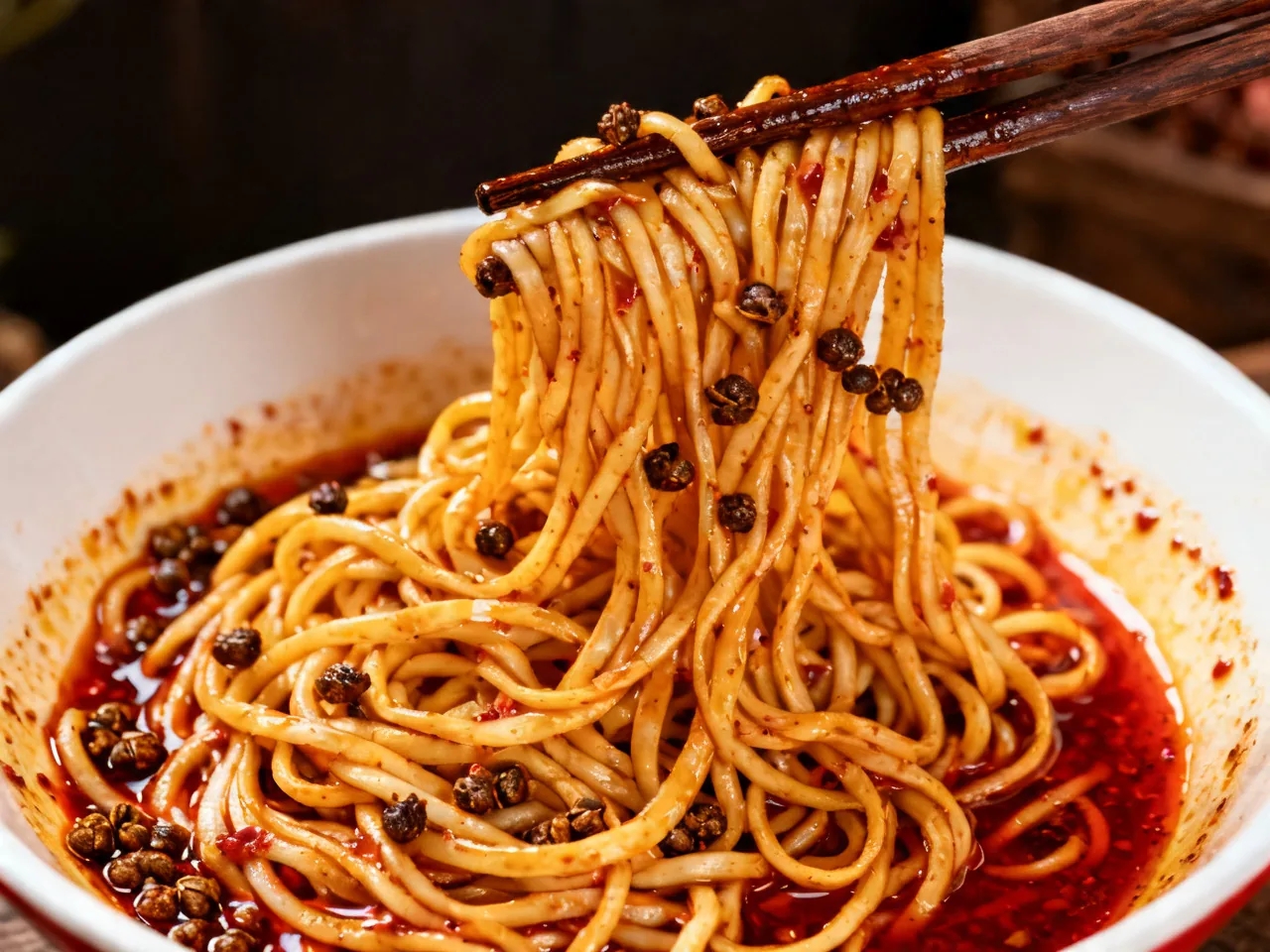
Sichuan people don’t just call it “spicy” — they call it “málà,” two characters that together mean something far more complex than simple heat. “Là” is the one-dimensional burn, the direct assault of capsaicin on your oral nerves. “Má” is the strange electric numbness from Sichuan peppercorns, like tiny currents dancing on the tip of your tongue. Combined, they don’t produce pain so much as a near-psychedelic sensory experience — numbness and stimulation happening simultaneously, impossible to stop once started.
When the plate of fuqi feipian arrived, it was deep crimson and glossy — thin-sliced beef and offal arranged neatly, drenched in thick red oil, scattered with sesame seeds and crushed peanuts. I picked up a slice, put it in my mouth: first came the sesame fragrance, then the chewy resistance of the beef, then — a wave of málà surged up from the back of my tongue, wave after wave, unstoppable. I drank some tea. Useless. I ate a spoonful of plain rice, which helped briefly — and then I reached for another slice.
The málà universe of Chengdu is far more complex than outsiders imagine. Hot pot alone splits into clear-oil pots, yin-yang pots, beef-tallow pots, and rapeseed-oil pots, each with a base recipe that is the proprietor’s most guarded secret. During my ten days in Chengdu, I tracked down a master who had been making hot pot base for thirty years — surnamed Wang, with a small workshop near Cuqiao that he doesn’t open to the public.
Master Wang’s workshop had an entire wall of sealed ceramic jars containing dried chilies from different regions and different harvests. He told me that authentic Chengdu hot pot base requires at least twenty spices, must be stir-fried for no less than forty minutes, and that controlling the heat is entirely a matter of feel and experience. “A lot of places use machines now. The flavor suffers.” He said this with the particular pride and sorrow of an old craftsman.
Beyond hot pot, Chengdu’s málà territory includes: bō bō jī (skewered chicken in chili oil), mouthwatering chicken, spicy rabbit heads, chuàn chuàn xiāng (skewer hot pot), cold-pot fish… Each dish has its own málà logic. The heat in bō bō jī is gentle — chicken soaked in red oil carries a faint sweetness. Spicy rabbit heads are violent — you tear them apart with your hands, the fragrance of chilies and peppercorns seeping directly into the bone crevices.
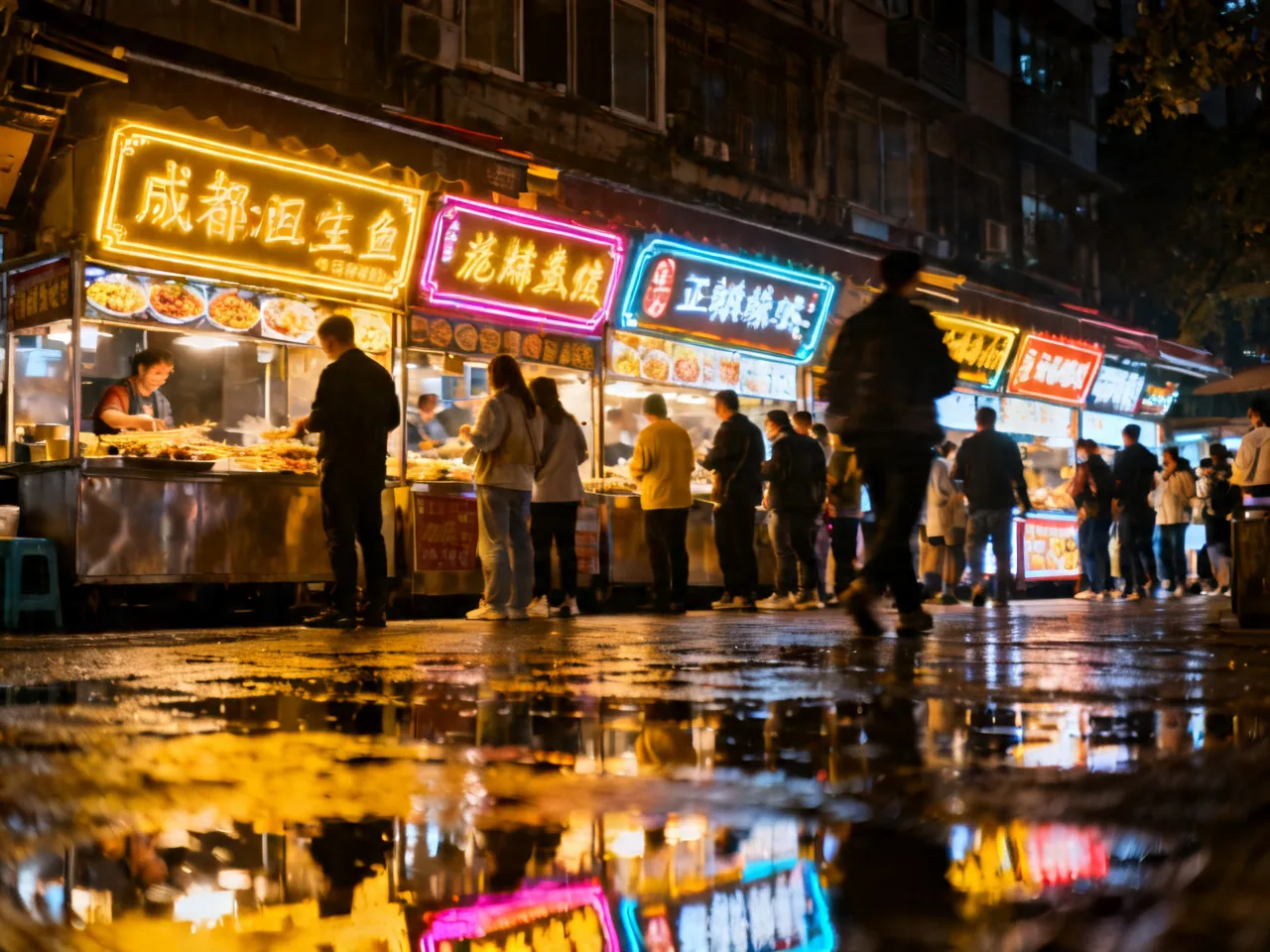
Near Kuanzhai Alley, I watched a middle-aged man in a suit sitting alone in a corner, a basin of spicy rabbit heads in front of him, hands covered in red oil, expression utterly focused — as if handling a matter of the utmost importance. The server nearby was unfazed, refilling his tea and handing him a few napkins without a word. That image made me feel that málà in Chengdu is more than a flavor — it’s a life philosophy: total commitment, full presence, indifference to how you look doing it.
On my last night in Chengdu, I went back to that unmarked restaurant. The owner recognized me and smiled: “Getting used to the spice?” I said yes. She nodded and said something I still think about: “First-timers always say it’s too spicy. Second visit, they say it’s just right. Third visit, they say it’s not spicy enough.”
I think that’s the magic of málà. It’s not conquering you. It’s changing you.
Related Reads
- The 8 Great Cuisines of China
- Street Steam: The Real Pulse of Chinese Cities
- The Peppercorn Dossier: Sichuan’s Flavor Map Through a Botanist’s Eyes
- More Than a Dish: Peking Duck as Beijing’s Letter to the World
- 10-Day East China Five-City Loop