In Qingdao, the Sea Does Not Conquer You at Once; It First Draws You Through Slopes and Streets
A little after three in the afternoon, I stepped out from a collection space, and the glass door had barely closed behind me when the wind pressed itself against my face. At the foot of the steps stood a young couple with small rolling suitcases. The man was checking a map; the woman looked up at a strip of bright sea in the distance and then down at the slope beneath her feet, as if she could not quite understand why the water seemed so close while the road refused to go straight toward it. The attendant by the entrance lowered the volume on a small radio and offered one sentence: you cannot enter Qingdao with the logic of direct arrival; follow the slope it gives you first.
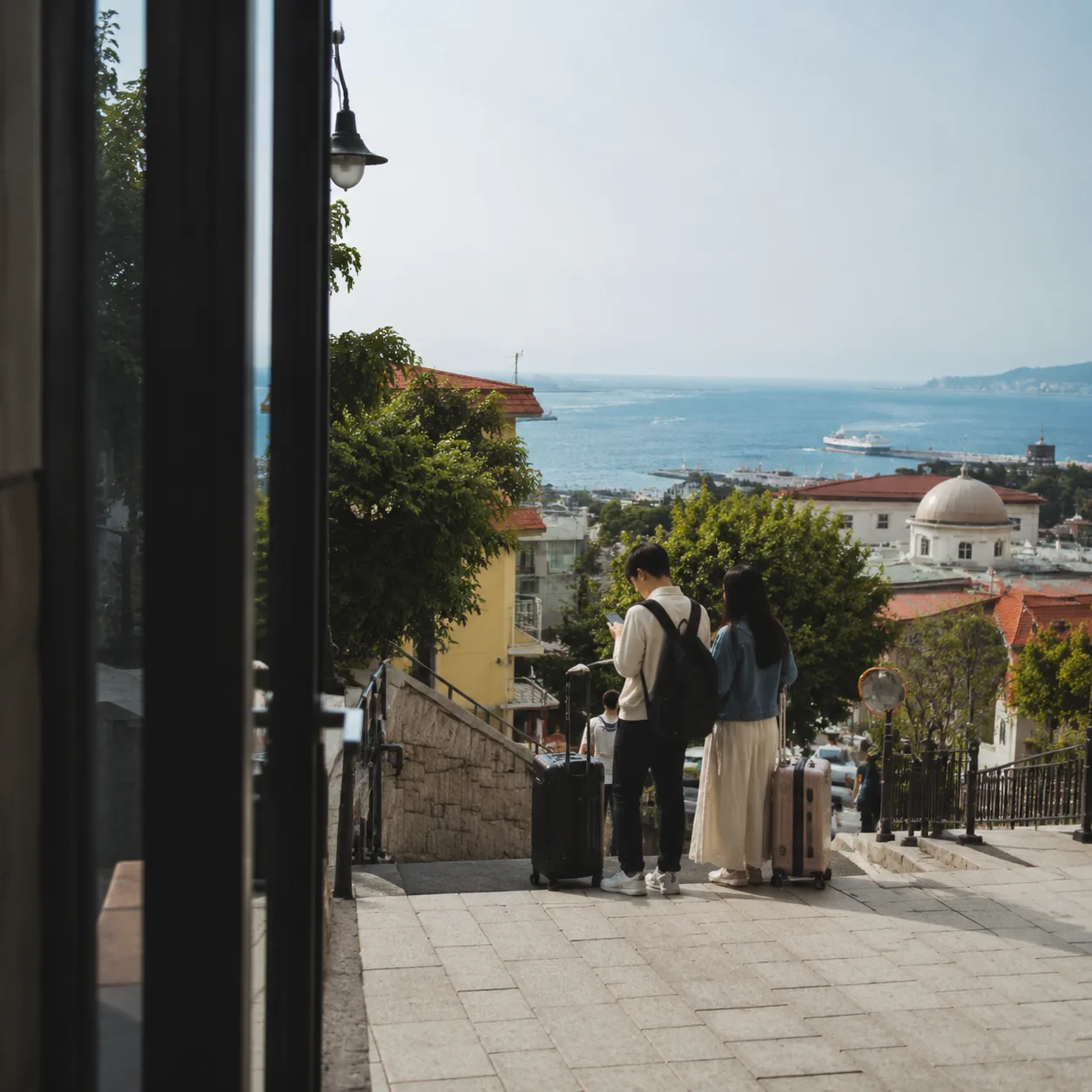
That sentence stayed with me for a long time, because the easiest thing to misread in Qingdao is precisely the idea that “the sea is already ahead.” The moment people see a coastal city, they assume they have understood the core of the route: walk toward the water, stop by the water, finish along the water. On the surface that sounds reasonable. But after actually walking Qingdao, one realizes that the city does not stand on one straight waterfront line at all. It reveals itself layer by layer: first a slope, then a turn, then a district, and only then a little wind, a little openness, a little sea. If the method of entry is wrong, even the best scenery later becomes flat.
This is why I have increasingly felt that what Qingdao deserves in retrospect is not any single landmark but what might be called its “logic of scenic transition.” The scenic surprise is not merely the sudden strip of water, the red roofs that light up after one turn, or the hilltop where the view opens all at once. More important is why these things arrive at that particular moment, why they should not appear earlier, and why their force would weaken if they were given too soon. If a city hands over its most beautiful material too early, the route collapses afterward. Qingdao does not do that. It always holds something back.
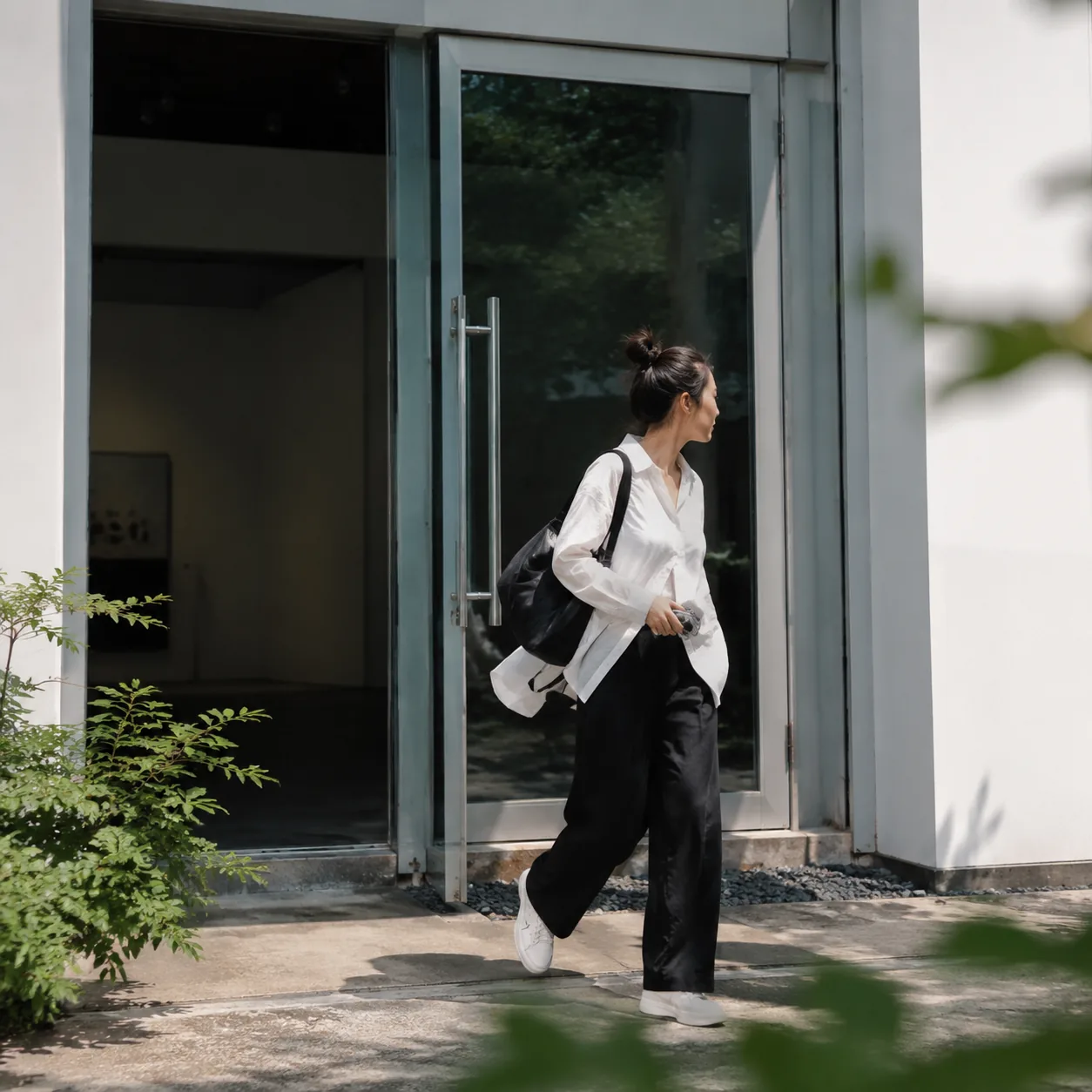
From the perspective of urban entry, this restraint is highly sophisticated. It forces one to accept the in-between. You cannot land and recognize only the sea, nor can you skip the older district merely because it looks ordinary at first glance. Many of the things that truly determine Qingdao’s character are hidden in these sections of “not yet fully arrived”: the direction of wind on a slope, the density of tree shadow against a wall, the warmth leaking from a bakery or convenience store that quietly slows the body, the reason pedestrians suddenly decelerate at one particular corner. None of these are spectacular in themselves, yet they decide whether the sea later moves you or merely looks pretty.
Many visitors encountering China for the first time naturally treat city routes as task lists. Qingdao is particularly good at correcting that instinct. Its best entry method is not organized by the rank of landmarks, but by the way the body gradually adapts to the scale of the city. First gather yourself in a museum or a quieter street segment. Then let your steps adapt to the slope. Then let your eyes get used to the distant brightness of the water. Only after that do you really give yourself to the waterfront. This is not a detour; it is a way to avoid reducing the entire city to a flat postcard.
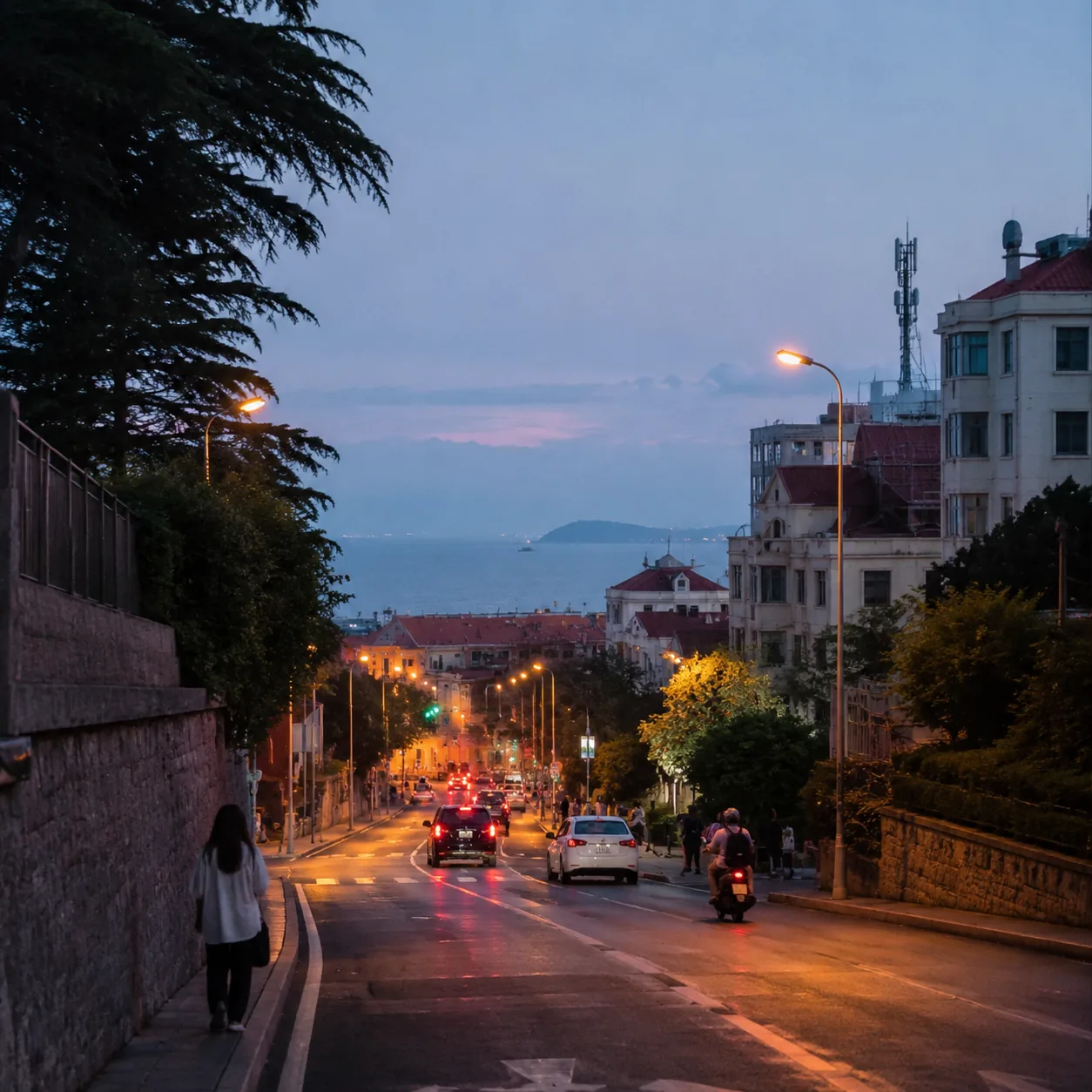
I also understand more and more why some of Qingdao’s most beautiful places, though close to the sea, do not rush to put the sea at the center. The moment everything is aimed at the water too early, the city’s other layers thin out at once. Old streets, sloped ground, wind corridors, and the changing scale between buildings all serve as essential preparation before the waterfront. They are not accessories to the sea. They are the reason the sea becomes worth reaching. That is precisely why the most mature way to walk Qingdao is never “get to the water as fast as possible,” but “by the time you reach the water, the city has already taught you how to look.”
This logic also changes the retrospective directly. When thinking back on a day’s route, the useful question is not “how many places did I go to,” but “which transitional sections helped me read the city properly.” It may be the short slope after the museum, or a stretch of pavement along an older street that looked less impressive at first, or the part just before the sea where the wind suddenly strengthened. These may not become the first photograph anyone posts, yet they often become the memory that remains longest in the body.
By evening I finally reached the sea. The wind was straighter and cooler than it had been in the afternoon. A few people stood quietly by the railing, none of them particularly loud. Behind them, the district lights were coming on one by one, and the sloped road looked as though it had been gently sewn back into the city. That was when I fully understood that Qingdao’s brilliance does not lie in the sea alone, but in knowing that the sea must not be given too early. When I lifted my hands from the railing and turned back to the slope I had just walked down, it felt suddenly clear that what would remain with me was not “I finally reached the water,” but “the act of entering this city had been part of the answer all along.”