On a Cold Haihe Evening, a Small Eatery Settled Me into Tianjin
One Ordinary Dinner in Tianjin Felt More Real Than Any Famous Dish
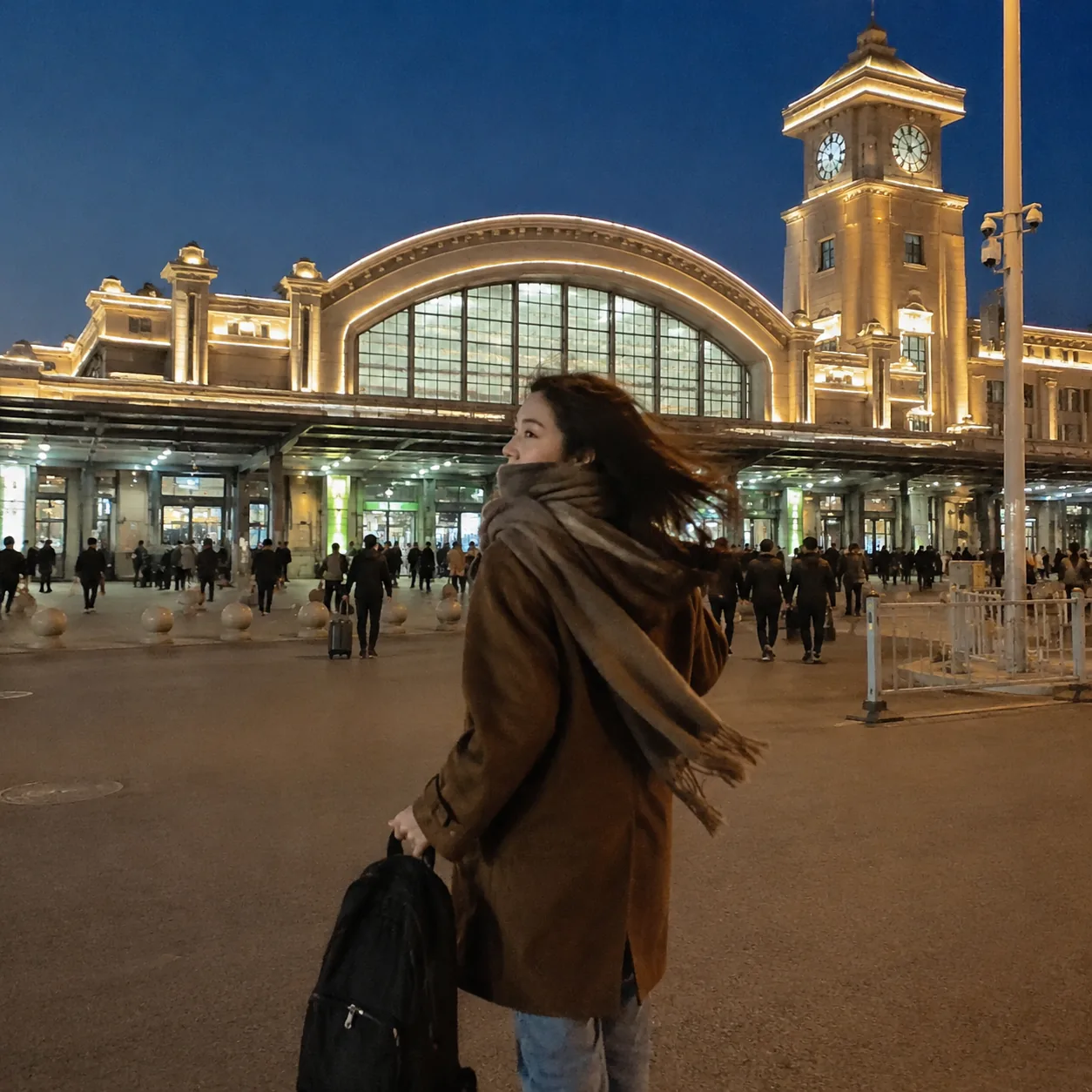
At 6:15 in the evening on November 6, 2024, I came out of Tianjin Railway Station with a black backpack in my hand, my scarf blown against my face by the wind from the Haihe River. The sky was not completely dark yet, but the bridge lights were already on. Taxis lined up by the road, and drivers rolled down windows to call to passengers. I had come from Spain, and it was my first time in Tianjin. My phone held several restaurants recommended again and again, but I did not go looking for those names right away. When I walked onto a street not far from my hotel, I saw steam rising from the doorway of a small eatery. A handwritten menu was taped to the glass door, and there were only six or seven tables inside. The owner, wearing a dark sweater, was carrying a plate of freshly fried shredded potatoes to the table by the window, moving briskly while joking with the neighboring table in a Tianjin accent. I stopped and decided to entrust dinner to this ordinary doorway.
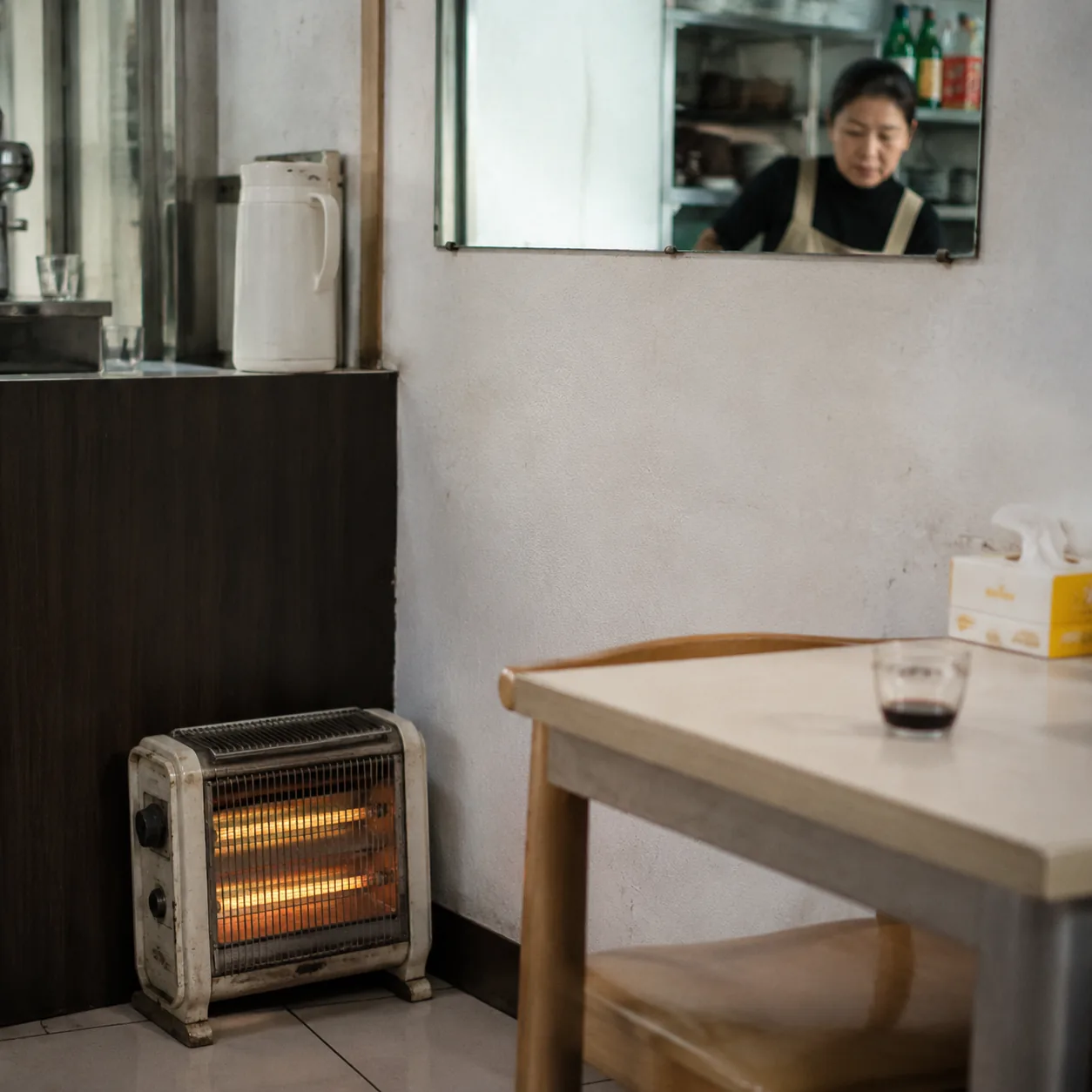
When I pushed the door open, the plastic curtain brushed my shoulder and brought in a gust of cold air. The owner’s wife stood behind the counter, looked up at me, and asked how many people. I said one, and she immediately pointed to a small table against the wall, saying it was warmer there and that I should not sit by the door. Only after sitting down did I realize the warmth came from a small electric heater near my feet. Its casing was a little old, but it made the space under the table comfortable. The menu on the wall listed dishes such as pot-fried pork tenderloin, shrimp with gluten, laobao san, vinegar cabbage, rice, and dough-drop soup. Beside it, another sheet said that jianbing guozi was available tonight, not the morning-stall version, but something the owner’s wife made for regulars when they craved it. I had thought a Tianjin dinner should begin with a signature dish, but this menu felt like a family note: it first asked whether you were cold, and then whether you were hungry.
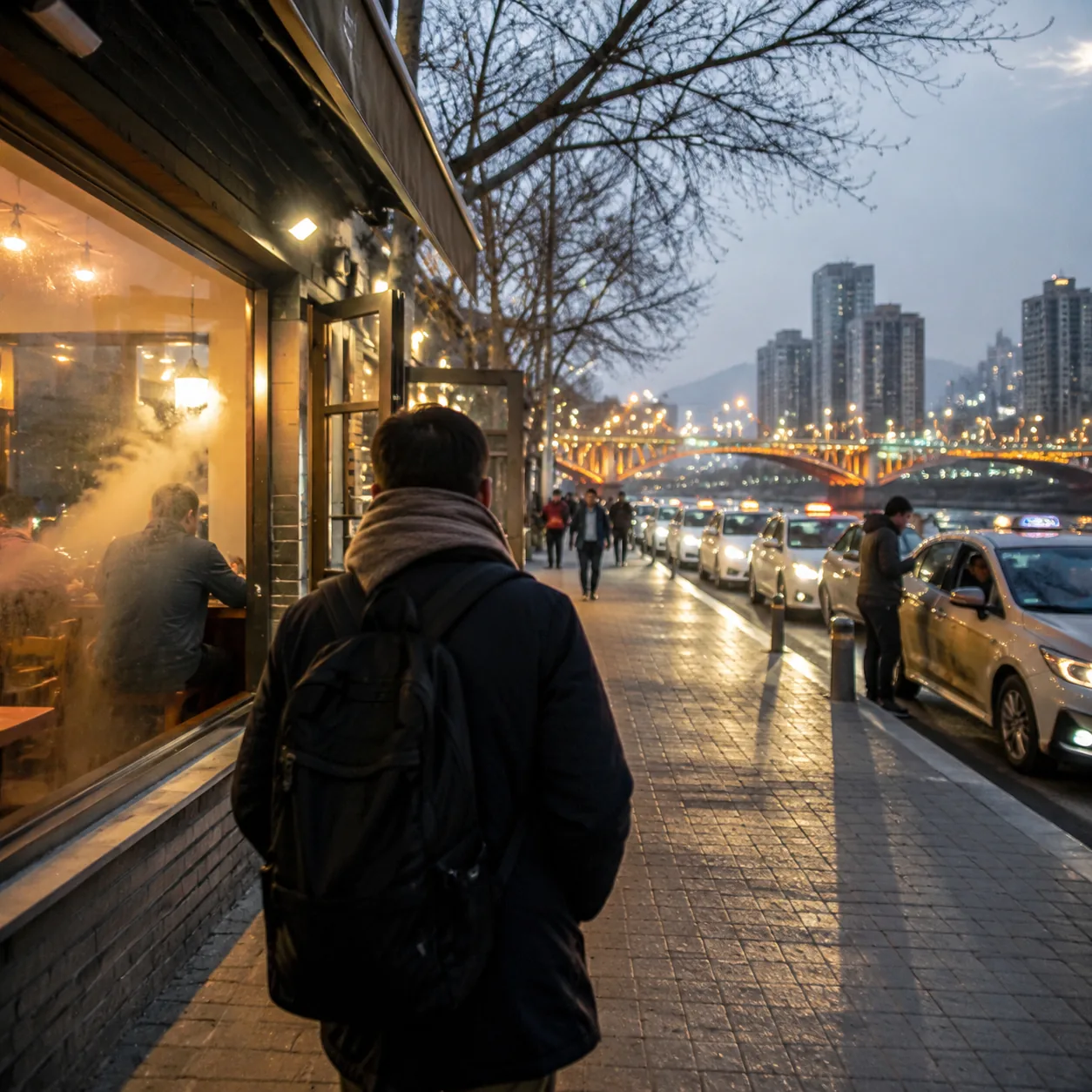
I ordered vinegar cabbage and a bowl of dough-drop soup, then hesitated and asked whether I could have half a jianbing guozi. The owner’s wife laughed and said half was hard to spread on the griddle, but she could make a smaller one for me. She did not repeat the dish names like a waiter; instead she called toward the kitchen and explained both my taste and portion size at once. Someone answered from inside, and the wok soon began to ring. The sound of oil meeting cabbage was crisp, and the aroma of vinegar rushed out a few seconds later, drifting through the eatery with the steam. Two uncles sitting diagonally across from me were drinking beer. One heard that my accent was unfamiliar, turned around, and asked where I was from. I said Spain. He nodded, as if hearing of a place very far away but not requiring surprise, and said, “Then you came to the right place today. On a cold day you need something hot.”
The bowl of dough-drop soup arrived first, and the rim was too hot for me to hold immediately. Inside were tomatoes, ribbons of egg, finely chopped greens, and little dough lumps of uneven size. It did not exist to look good in photographs; its colors were plain and its steam was honest. I took the first spoonful, burned my tongue slightly, and then tasted the acidity of tomato and the soft chew of the dough. When the owner passed by and saw me blowing on the soup, he smiled and told me to take it slowly. The final sound of his Tianjin speech rose upward, like a small hook hanging at the end of the sentence. I did not understand every word, but I could hear a kind of care that did not overstate politeness. It did not make anyone awkward; it simply moved the distance between stranger and local a little closer.
When the vinegar cabbage arrived, a little sheen of oil remained along the edge of the plate. The cabbage stems stayed crisp, the leaves were full of sour fragrance, and minced garlic clung to the corners. After a few bites, I realized the goodness of the dish was not in being unusual but in being exact. The heat was exact, the acidity exact, the saltiness exact, and the portion exact, just enough to revive a cold evening that had made my body stiff. At the neighboring table, a family of three ordered pot-fried pork tenderloin and rice. The child arranged chopsticks into two train tracks and was gently tapped on the back of the hand by his mother. The father served the child food while discussing with the owner whether the temperature would drop tomorrow. No travel guide would record such conversation, but it made me feel that I had sat down inside Tianjin’s dinner hour, not inside a restaurant waiting to be rated.
The small jianbing guozi arrived when I was halfway through the meal. The owner’s wife said she had used a little less sauce because she was afraid it might taste too salty for my first time, and she had added scallions because they made it fragrant. The thin pancake wrapped around the crispy fried cracker, and its edge still held the crunch of having just left the griddle. It did not look quite like the neat photos I had seen online. Its shape was a little casual, and the paper bag had no pretty design, but when I bit into it, egg, flour aroma, sauce, and the shattering sound of the cracker all appeared together. The uncle beside me saw that I was eating cautiously and could not help laughing. He said this was not something to eat too elegantly; I should take big bites while it was hot. I did as he said, and the sauce almost touched my glove. He laughed louder, as if only then had I eaten it correctly.
The television in the eatery was on, but not loud. A local news program was playing on the screen. After the news, it switched to a xiangsheng comedy clip, and the two performers delivered lines one after another. Several people in the shop laughed along. The laughter was not explosive; it was familiar, like hearing a relative tell an old joke again. The owner wiped tables while adding a line, and the uncle at the next table followed with two comments. I understood only part of it, but the tone carried me into laughter. At that moment, Tianjin humor was not a stage performance. It was a seasoning casually passed along beside the dinner table. It did not need the joke explained; it needed only the right pause, a rising final tone, and a look everyone understood.
Halfway through the meal, a young delivery rider on an electric bike came in to pick up food. He took off his helmet and tucked it under his arm, first telling the owner’s wife that traffic had been a bit jammed, then asking whether his order was ready. She said it needed two more minutes and told him to sit and warm up first. He did not fully sit down; he only leaned against a small stool near the door and lit up his phone screen to send a voice message to a coworker: “I’ll wait here for a moment and leave right away.” The sentence was ordinary, yet it brought another layer of the city’s night inside. Some people slowly ate in the shop, while others waited to carry hot meals away. Some treated dinner as a place to pause, and others treated dinner as the starting point of another stretch of work. The small eatery’s door opened and closed, letting cold wind and food aroma take turns entering.
I remembered walking along the Haihe River in the afternoon, seeing many tourists holding phones to photograph bridges and buildings, while local people walked behind them carrying groceries. At that moment I had not known which side I should look at. During this dinner, I understood that Tianjin was not only on riverbanks, in old foreign-style buildings, or in famous restaurants. It was also in the steam of a bowl of dough-drop soup, in the owner’s wife making the sauce lighter for a stranger, and in the neighboring table’s complaints about the weather. When traveling, it is easy to be pulled along by the idea of what one must eat, as if missing a dish means missing the city. But this little eatery did not help me complete a checklist. It made me stop outside the checklist and see how people place appetite, work, cold weather, and jokes on the same table every day.
The owner came over and asked whether the food suited my taste. I said it was very good, especially the soup. He did not immediately say thank you; he looked seriously at the bowl and said I still had some left and should not waste it, because it would not taste good once cold. I felt a little embarrassed and quickly drank a few more spoonfuls. He smiled and carried the empty plate toward the kitchen. If such directness had happened elsewhere, I might have felt rushed, but here it felt like a reminder between familiar people. I was not treated as a foreign tourist needing special care, nor as a completely invisible passerby, but as a person eating in the shop. The owner did not care whether I would write a review; he cared whether the soup had been finished while it was hot.
When I paid, the owner’s wife tapped the calculator several times and charged a few yuan less for the smaller jianbing guozi. She said she had made it smaller, so she could not count it as a full portion. I insisted it was fine, but she waved her hand and said people in Tianjin had to do business honestly. The uncle nearby cut in and said she could simply tell me to come back next time. She laughed and replied, “He came from abroad. Who knows when next time will be?” That sentence moved me. In travel, “next time” is often light, like a polite phrase. But when it came from behind the counter of a small eatery, it suddenly gained weight. It admitted that I might not return soon, yet still treated this meal with seriousness.
When I walked out of the eatery, the wind on the street had grown colder. The glass door closed behind me, turning the laughter inside into a muffled cloud. Across the street, a fruit shop stacked oranges into small hills, and in the hair salon next door, someone had just had their hair washed, wet strands resting on a towel. An elderly person slowly passed with a thermal food container, and two middle school students shared a stick of candied hawthorn under a streetlamp. The street had no landmark that I had to photograph, but I walked slowly because the dinner I had just eaten lit up all the surrounding details. I could smell cooking smoke, roasted sweet potatoes, the damp cold road, and the sweetness of the fruit stand. They mixed together, not prettily, but truthfully.
On the way back to the hotel, I passed a small window that was still open, where someone was making jianbing guozi. Batter was spread across the iron griddle with a wooden scraper, an egg was cracked on top, scallions were scattered, and the movements were faster than I had imagined. There were not many people in line, but they were quiet. A young mother pulled her child’s hat up, and a man in a suit tucked his briefcase under his arm to free a hand for payment. I was already full, yet I stood beside the window and watched for a while. During the day I had treated jianbing guozi as a symbol of Tianjin. At night I discovered it was also calories for people on the move, comfort after work, and fragrance in a child’s hand. Only after a symbol is bitten open does life appear inside.
The next day I went to several well-known places as planned and ate dishes that had been recommended many times. They were certainly good, with clean environments, careful plating, and thoughtful service. Yet I found myself comparing them with the little eatery from the previous night. Those famous dishes were like clear answers, while that ordinary dinner was like a question slowly unfolding: why the owner remembered that regular customers wanted less chili, why neighboring tables could naturally join a conversation, and why a bowl of soup could feel more reassuring than beautiful tableware. Travel is not only the search for the best flavor. Sometimes it is the search for how people live behind that flavor. The part of the answer Tianjin gave me was not under the brightest signboard, but at a small table against the wall, beside an old electric heater, and inside a bowl of soup that was not wasted.
On the morning before leaving Tianjin, I walked back to that street, but the eatery had not opened yet. The rolling shutter was down, and several boxes of cabbage and a bag of flour were stacked at the entrance, as if dinner were still asleep. I stood there for a few seconds and sent a message to a friend, saying that if they came to Tianjin in the future, they should not only chase famous restaurants but should leave one dinner for an ordinary street corner. After sending it, I put my phone away and did not take a photo. That shop no longer needed to become photographic proof for me. It had become a memory of temperature: a plastic curtain brushing my shoulder, an electric heater warming my shoe soles, Tianjin accents turning inside wok steam, and a mouthful of hot soup slowly settling a strange evening into place.
When the train started moving, I watched the platform outside slowly slide backward. Someone in the carriage opened a breakfast bag, and the fragrance of scallions and flour drifted over briefly. I thought of the owner’s wife saying that business should be honest, and I thought of the uncle teaching me to take big bites of jianbing guozi. Tianjin did not welcome me with a luxurious banquet. It invited me to sit down through an ordinary dinner, to listen to people talk, to watch people come and go, and to learn to finish hot soup. For a foreigner visiting for the first time, that felt more real than any enlarged signboard. A signboard tells you where something is famous; an ordinary dinner tells you how a city cares for its stomach, its mouth, and its mood at night.