A Small Red-Sign Eatery in Yinchuan Offered No Fancy Presentation, Yet It Caught My Hunger After the Desert Wind
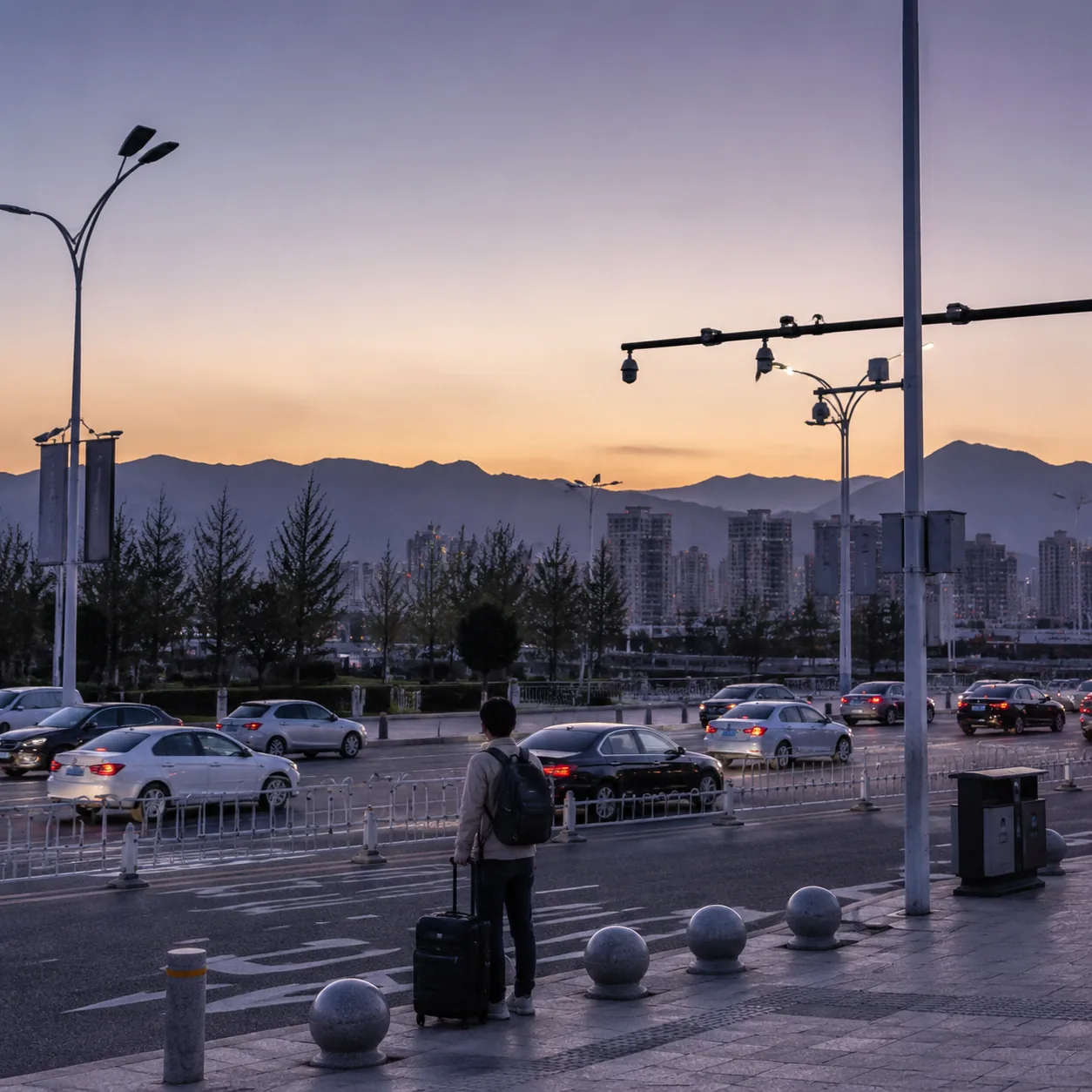
When I arrived in Yinchuan, the sky had slowly changed from pale blue to gray-purple. The airport bus entered the city, and outside the window the shadows of trees were pressed low by the wind, while the Helan Mountains lay across the horizon like a quiet dark line. I come from Seville, Spain, and before departure I had saved many restaurants on my phone: hand-grabbed lamb, lamb offal soup, hui snacks, spicy paste hotpot. Each name made me feel I had to arrange my first dinner carefully. But after getting off the bus, the wind came through the street corner with the dry coldness of a northwestern night, and I suddenly did not want to cross half the city to search for the “most representative” thing. I only wanted to find a small place with hot soup, rice, and people eating a normal dinner, so my body could first land from the journey.
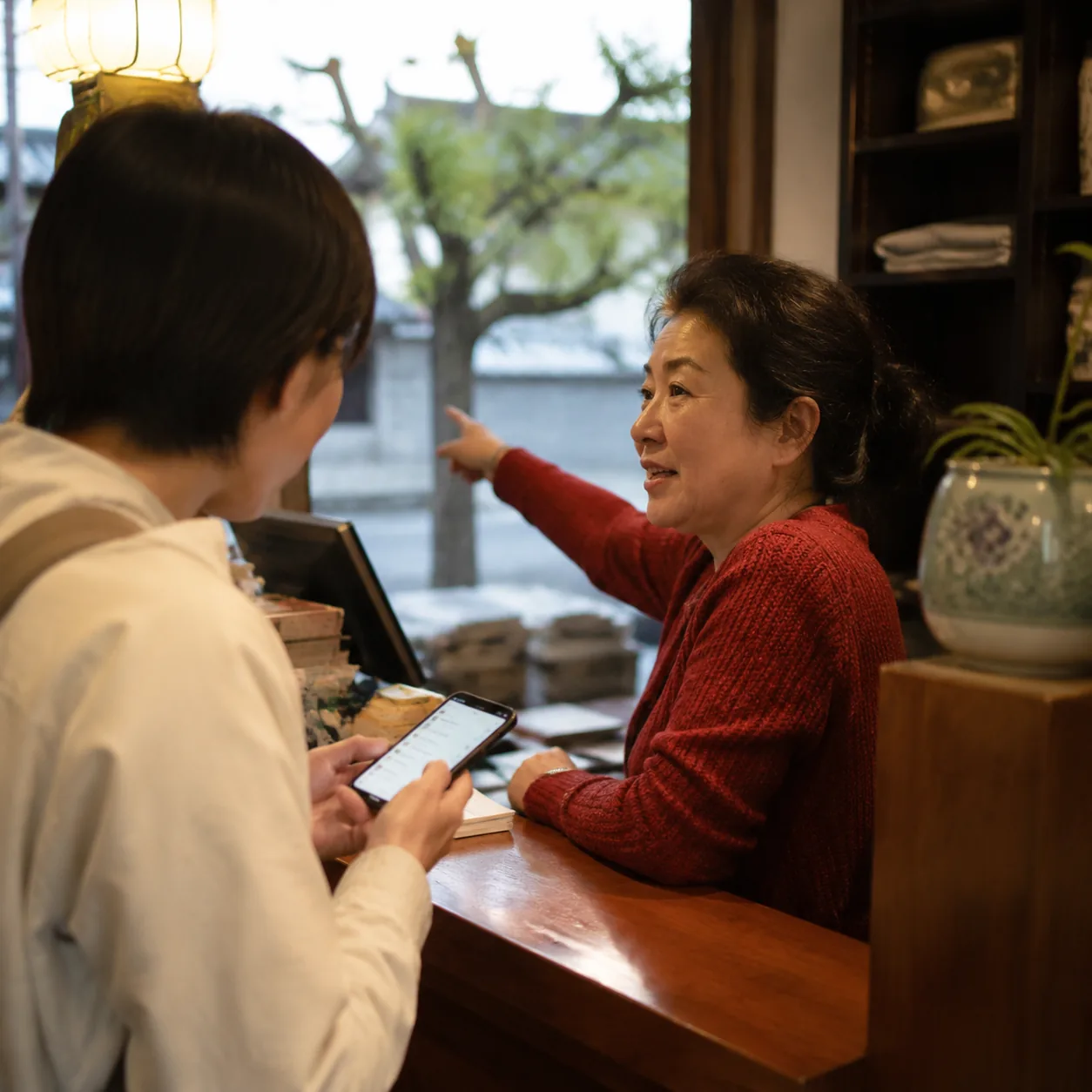
My guesthouse was on a quiet street in the old city. The woman at the front desk, whose surname was Ma, wore a dark red sweater. While helping me check in, she saw that I was still carrying a large bag and asked whether I had eaten. I showed her the saved list on my phone. She smiled and shook her head, saying those places were all fine, but that I should not make myself too tired tonight. She pointed out the window. “Walk one intersection ahead. On the right there’s a small restaurant where people nearby often go after work. The lamb soup is hot, and the stir-fried dishes are reliable.” I asked whether it had a special signature dish. She thought for a moment and said there was no plating made especially for photos, but the steamed buns were good and the soup did not cheat people. The answer sounded extremely plain, yet it matched my tiredness exactly.
I followed her direction. The small restaurant had a narrow storefront, with white characters on a red sign, one section of the light tube dimmer than the other. At the entrance stood a large iron bucket filled with freshly washed greens, and beside it a small table held stacked bamboo steamers for buns. The glass door shook lightly in the wind, and through the gap came the smell of lamb soup, scallions, and hot wheat food. I pushed the door open. Five of the eight tables were occupied: one by men in work clothes, one by a couple with a child, and another by two elderly people slowly drinking soup. No one held a camera, and no one discussed which dish was more famous. Everyone simply hung coats on chair backs and lowered their heads to eat dinner.
The menu was written on a whiteboard on the wall, and some characters had blurred in the steam. I recognized only a few dish names: lamb soup, shredded potatoes, greens, eggs, and noodle pieces. The owner came over with a small notebook, asked where I was from, then asked whether I could eat lamb. I said yes, but I did not want to order too much because I planned to visit the Western Xia Mausoleums and Helan Mountain rock paintings the next day. She nodded and quickly narrowed the choices for me: a bowl of lamb soup, a plate of quick-fried shredded potatoes, a small portion of greens with tofu, and one steamed bun. She said they did have hand-grabbed lamb, of course, but for one person at night it would be too heavy, and my stomach might feel uncomfortable the next morning. She said this without selling or preventing me from experiencing local flavor. She was simply arranging a steady night for someone who had just arrived in Yinchuan.
I sat by the window, where a thin layer of cold clung to the glass. On the wall hung a Ningxia tourist map with curled corners repaired by clear tape. There was no door between the kitchen and the dining room, so the sounds of the pot, chopping, and the owner calling orders came straight out. The men in work clothes discussed the next day’s construction arrangements, and I could understand only a few words: strong wind, materials, go early. At the table with the child, the child broke the steamed bun into small pieces and dropped them into the soup, while his mother reminded him not to splash soup onto his cuff. The dinner had no drama, yet it relaxed me at once. It did not require me to prove that I understood Yinchuan, nor did it require every mouthful to be explained as a cultural experience.
The first thing served was the lamb soup. The white porcelain bowl was large, with tiny scallions floating on the surface and several slices of lamb resting below. Steam rose straight upward. Yinchuan’s dry cold became more obvious against this bowl of soup, and as soon as I lowered my head, my glasses fogged. The first sip was not as strong as I had imagined. It was clean instead, with the aroma of lamb slowly appearing afterward and the salt held steady. When the owner passed and saw me drinking quickly, she reminded me to slow down because the soup was hot. I nodded, but I still could not resist another sip. The cold wind at the airport, the shaking of the bus, and the fatigue of dragging luggage while looking for the way all seemed placed back into their proper places inside my body by that hot soup.

The quick-fried shredded potatoes arrived soon after. The potatoes were cut thin, but not in the overly perfect way shown in restaurant photos; some strips were slightly wider, and some curled at the edges, with red chili threads mixed among them. They were crisp, carrying a little vinegar fragrance, and the heat touched only the tip of the tongue. The greens with tofu were even more ordinary. The tofu was cut into small cubes, its edges yellowed slightly by wok heat, while the greens still held some moisture. They had no “must-check-in” posture, yet bite by bite they pulled me out of my travel plan and back into the present. I suddenly understood that the virtue of an ordinary dinner is that it does not ask you to be excited. It only asks you to sit steadily, eat something hot, and slowly digest the road you have traveled that day.
Halfway through the meal, the wind outside grew stronger, and the glass door rattled once. A delivery rider pushed the door open, his face reddened by the wind and dust on his gloves. He read out two order numbers, and the owner handed over packed soup and noodles from the kitchen, adding a small bag of chili and several tissues. Before turning away, the rider saw me clumsily breaking the steamed bun and smiled, gesturing that I could tear it first and dip it into the soup instead of pressing the whole piece into the bowl. I followed his method, and the bun absorbed the broth, becoming soft and hot. We shared no common language, but because of the way to eat a steamed bun, we stood briefly at the same table.
The elderly man at the next table asked where I came from. I said Spain. He nodded and said Yinchuan’s winter wind was hard, and that a first-time visitor should wear more. He asked where I was going the next day. I said I wanted to see the Western Xia Mausoleums and Helan Mountain rock paintings. He did not immediately talk about history. He only said the area was open, the wind was stronger than in the city, and I should carry enough water and not only focus on taking photos. His wife added that I should eat something hot before leaving in the morning because it became cold quickly near the mountains. I wrote these two sentences into my phone notes, and they reassured me more than guidebook descriptions of scenic sites. They were not meant to create expectation; they were meant to spare me discomfort. The truth of travel sometimes hides inside such unshowy reminders.
I had thought that my first dinner in Yinchuan should have a loud name, preferably one proving that I had eaten Ningxia. But the virtue of this meal was exactly that it did not try to represent anything. The steamed bun sat on a stainless steel plate with a small dent on the rim; the label on the vinegar bottle had been rubbed pale by hands; a heater in the corner gave out a soft hum. Everything seemed part of long-term life rather than a scene temporarily arranged for outsiders. Eating here, I did not feel invited to watch Yinchuan. I felt allowed to sit for a while inside Yinchuan’s evening. The difference was small, but important.
The owner’s daughter, probably in her teens, came in from outside with a schoolbag and a little dust on her scarf. She first called out to her mother, then placed the bag behind the counter. While turning food in the wok, the owner asked whether she had much homework. She answered vaguely that it was all right, then washed her hands and helped carry a bowl of soup to a customer who had just entered. The elderly people saw her and said she had grown taller again. She became a little embarrassed and lowered her head with a smile. That moment felt more like Yinchuan than the tourist map on the wall, because it did not put me at the center. It let me see where the real center was: family, mealtime, a familiar sentence, and a child entering from the wind and growing up under the light.
When I paid, I found the meal much cheaper than I had expected. The owner used a calculator, and the number appeared on the screen. She glanced outside and said the wind was strong, so I should put on my hat on the way back. I thanked her. From beside the counter she took a small packet of tissues and handed it to me, saying I should carry it when going toward the mountains the next day, because the wind could make my eyes water. I thought of the things already prepared in my bag: camera, power bank, thermos, gloves. Each had come from planning, while this packet of tissues came from the reality after a dinner. It was light, yet it made my luggage feel more complete. Good travel preparation is sometimes not bought in advance; it is added by people along the road.
On the way back to the guesthouse, shops along the street were lit one by one: some selling beef and lamb, some fruit, and some small daily goods. The wind slapped plastic door curtains, and streetlights pulled long shadows across the ground. I passed a restaurant I had saved earlier. Its entrance menu was beautiful, the photos bright, and the dish names closer to what I had imagined as “Yinchuan flavor.” A few hours earlier, I might have walked in firmly and carefully compared which dish best represented Ningxia. But after that ordinary dinner, I no longer felt urgent about proving I had eaten correctly. The truth of a place is sometimes not at the top of a list. It is in the tone with which someone asks whether you are cold, where you will go tomorrow, and whether the soup is too hot.
The next morning, I ate breakfast in the small dining room of the guesthouse. On the table were congee, eggs, pickles, and hot steamed buns. The sky outside was still pale, and the outline of the Helan Mountains was clearer than the night before. I put the packet of tissues into my jacket pocket and deleted two restaurant plans from my phone that had made the itinerary too full. Not because they were bad, but because I finally admitted that not every travel meal had to carry the task of proving something. When the car came to pick people up and the driver urged everyone to hurry, I lifted my bag, and the tissues in my pocket rubbed softly against the jacket. The sound was small, yet it felt like an echo of the glass door rattling in the wind the night before, reminding me that Yinchuan had already sent me steadily into the next day through one homely dinner.
On the road to Helan Mountain, the city slowly receded, the view became open, and the wind grew more direct. Beside me sat an auntie from Lanzhou. She asked what I had eaten the night before. I said lamb soup, shredded potatoes, greens with tofu, and steamed bun. She laughed and said, “Isn’t that just an ordinary meal?” I said yes, but I thought it was very good. She nodded and said that in the northwest, one should first eat steadily before looking at scenery; when the stomach is warm, the person does not panic. Hearing that, I suddenly understood why that dinner felt more real than a signature dish from a guide. It did not turn Yinchuan into a name that had to be consumed. It first settled me, a person from far away, into a body that could look at mountains properly, stand in wind properly, and feel cold and warmth properly.
At the scenic entrance, I touched the tissues in my pocket and remembered the owner saying they would be useful when the wind was strong. Around me, visitors were adjusting cameras and hats, and I retied my scarf. In that moment, I did not regret missing the famous restaurants saved on my phone. Instead, I felt that from an ordinary night in Yinchuan I had received an unobtrusive permission: not every journey had to become a display, and not every meal had to become proof. The strength of an ordinary dinner is that it lets a person land after moving too much, then continue toward mountains and wind with a little patience left by hot soup. The way Yinchuan truly entered my memory was not through a loud dish name, but through the white steam rising from that bowl.