Late-Night Changsha: The Spice Capital's After-Dark Kitchen
In Changsha, 10pm is when the day really begins.
I’m not exaggerating. The city’s nightlife has a density that other Chinese cities can’t quite match — Jiefang West Road’s bar strip, Taiping Street’s tourist crowds, Pozijie’s food stalls, all more alive after dark than during the day. But what truly defines Changsha nights isn’t the bars — it’s the late-night eating. Skewers over charcoal, spicy crayfish in iron woks, grilled brain in tinfoil, the air thick with chili and cumin.
I spent five days in Changsha and didn’t get back to my hotel before 2am once. Not because of nightlife — because I couldn’t stop eating.
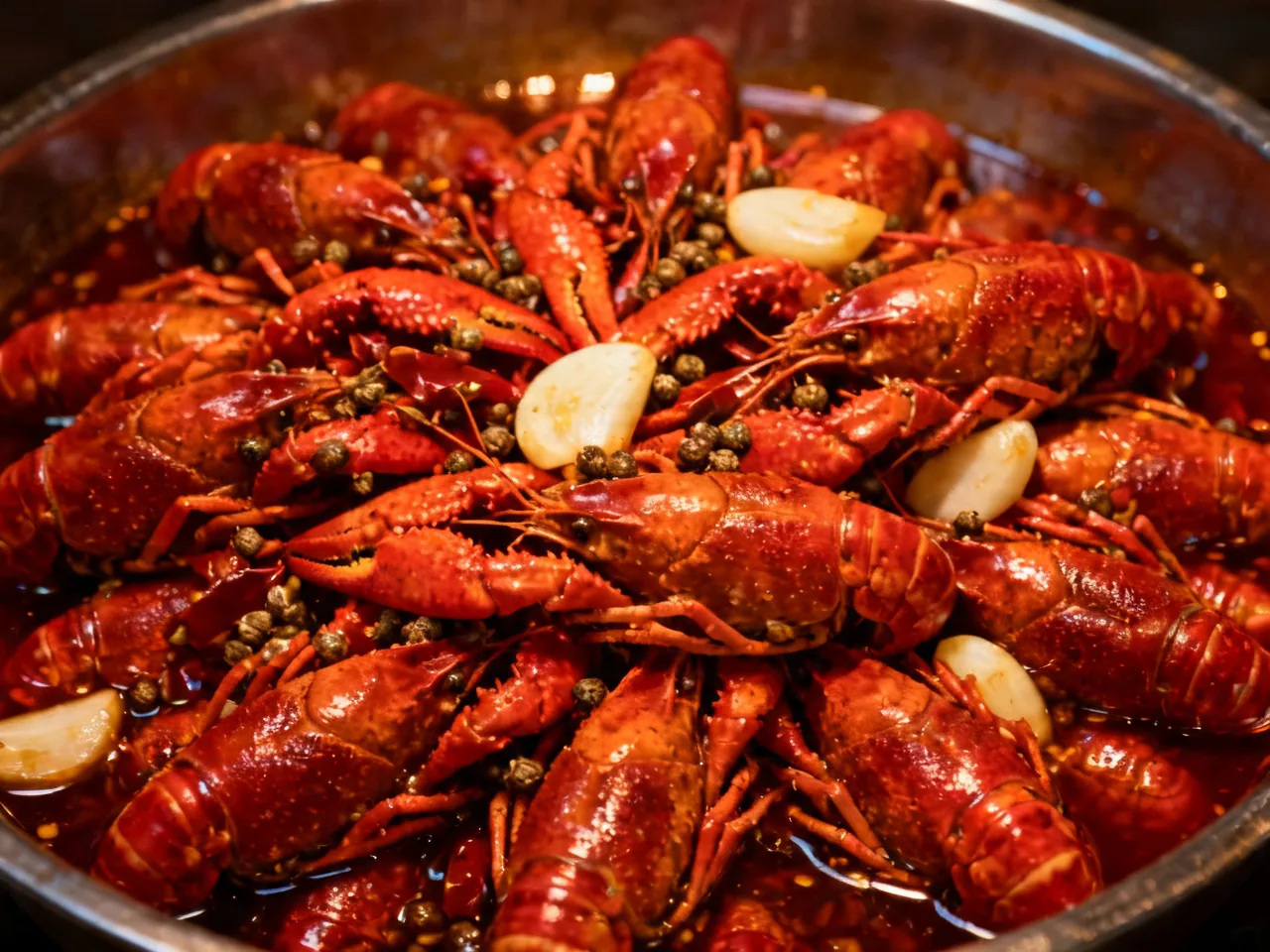
Changsha’s “kǒu wèi xiā” — flavored crayfish — is the undisputed king of local late-night eating.
Compared to other cities, Changsha crayfish is heavier on oil, heavier on chili, heavier on garlic. A massive basin arrives at the table, the surface a layer of crimson chili oil studded with Sichuan peppercorns, dried chilies, and whole garlic cloves. Put on the gloves, crack open the head, suck out the roe — if you can get through that step, you understand. The tail meat is secondary. The roe and the chili juice are what matter.
Near Nanmen Gate, there’s a place called Wenheyou — it’s basically synonymous with Changsha crayfish. The original shop is tiny, the queue often stretching into the street. They later opened Super Wenheyou in the Hisense building, decorating six or seven floors to look like 1980s Changsha, but the crayfish tastes the same. I went to the original. Waited forty minutes. Worth it.
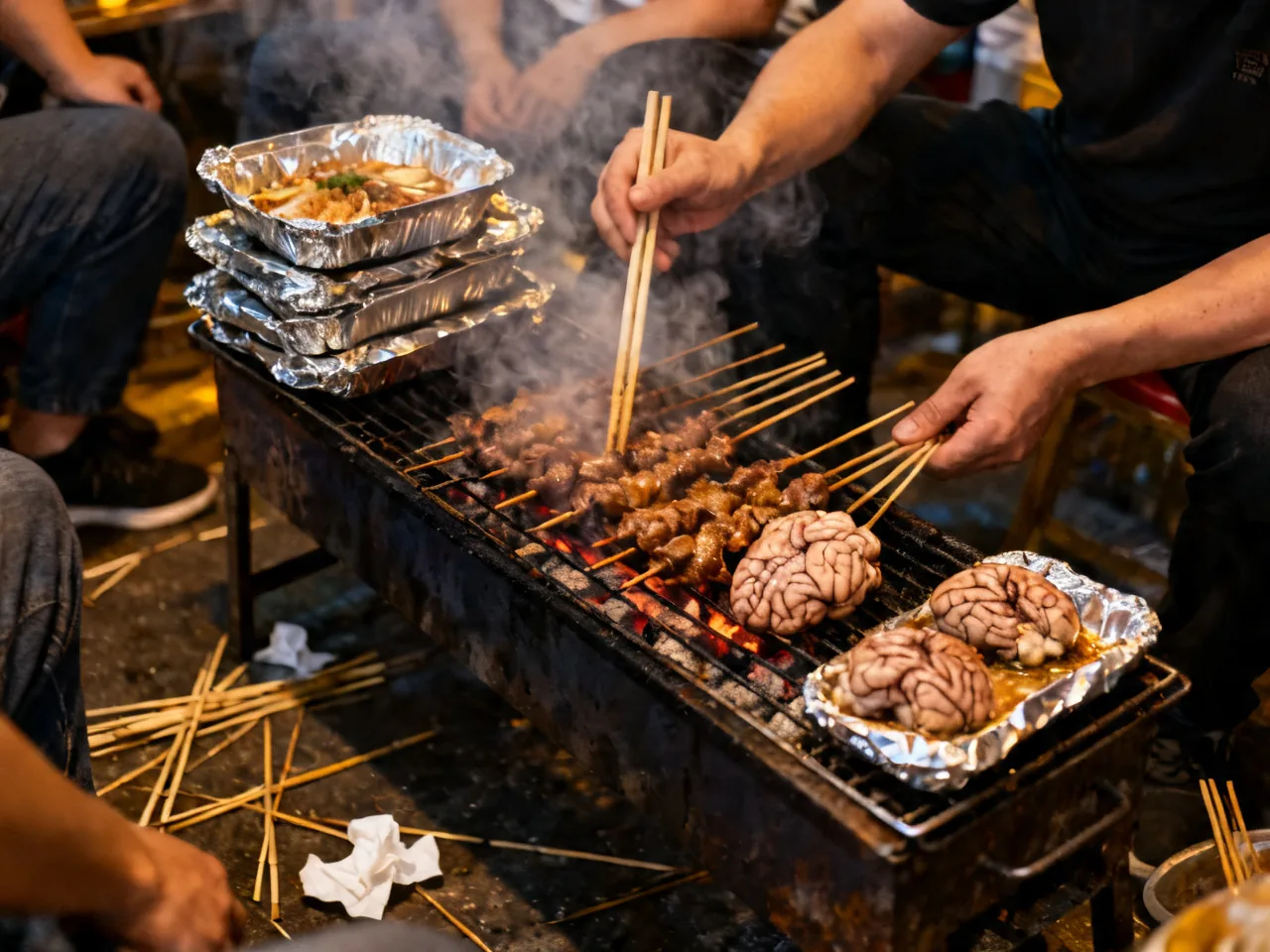
Changsha barbecue is nothing like the Northeast’s, and nothing like Xinjiang’s.
The local style leans heavy on chili and compound seasoning. Grilled leeks, eggplant, corn — each gets a thick coating of chili powder and cumin, plus garlic paste and sauce. The meat skewers use pork or beef rather than the pure lamb of Xinjiang, but the flavor profile is more complex.
Grilled pig brain is Changsha’s hidden late-night champion. Wrapped in tinfoil with minced garlic, fresh chili, and cilantro, then grilled over charcoal until it bubbles. The texture is like soft tofu but smoother, finer. Many outsiders won’t try it, but in Changsha it’s a mandatory order at every table. After my first bite, I ordered it three nights running.
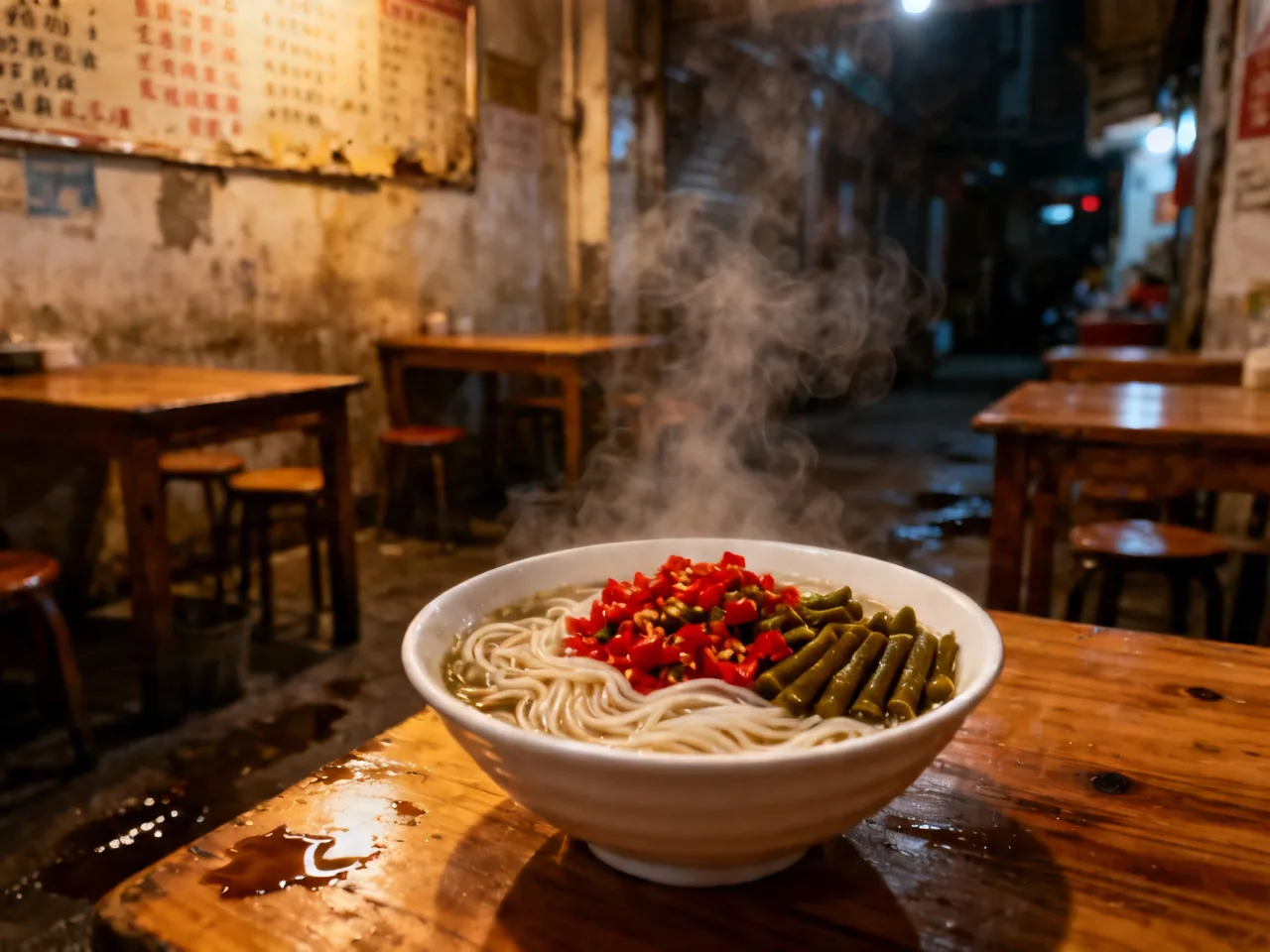
Changsha locals call eating noodles “suō fěn” — “suō” is the sound of slurping.
Changsha rice noodles are different from Guilin’s — thinner, rounder, chewier. The most classic version is “shā tóu fěn” (legend says noodle shops used to sit near the execution grounds, and this was the condemned’s last bowl). The broth is pork or chicken bone, the toppings include fried sauce, shredded meat, pickled beans, and chopped chili, chosen to taste.
At 3 or 4am, Changsha street noodle shops are still open. Not the brightly lit chain kind — the kind with one door, a few plastic tables, and one person working behind the stove. You push open the door, say “one bowl of noodles,” and five minutes later it’s in front of you. Slurp it down, walk out. That’s Changsha’s quietest late-night moment.
Practical Notes
- Nanmen Gate / Pozijie: most concentrated late-night eating area, walkable
- Wenheyou original: near Wuyi Square Station (Metro Line 1), arrive before 8pm to avoid the queue
- Super Wenheyou (Hisense Plaza): 1980s Changsha atmosphere, great for photos
- Best hours: 10pm to 2am is peak
- Budget: crayfish ¥80-150/basin, barbecue ¥50-100, noodles ¥10-20
- Spice warning: Changsha food is spicy by default — say “wēi là” (mild) or “bù là” (no spice) in advance
Related Reads
- The 8 Great Cuisines of China
- Spellbound at First Bite: A Stranger’s Descent into Chengdu’s Heat
- Street Steam: The Real Pulse of Chinese Cities
- The Peppercorn Dossier: Sichuan’s Flavor Map Through a Botanist’s Eyes
- 10-Day East China Five-City Loop