The Art of Chinese Calligraphy
In China, calligraphy is far more than handwriting — it’s philosophy, meditation, and the visual carrier of three thousand years of civilization. A brush, an inkstone, a sheet of Xuan paper: these simple tools can connect you to the deepest chord of Chinese culture.
Three Thousand Years of Ink
Chinese calligraphy begins with oracle bone inscriptions. Shang Dynasty diviners (around 1600 BCE) carved characters into turtle shells and animal bones — those angular, forceful marks are the earliest ancestors of Chinese characters. When Qin Shi Huang unified the six kingdoms, he also standardized the writing system, giving calligraphy its first common foundation.
Calligraphy holds the highest place in traditional Chinese culture — ranked above painting, it was a skill every scholar-official had to master. Imperial examinations tested calligraphy; imperial edicts required the most precise regular script; temple plaques and garden couplets were all stages for the art. In 2009, UNESCO inscribed Chinese calligraphy on the Intangible Cultural Heritage of Humanity list.
The Four Treasures of the Study
To learn calligraphy, start with the tools. The “Four Treasures of the Study” (文房四宝, Wénfáng Sìbǎo) are brush, ink, paper, and inkstone — each with its own origin and standards.
Brush (Hu Brush) — The finest brushes come from Huzhou, Zhejiang, known as “Hu brushes,” made from goat hair, weasel hair, or rabbit fur. The spring and ink-holding capacity of the bristles determine the quality of each stroke. A good Hu brush tapers to a needle-fine point when gathered, yet opens full and round when loaded with ink.
Ink (Hui Ink) — Traditional ink sticks come from Anhui province, called “Hui ink,” made from pine soot or oil soot. You grind the stick on an inkstone with water, controlling the concentration yourself. Bottled ink is available now and more convenient, but you lose the meditative ritual of grinding.
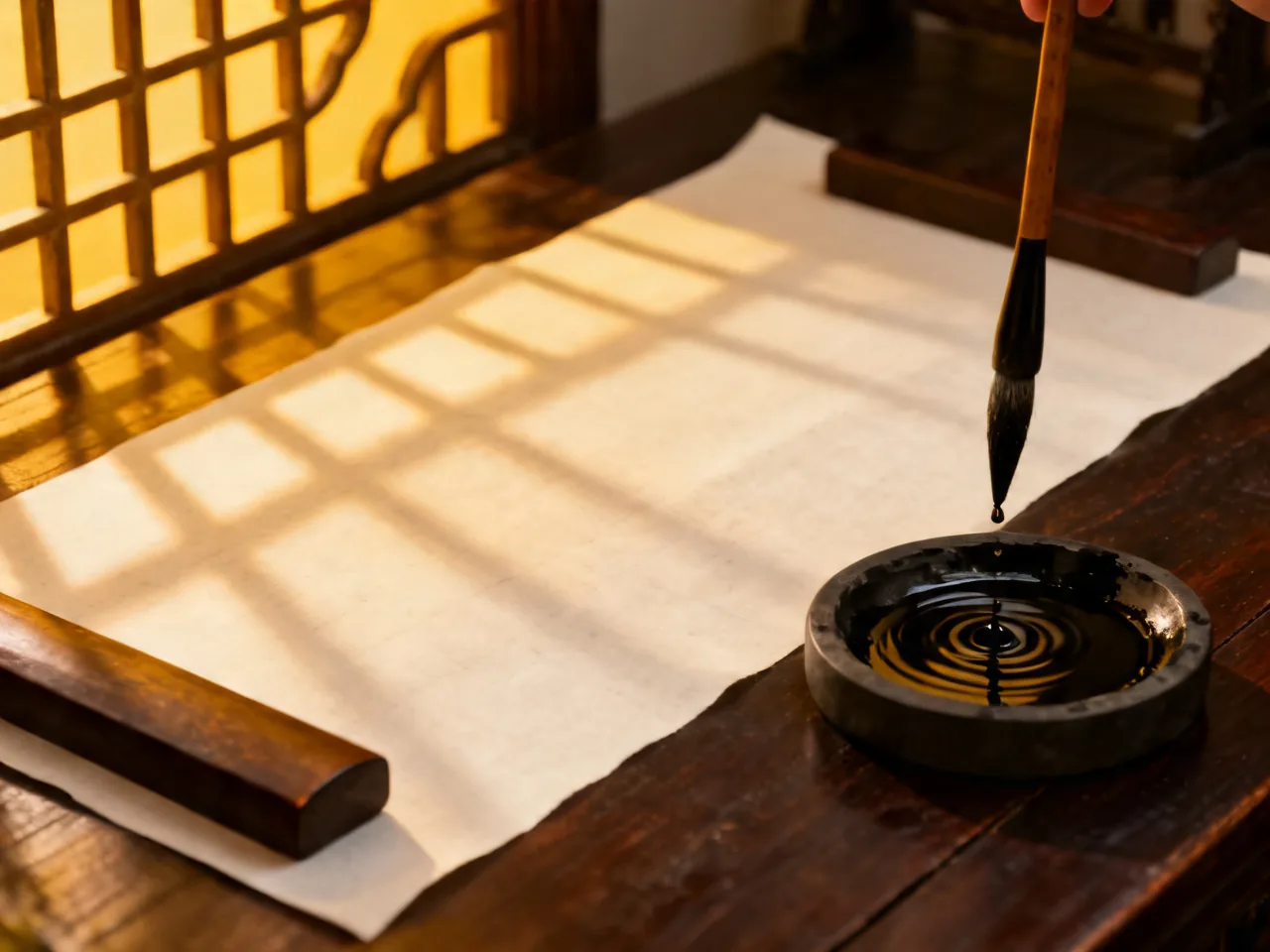
Xuan Paper — Made in Jing County, Anhui from blue sandalwood bark, it absorbs ink without bleeding and can last over a thousand years without yellowing. On a good sheet of Xuan paper, you can feel the subtle resistance as ink seeps through the fibers with each stroke.
Inkstone (Duan Inkstone) — The most prized inkstones are “Duan inkstones” from Zhaoqing, Guangdong, with fine-grained stone that produces lustrous ink. A fine inkstone can be passed down through generations, ranging in price from a few hundred to tens of thousands of yuan.
Five Script Styles
Chinese calligraphy has five major script styles, each with its own historical context and aesthetic character.
Seal Script (篆书, zhuànshū) — The oldest style, with smooth, even lines that look almost like drawn patterns. Today it’s mainly used for carving personal name seals (印章). If you have a seal carved with your name in China, it will almost certainly be in seal script.
Clerical Script (隶书, lìshū) — Matured during the Han Dynasty, with wide, flat characters and distinctive “silkworm head, wild goose tail” horizontal strokes. It looks dignified and grand, commonly seen on museum signs and inscriptions on historical-style buildings.
Regular Script (楷书, kǎishū) — The most standardized style and the starting point for Chinese children learning to write. It peaked in the Tang Dynasty; Yan Zhenqing’s “Yan style” and Liu Gongquan’s “Liu style” are its two great summits. Regular script is upright and dignified, with precise rules for beginning and ending each stroke.
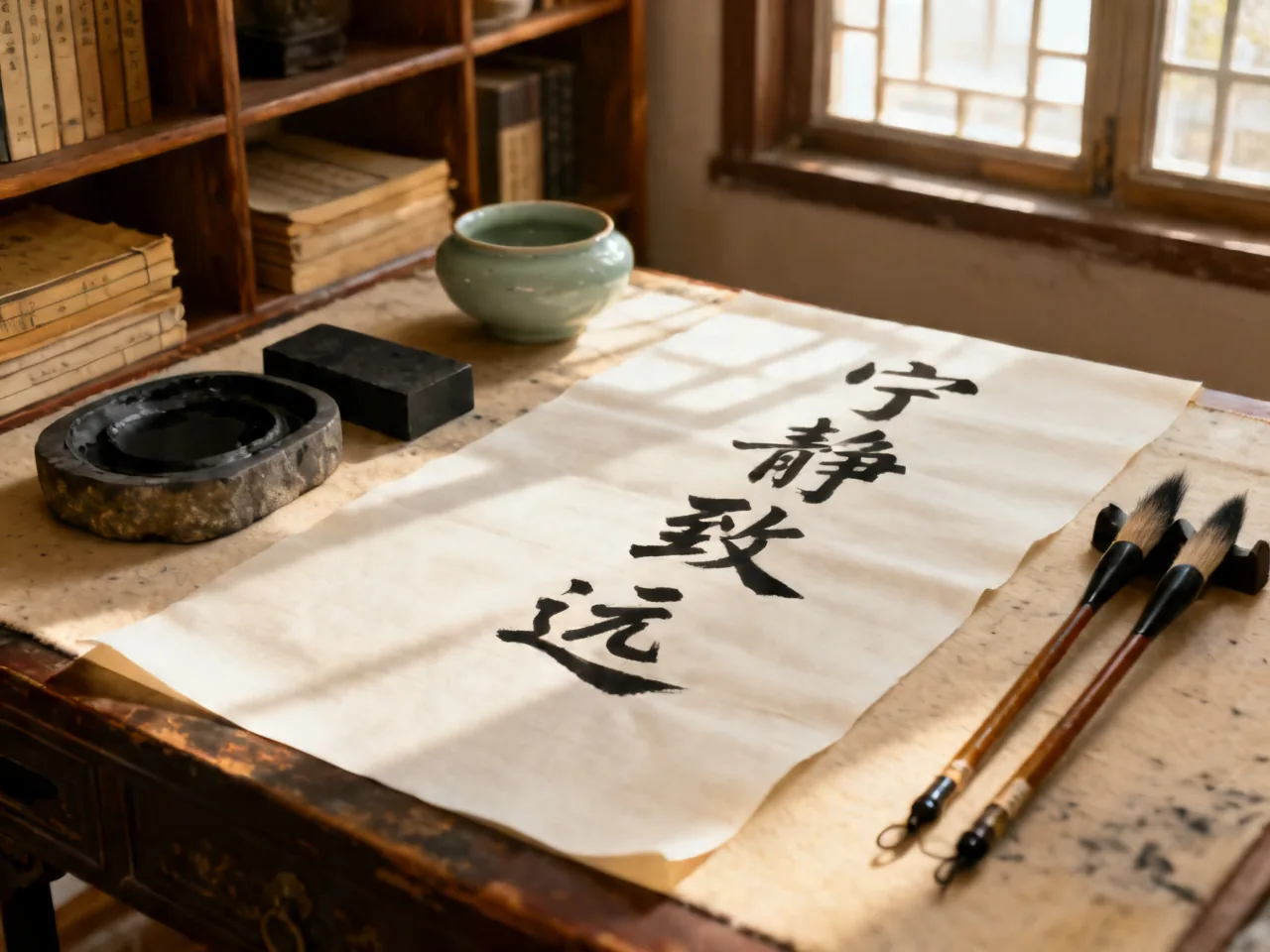
Running Script (行书, xíngshū) — A fluid version of regular script, written faster with connected strokes. This is what people use for everyday writing and correspondence. Wang Xizhi’s “Preface to the Orchid Pavilion” is the pinnacle of running script, called “the finest running script under heaven.”
Cursive Script (草书, cǎoshū) — The freest and most abstract style, with highly simplified strokes flowing continuously between characters. Non-specialists can barely read it, but to calligraphers it’s the style most capable of expressing emotion and personality. Tang Dynasty master Zhang Xu was called the “Sage of Cursive Script” — legend says his best work came when he was drunk.
Wang Xizhi: The Sage of Calligraphy
No discussion of calligraphy can bypass Wang Xizhi (303–361 CE). A man of the Eastern Jin Dynasty, he is revered as the “Sage of Calligraphy” — the Confucius of the art form.
In 353 CE, Wang Xizhi hosted a gathering of scholars at the Orchid Pavilion near Shaoxing, Zhejiang. Forty-two literati drank wine and composed poems beside a winding stream. Inspired by the wine, Wang Xizhi wrote the “Preface to the Orchid Pavilion” — 324 characters, including 28 instances of the character “之” (zhī), each written differently. This preface has been called “the finest running script under heaven” ever since.
Legend says Wang Xizhi tried to rewrite the preface the next day when sober, but could never recapture its spirit. Emperor Taizong of Tang loved it so much that he allegedly had the original buried with him in his tomb — everything we see today is a copy.
If you visit Shaoxing, you can tour the Orchid Pavilion scenic area. Every year on the 3rd day of the 3rd lunar month, a calligraphy festival draws enthusiasts from across the country to reenact the original gathering beside the winding stream.
Where to Experience Calligraphy
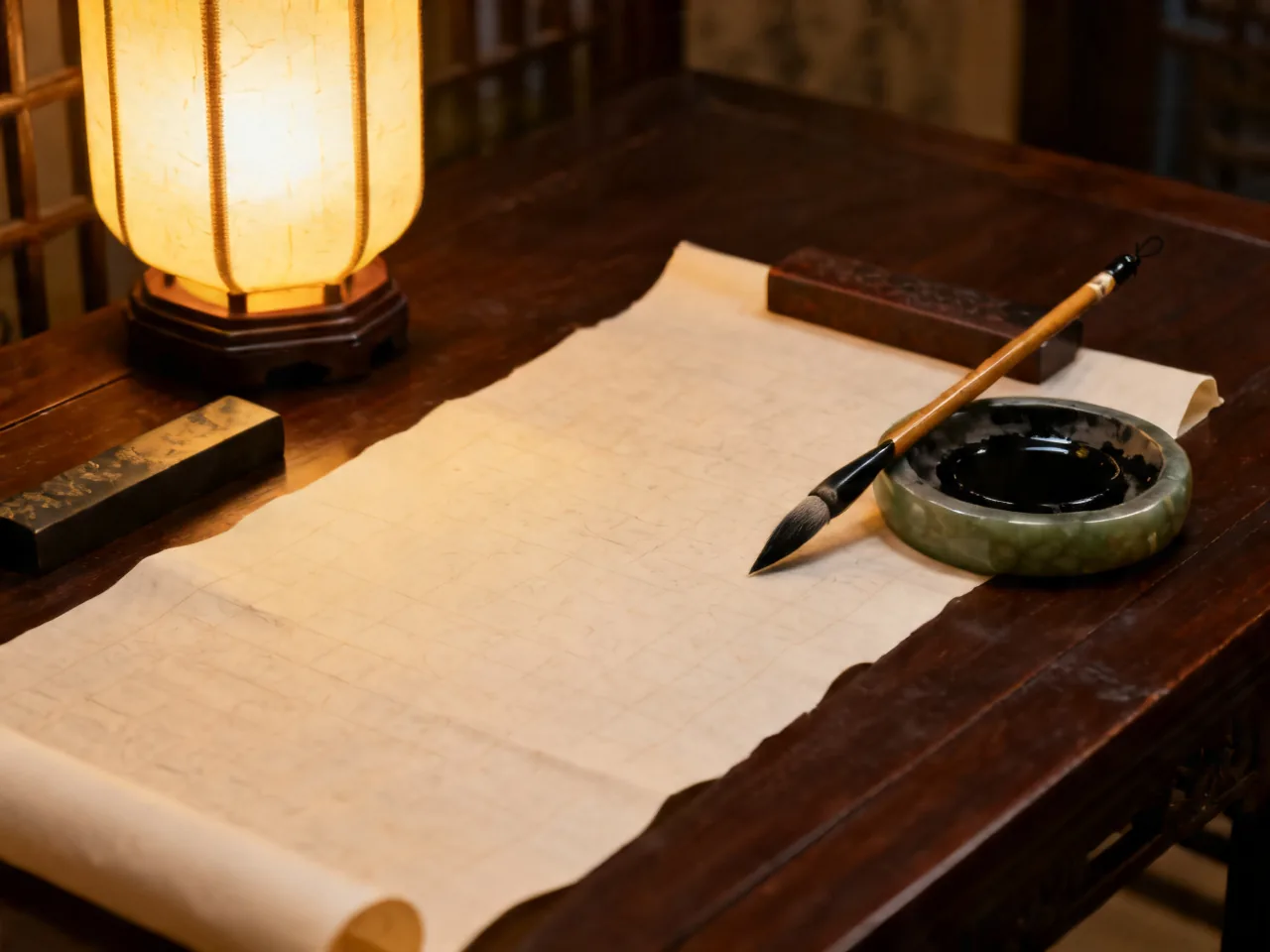
Xi’an Stele Forest Museum (碑林博物馆) — Founded in 1087 CE, it houses over 4,000 stone steles spanning two thousand years, containing rubbings of nearly every great calligrapher’s work. The “Kaicheng Stone Classics” alone fill 114 steles with 650,000 characters of Confucian texts. Visitors can buy stone rubbings (拓片) as souvenirs — Xuan paper is pressed onto the stele and rubbed with ink, producing a copy of characters carved a thousand years ago.
Beijing Liulichang Street — Beijing’s most famous cultural street, 500 years old, specializing in the Four Treasures, paintings, and antique books. Rongbaozhai (est. 1672) and Daiyuexuan are excellent places to buy brushes. Calligraphy workshops here can be booked for hands-on experience.
Calligraphy Workshops — Cultural centers and hutong guesthouses in Beijing, Shanghai, Hangzhou, and Xi’an offer 1–2 hour calligraphy experience classes for around 100–300 RMB. The teacher will first show you how to hold the brush and practice basic strokes, then guide you to write your own Chinese name. It makes for one of the best personal souvenirs of any China trip.
What to Buy and Take Home
A beginner’s set (brush, ink, paper, inkstone) costs around 50–150 RMB at Liulichang or cultural streets elsewhere — good for personal use or as a gift. For better quality, individual Hu brushes range from 30 to 500+ RMB; a pack of 100 sheets of Xuan paper runs 50–300 RMB.
The most meaningful souvenir is a custom name seal — carved with your Chinese name or a phrase you love, ready in about 30 minutes, costing 50–500 RMB. You can stamp it on your own calligraphy, on postcards, or on book pages — a unique personal symbol that’s entirely yours.
Calligraphy is not an art you can master in a day, but one genuine experience is enough to understand why Chinese people say: look at a person’s handwriting, and you can see their character.
Related Reads
- Spring Bloom Map: China’s Most Beautiful Flower Fields
- Summer Escapes: Plateaus & Islands
- Huangshan Sea of Clouds & Welcome Pine: Beautiful in All Seasons
- Best Autumn Foliage Spots in China
- 10-Day East China Five-City Loop